HDL Studios
Posts tagged with "How-To" contain reflections on designing, organizing, and operating the HDL Studios. This post was originally drafted as part of our In Studio book but was cut and has been lingering in draft mode ever since. As we're now spending more helping other public sector organizations boot up internal design capabilities the topic became relevant again. So here we go!
—
In a previous post we talked about Transferring Knowledge with regards to stakeholders who are outside of your organization. In this post I'd like to talk about the flip side of that: how knowledge is transferred internally. Or maybe it's more basic. How does one build commitment within their own organization?
A bit of explanation is due. Strategic design was a new thing at Sitra when we began preparing for HDL 2010. In fact, before Marco came to Sitra as the Director of Strategic Design the position didn't exist. For us the stakes of the studio were double—they had to serve a need for the external stakeholders while also helping to demonstrate to our colleagues here at Sitra what design is, what it looks like, and what benefits a design process can yield. The worst thing that could happen was that we end up as an 'internal service bureau,' offering turnkey services to disinterested 'clients.'
In fleshing out this aspect of the Studios we took a slightly oddball approach and sought to build internal partnerships that would yield financial (€€€), social (networks), and human capital (know-how). In other words, we thought of ourselves as a startup looking for seed funding within the broader umbrella of Sitra.
Financial capital
Money is always useful when beginning a project, but the motivations for seeking internal 'investment' go a bit deeper—after all, this is a question of moving money around internal accounting buckets, so it's mostly an imagined barrier. Money may be a flawed symbol of commitment, but it's a convenient one.
The reason we asked that our partners in the Public Leadership and Management Programme and the Energy Programmes to contribute to HDL studio budget was to make our shared commitment more tangible in the early phases of the project, when design was still mostly a magical black box for most of Sitra. It was a leap of faith that we're very thankful for!
Formalizing the partnership by re-allocating funds served as a reminder of the shared vision that we were developing. In a public organization like Sitra the accounting system is robust, requiring diligent structuring and sign offs, so we turned this into an asset by using the 'gatekeeping' nature of the accounting system as a way to regularly revisit our shared commitment both verbally and in writing.
Social Capital
With a bit of skin in the game, our internal partners also had increased incentive to be personally invested in the Studios. The first evidence of this deeper level of interest came through the sharing of networks. For each of the studios we conducted extensive research to create the challenge briefing, organized a day of field trips for the studio members, and brought a handful of guest speakers. This amounted to a significant network-building effort, especially considering that our knowledge and connections in the areas of education and ageing were limited at the outset.
We were obsessive about quality because the studio was limited to a one week on-the-ground window of opportunity, there wasn't a single minute to waste. In practical terms this translated to thorough vetting of all speakers and guests under consideration for the Studios. Our internal partnerships were instrumental in helping build long lists of possible studio members and guests, as well as making personal introductions and helping start those relationships off on the right foot.
In return, the promise that we made was to help the programmes develop their own networks. Since we were out in the field talking to people on a more or less daily basis, it was easy for Marco and I to keep in mind the needs of the programmes and make connections where they seemed valuable.
Looking back over the invite lists for each of the studios, it's clear that each of them is the result of a deep meshing of the various personal and professional networks within Sitra—and richer because of it. By using the broader networks as the basis for our recruiting we were able to introduce productive overlaps between studio members, guests, and others involved which would not have been possible with our own HDL network alone.
Human capital
Having the partner programmes on board with the Studios added resilience during crunch points when we had acute needs for extra help. For instance, being able to get an extra pair of eyeballs to review the challenge briefings at various stages of their creation was very helpful. This also served as an opportunity for our partners to be personally involved in the process, seeing for themselves how key parts of the design process are developed and fine tuned, and hopefully to take some of that experience back to their own teams. There's a delicate balance to be struck between asking too little of your partners and overwhelming them with requests. At the moment we don't have any grand insights into what that point is, other than to say you'll see it on the face of your coworkers when you're about to topple the balance!
Being Realistic
Given that there was no precedent for design within the organization, the level of support and trust that has been afforded to HDL within Sitra is remarkable. Starting from scratch, we knew that the Studios would be a good opportunity to help our leadership see for themselves what strategic design is all about, but we also knew that we had to be realistic about how much of their time we could hog. Everyone has packed schedules, and for top leadership that's doubly so.
For many reasons we are averse to memos and reports. Particularly when dealing with a topic such as strategic design, which can be quite abstract, we knew from the start that it's more productive to have conversations than put things immediately into writing. As much as possible we tried to create opportunities for in-house leadership to visit with Studio, to see it for themselves, and to hear from the Studio members what the experience was like.
On the other hand, we also had to be realistic. What's the minimal involvement that would be useful? Two or three brief visits each from a couple key individuals over the course of the entire Studio experience was effective in generating a deeper level of in-house understanding. As much as possible, we encouraged these visits to occur during active times (like the final jury discussions) to maximize their impact.
Making (and taking) Time
Having built strategic design at Sitra and the HDL Studios with a combination of financial, social, and human capital on a hunch that all three would be needed, this combo only becomes more critical the longer we work on these issues. As Sitra has now been practicing strategic design for coming on four years, the deep importance of strong partnerships—internal and external—can only be underscored.
Perhaps the reason for this is quite simple: partnerships take time. The longer we spent working with our internal partners the more we see saw strategic design taking root within Sitra. Patience and persistence might be the most important kinds of capital we have.

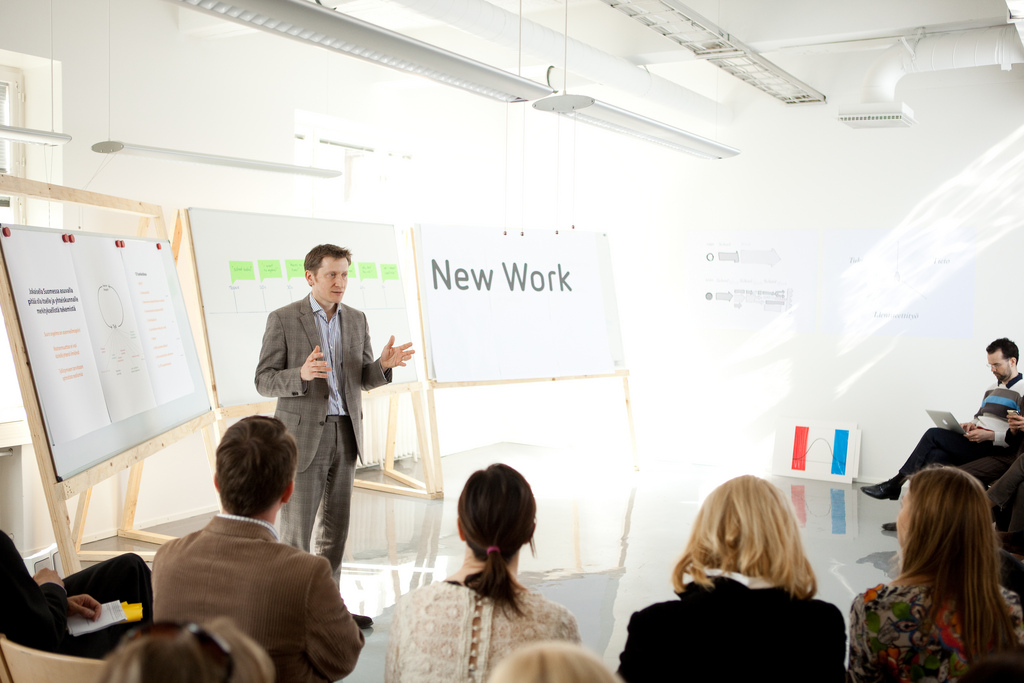
As we mentioned previously, last month we were working with the Synergize Finland team to run three concurrent studios on the theme of "new work". The details are continually pouring onto the Synergize (Elinvoima) website, so you can hop over there for the updates as the programme continues, but here's a peek at the week in an abreviated form.
Monday
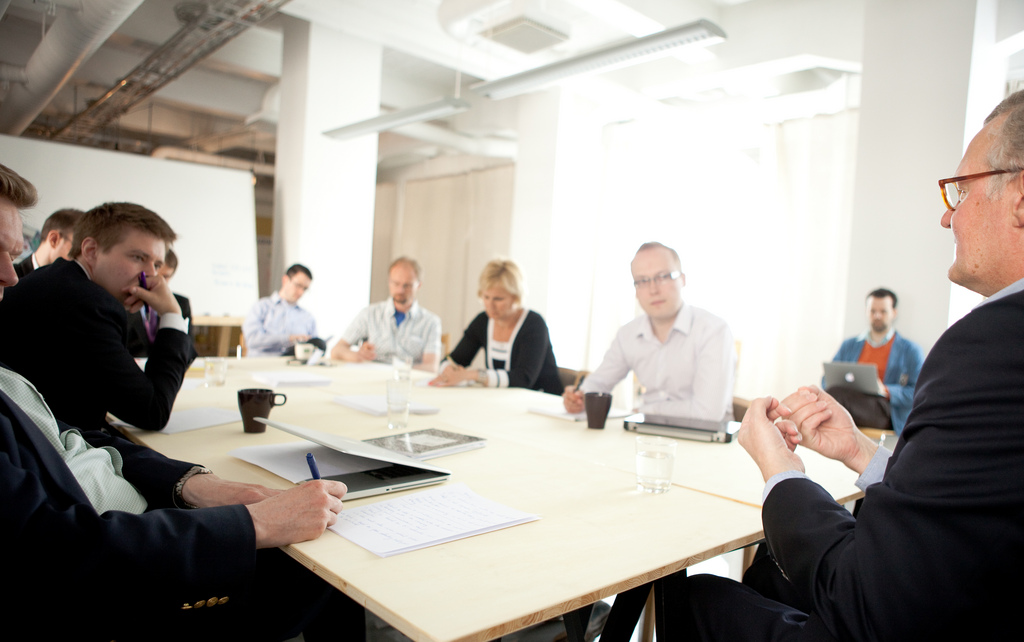
Esko Kilpi talks with the 'new knowledge work' studio team about the ways that social media and the internet are changing working relationships. Monday was full of talks with guest speakers.
Tuesday

Tuesday each of the three studios were out and about all over Helsinki, making site visits to see the realities of contemporary work in each of the three themes. This is a scene from the group who visited the City of Helsinki offices to talk about immigration and work.

Wednesday
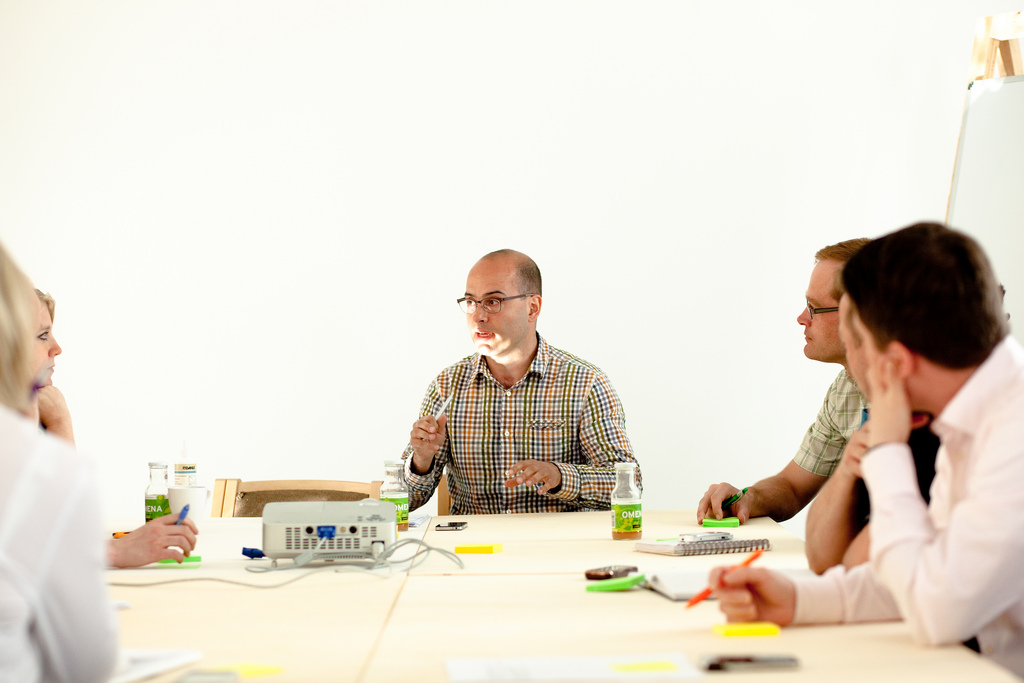
With a bit of top-down and bottom-up perspective percolating from the first two days, Wednesday is when things really got down to business. The teams were in studio all day beginning to synthesize their insights and ideas through group discussion...
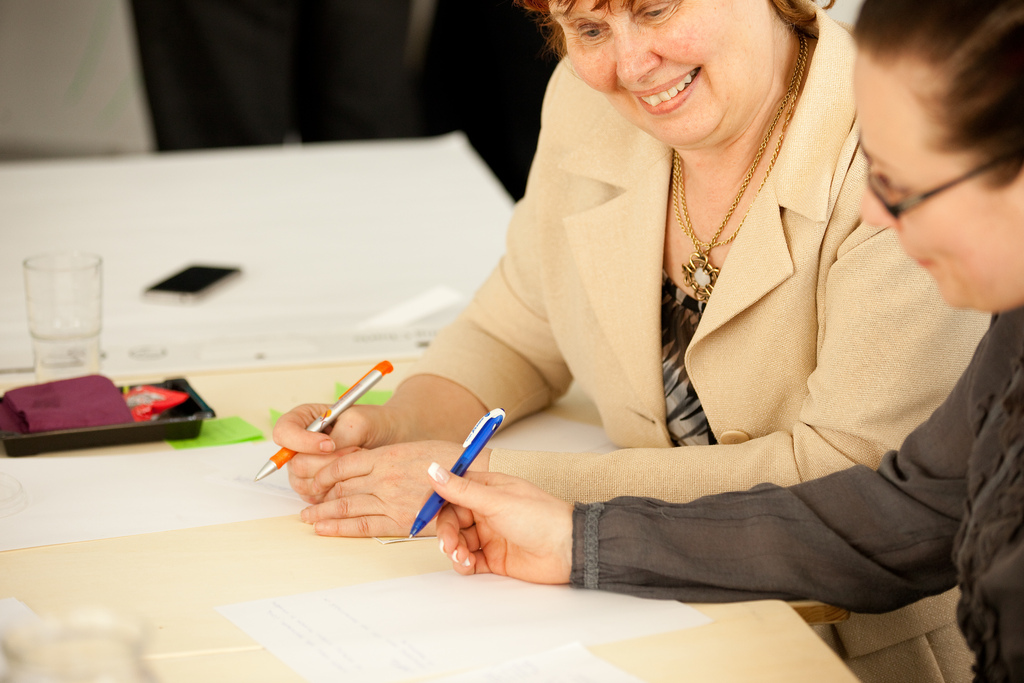
... and collaboration in pairs.
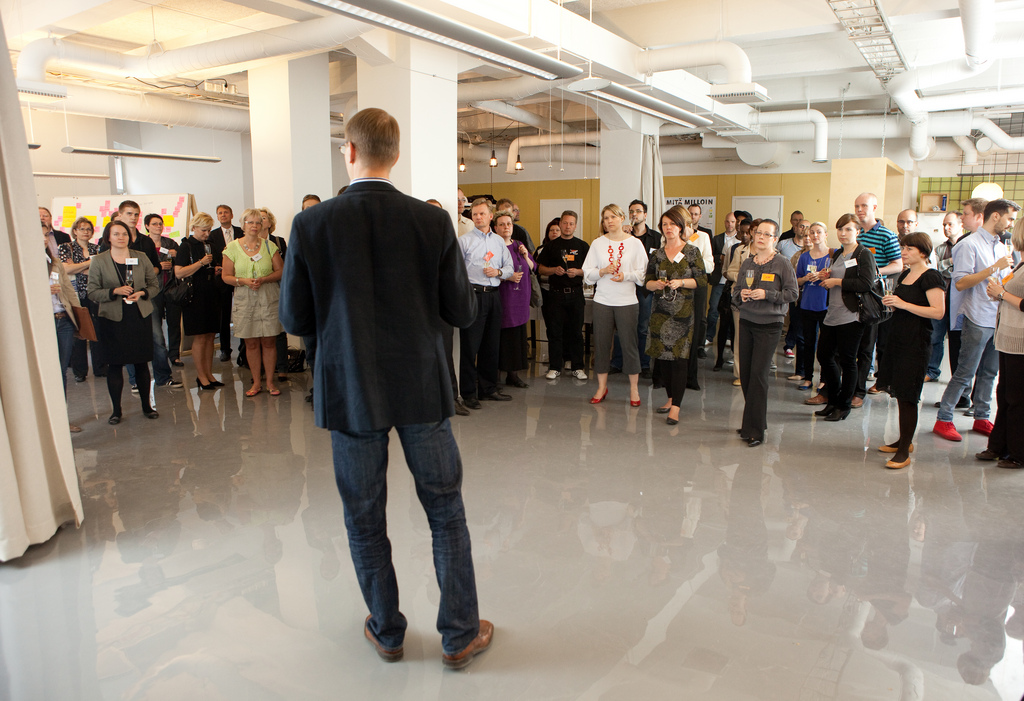
That evening we had a town hall meeting with 60 guests where each of the three studios gave a 4 minute 'elevator pitch' of their current thinking.
Thursday

Marco and the rest of our Strategic Design Unit were continually 'sparring' with the studios to help them hone their proposals.
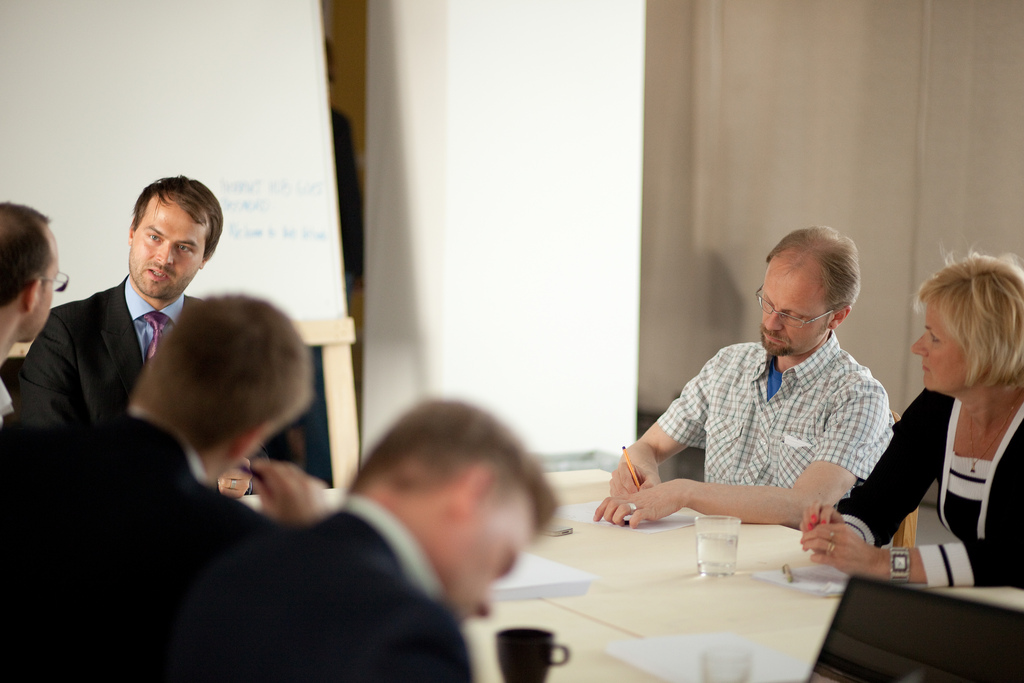
As the end of thursday came near, the deadline began to loom large. We ended each day with a dry run—'what if you had to present now?'
Friday
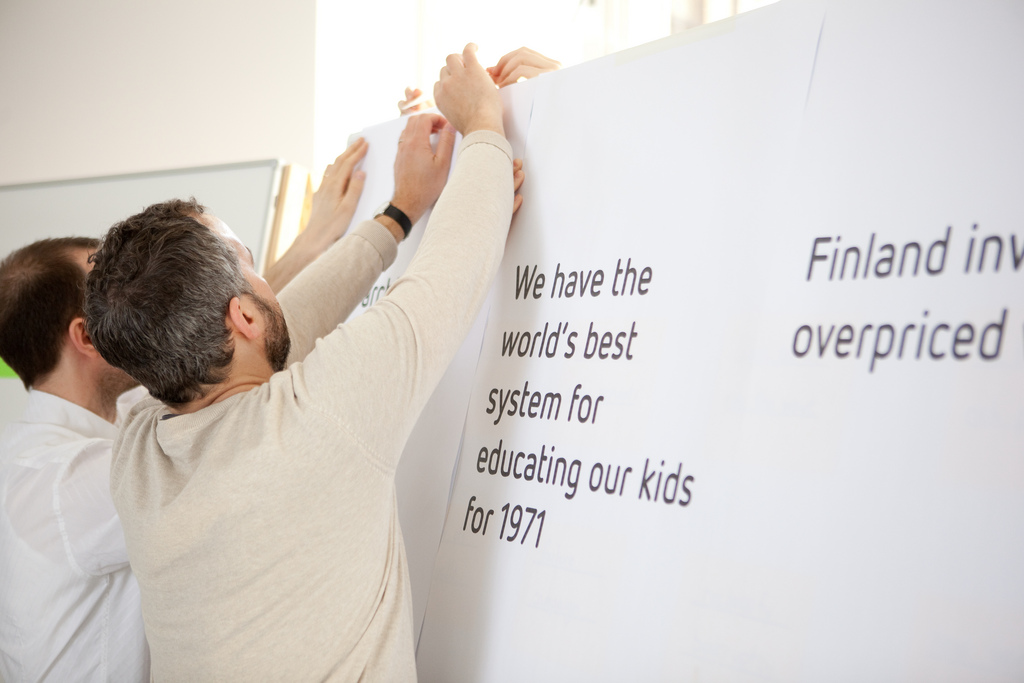
Dan and I stayed late on thursday night to help the teams wrap up their presentations. No one used Powerpoint, so there was a lot of paper-wrangling come friday morning.
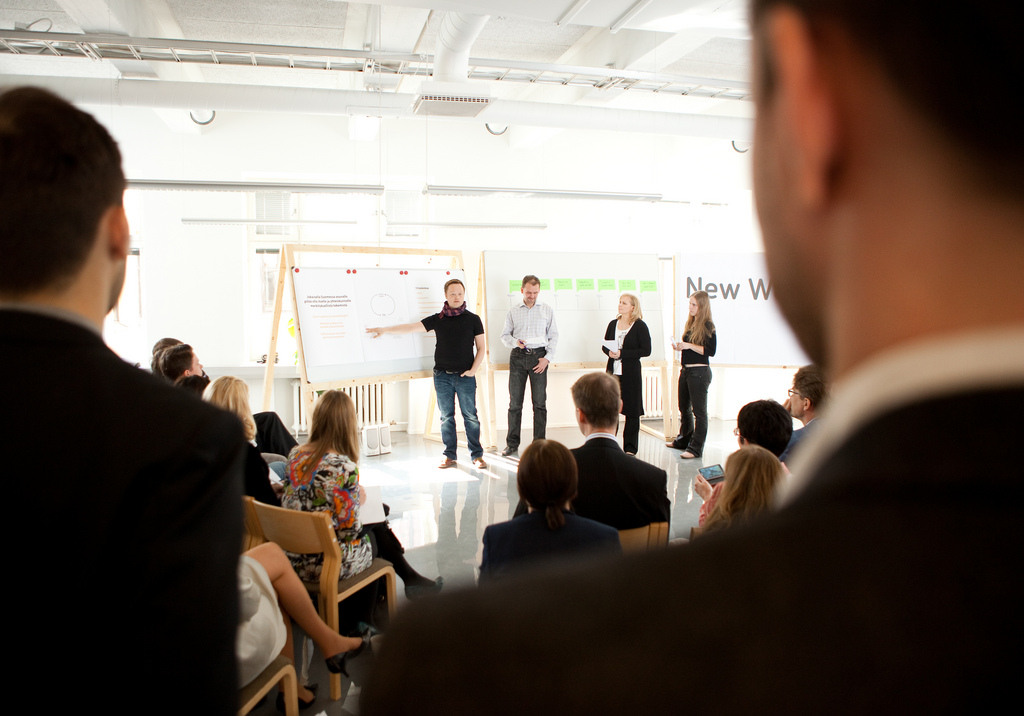
The three teams presented one after another, each giving their version of the big picture and sharing a collection of 10 action areas each described in sketch form, both verbally and visually.
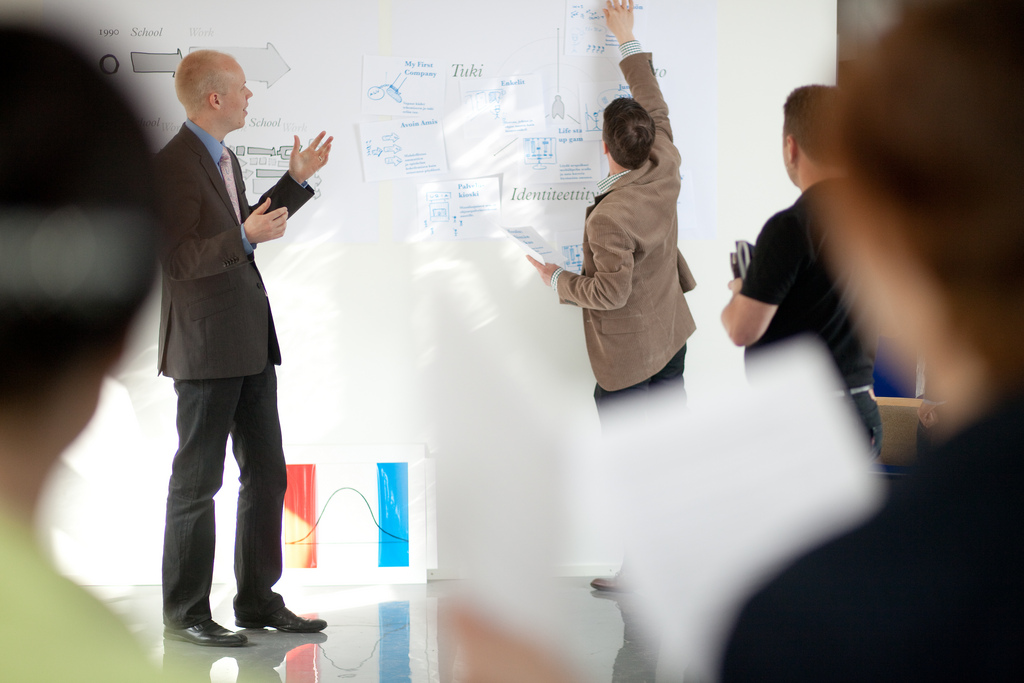
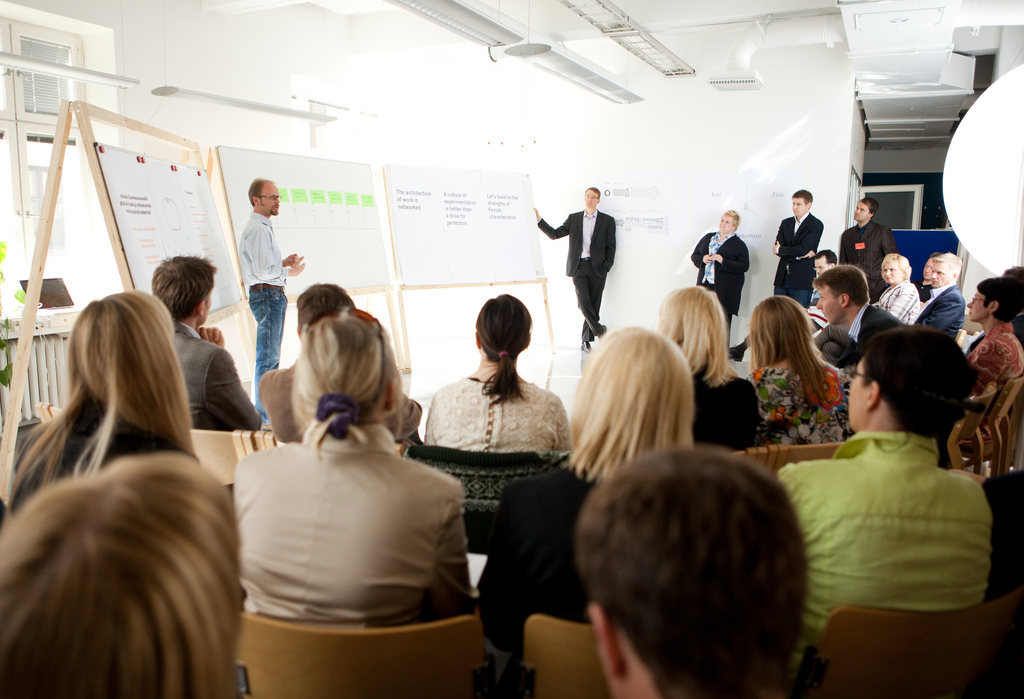
Amongst the audience were five special guests to give focused feedback: Annika Forsander, Kirsi Juva, Mikko Kosonen, Risto Siilasmaa, and Anni Sinnemäki.
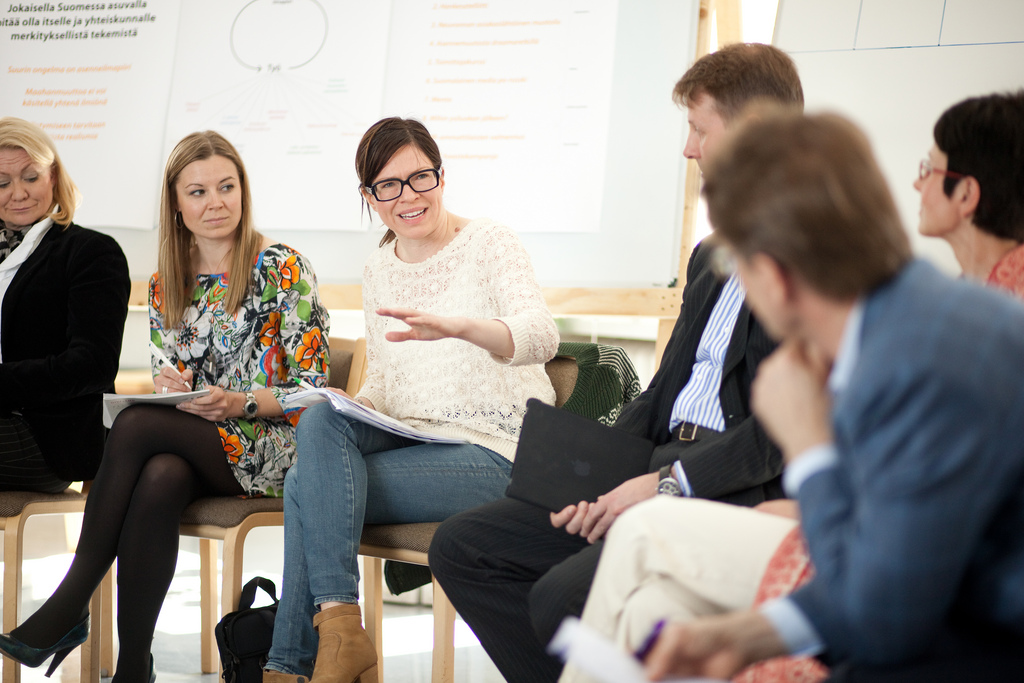
Anni Sinnemäki responding to a question by Mikko Kosonen.
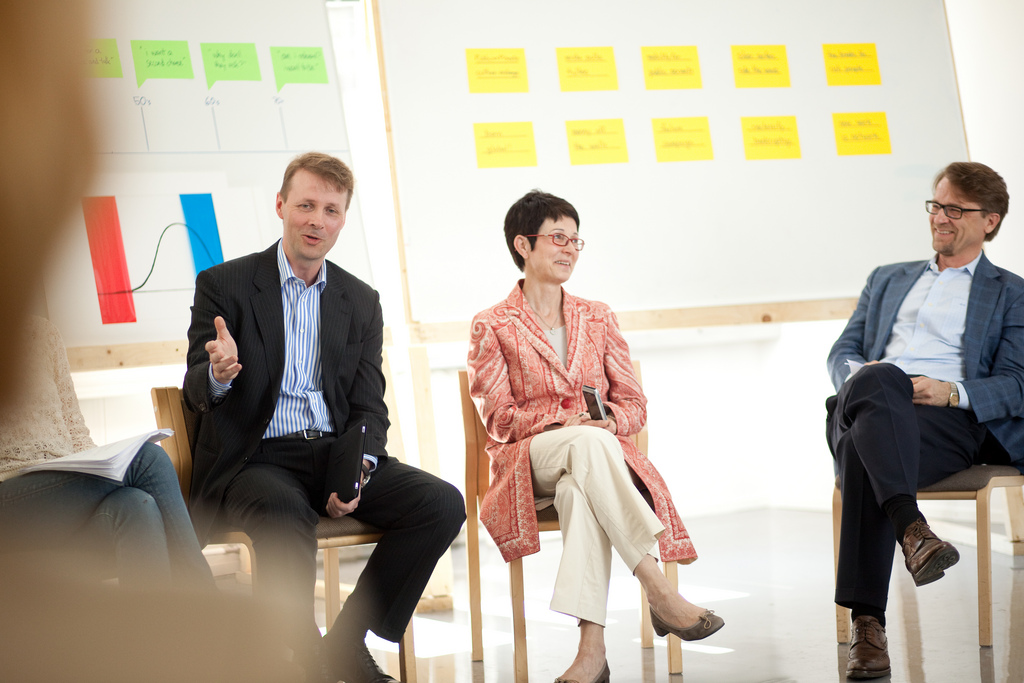
Risto Siilasmaa.
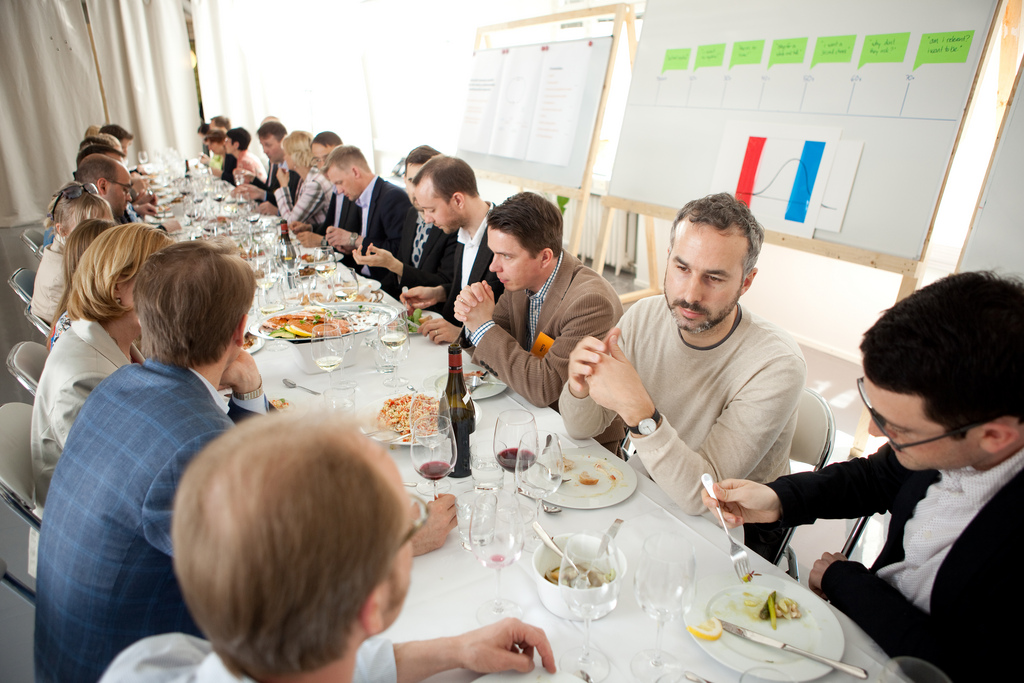
After the presentations concluded we moved all of the chairs out of the way and set up a big table to continue the discussion during a casual lunch.
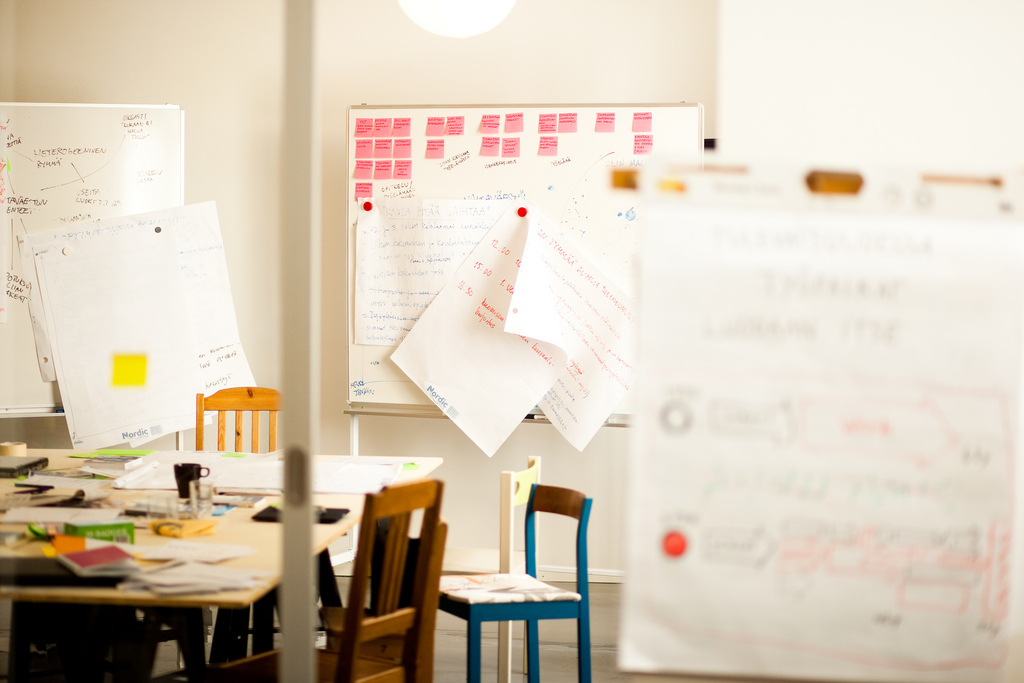
Phew.
Next Steps
After the studio week the teams have had a subsequent session to begin developing some of the action areas into social innovation projects. The trajectory of that work is based on the rapid development of a big picture 'architecture of solutions' in studio and will culminate this fall when Sitra hosts everyone again for a celebration and announcement of the projects that are continuing forward.
As for us, we learned a lot from the week and it was an especially useful experience to run multiple studios concurrently. Exhausting, to be sure, but useful.
By nature of being an internal collaboration within Sitra we also dedicated time to articulating in a more careful way how to put something like an HDL studio together. Part of this was iterating and formalizing the tools and techniques that make each of the days tick.
One example is an 'ethnography field guide' that we developed with the help of WeVolve for the fieldwork on tuesday. On my plate is to finish up the English translation and get that document up here as a download, which will happen before summer kicks in.
In the meantime, there are many more photos of the week on our Flickr account. Enjoy!
All photos by Ivo Corda.
This week we're posting the third and final studio recap video. If you've been following the previous weeks with Education and Sustainability, this is going to look pretty familiar.
These videos were created for parallel panel conversations at HDL Global 2010 so the original audience was only able to see one, thus the repetition was necessary to allow everyone to have the same introduction to the studio concept. Feel free to fast forward past the recipe section if you've already seen it twice!
If the animation has piqued your interest, the best place to find out more about the Ageing Studio is in the Dossier. Like the other Dossiers, you might want to start with the Challenge and Opportunity Space, which together outline the starting point for the studio, and then continue on with the Studio Summary which outlines where the studio ended their week together.
Currently we're hard at work trying to convert some of the "hunches" that the studio sketched out into prototype projects. More details as they emerge.
The themes of each of our three summer studios were borrowed as panel themes for HDL Global 2010. Last week we talked about the Education panel, and this week we're sharing the video from our Sustainability panel.
The goal of the panel sessions at HDL Global was to expand the work of the studio, which focused on an issue within Finland, to include input from the global community. You could think of it as a very (very) brief road testing session: is the broad thematic area of the studio dramatically different in other contexts? Might the studio concepts helpful elsewhere?
To find out more about the Sustainability Studio, the best place to look is here in the Dossier, our living archive. The Challenge and Opportunity Space which were part of the call to action, and the Summary which is a quick recap of where the Studio ended the week, are two good entry points.
Since the studio concluded we've been working on finding opportunities to convert some of the sketched "hunches" into prototype projects. That work is ongoing and we'll share developments here as they emerge.
As part of HDL Global 2010 we hosted a panel discussion on each of our studio themes. These discussions were used to open up the localized findings of the studio to a global frame of reference.
Here's the short video which introduced the session by providing a glimpse into the HDL Studio environment.
While we're at it, you can also dive into the Education Dossier, in particular the Challenge and Opportunity Space that kicked off the studio and the Summary from the end of the week.
At the moment we're working to convert some of the "hunches" that the studio sketched into prototype projects. When that happens, readers of this blog will be the first to find out.
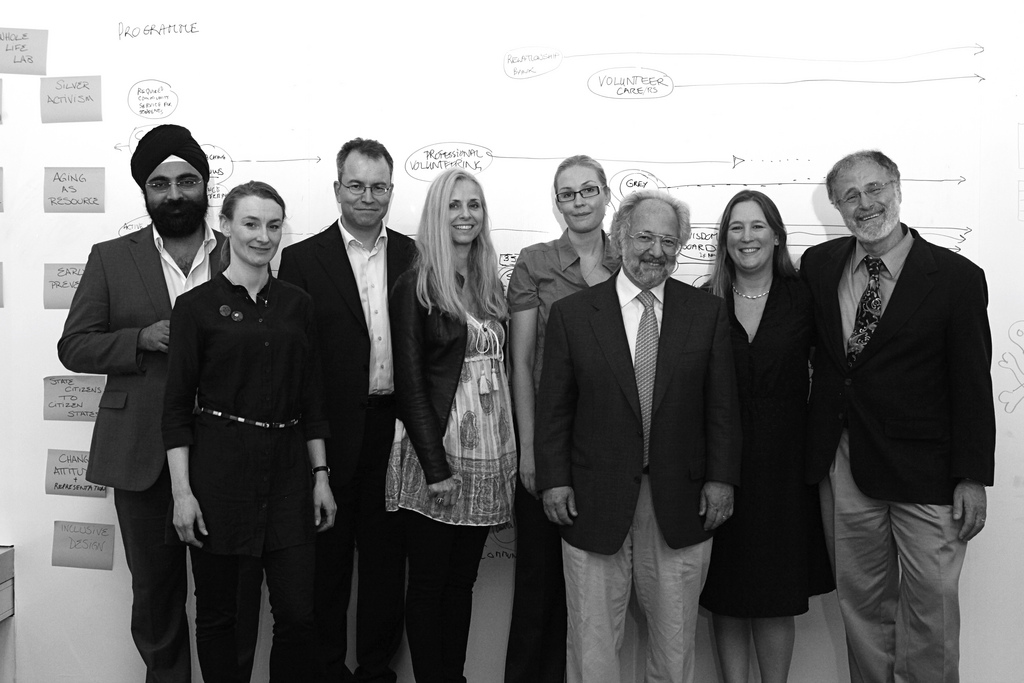
Left to right: Inderpaul Johar, Marianne Guldbrandsen, Petri Lehto, Onny Eikhaug, Hannele Seeck, Alberto Holly, Emily Thomas, John Ruark.
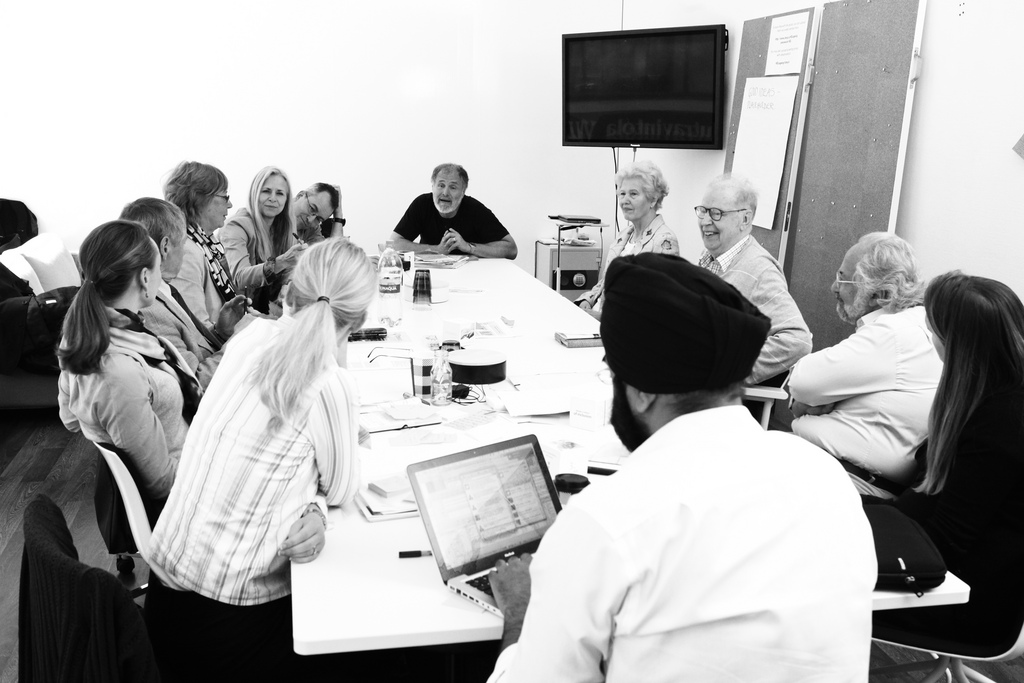
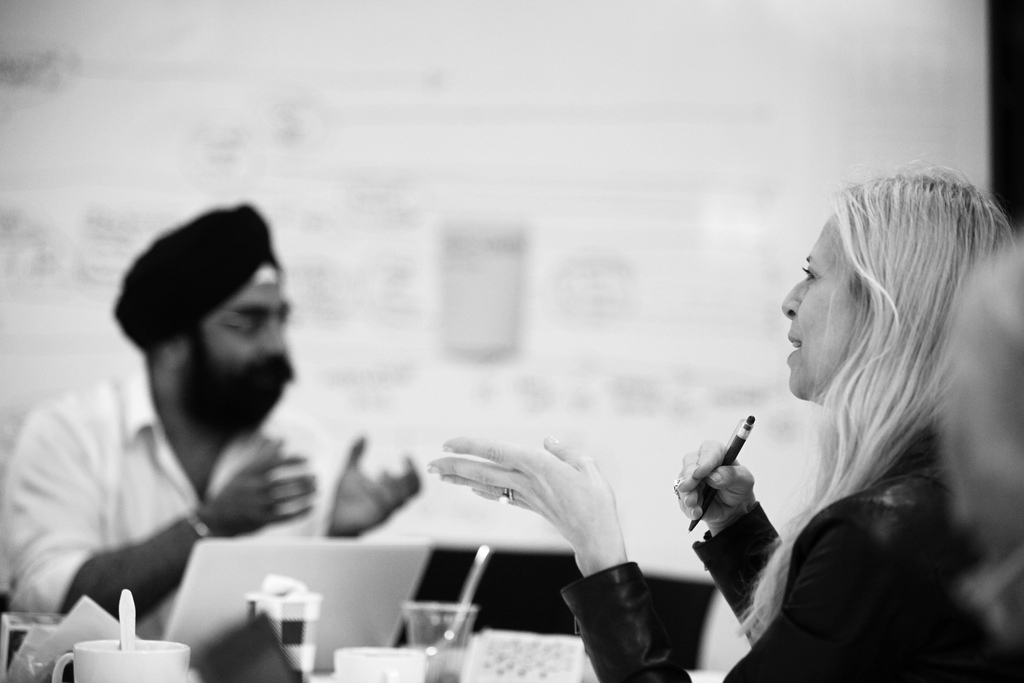
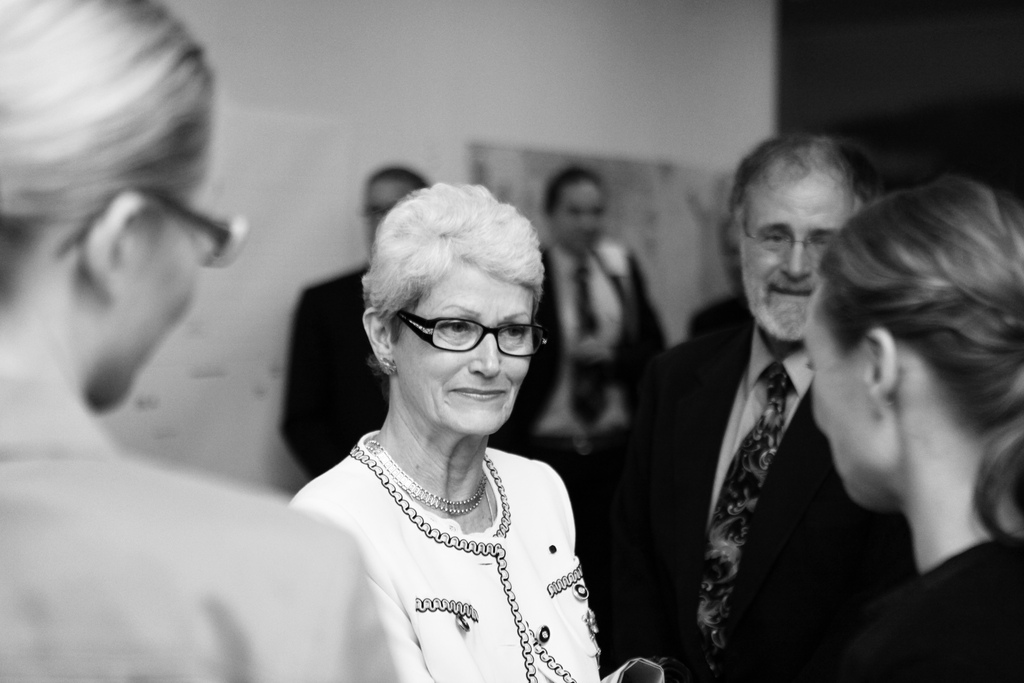
Helsinki's Deputy Mayor Paula Kokkonen joins the studio for the friday review.
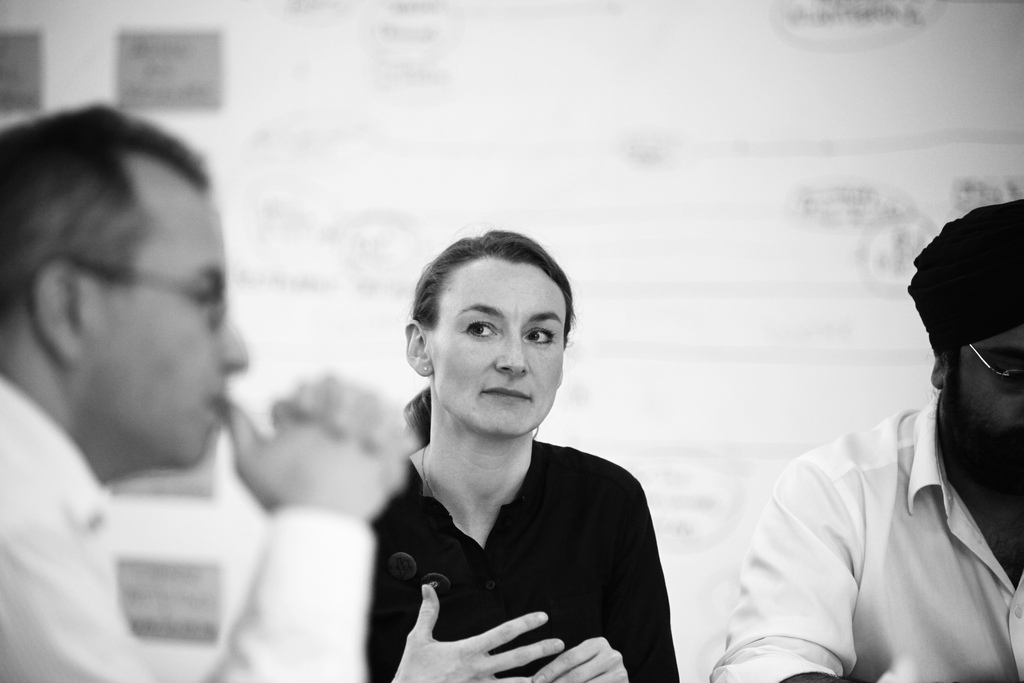
And many more here on Flickr. Photos by Ivo Corda.
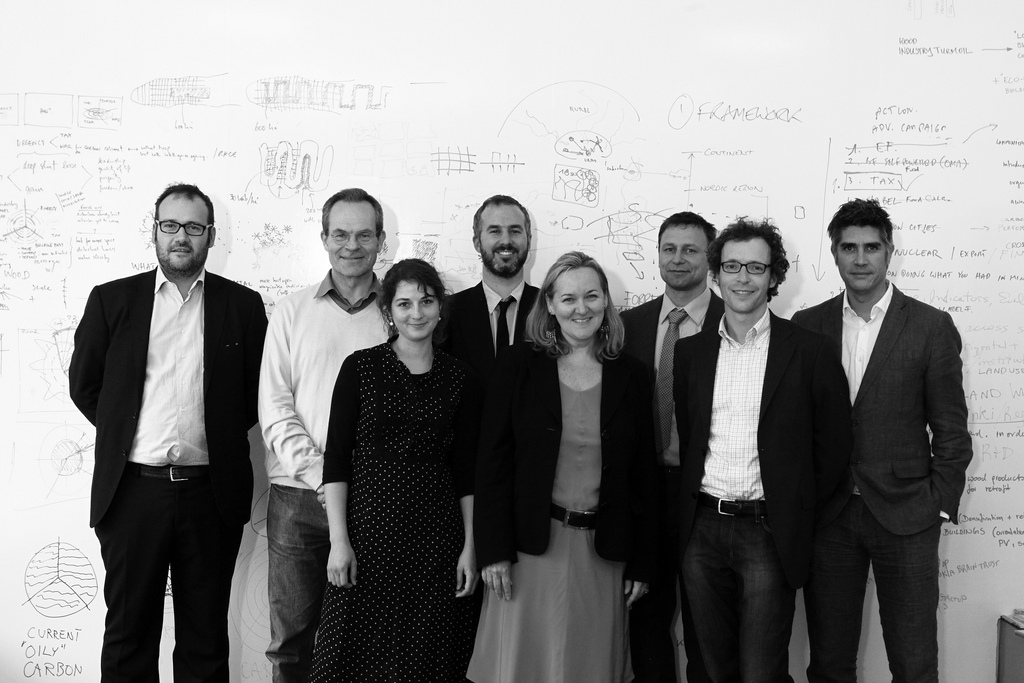
Left to Right: Federico Parolotto, Janne Hukkinen, Katharina Schmidt, Dan Hill, Patricia McCarney, Seppo Junnila, Matthias Rudolph, Alejandro Aravena.

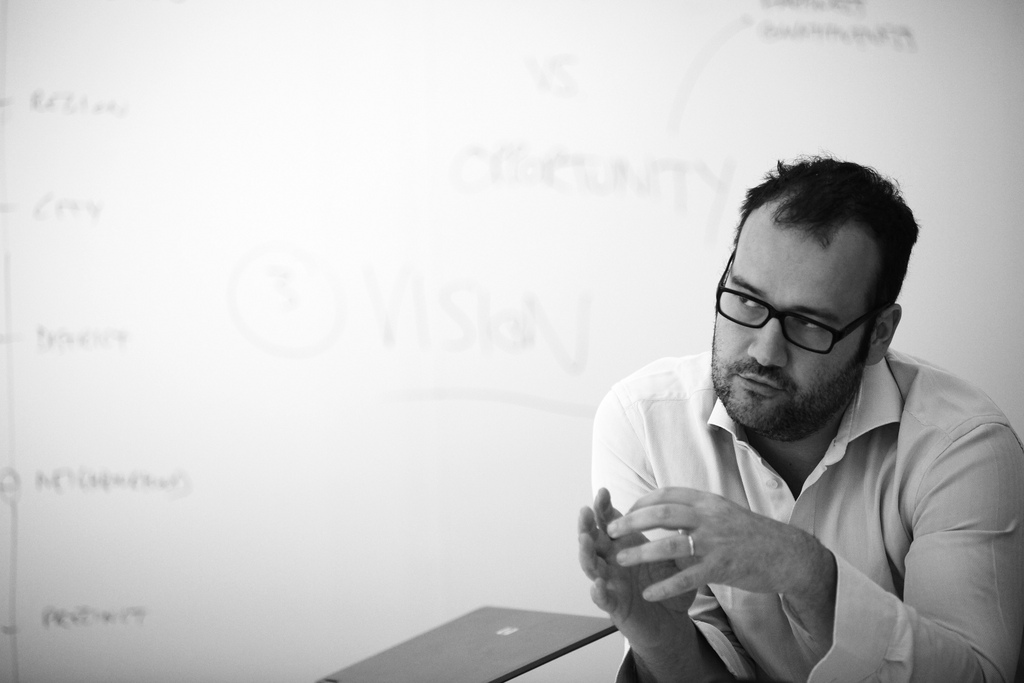

Alejandro presents the Studio's work
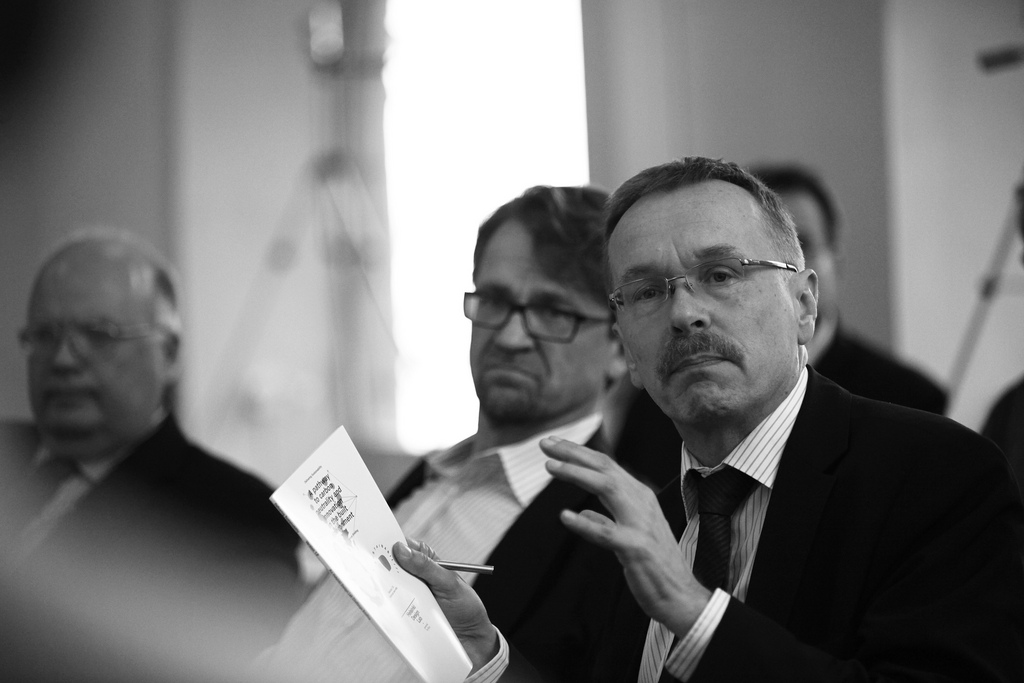
Timo Mäkelä, Director of Sustainable Development and Integration at the DG Environment of the European Commission, comments during the Friday review
With more photos on Flickr if you cant get enough. Photos by Ivo Corda.
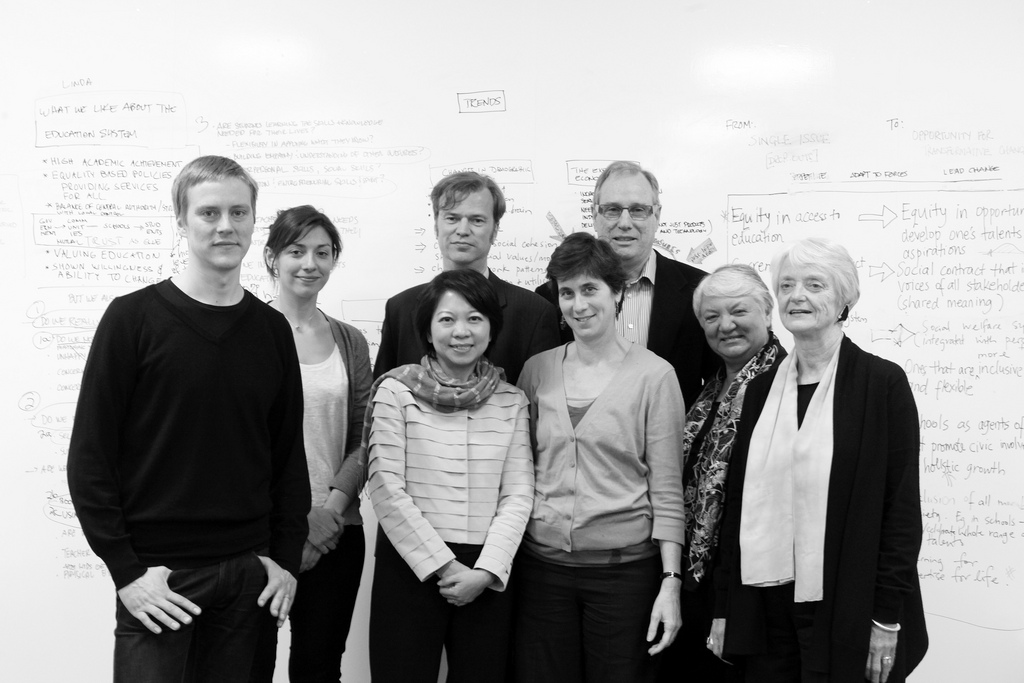
Left to Right: Roope Mokka, Maja Kecman, Lim Lai Cheng, Juha Teperi, Linda Nathan, Darrel Rhea, Ann McCormick, Jane Bernstein
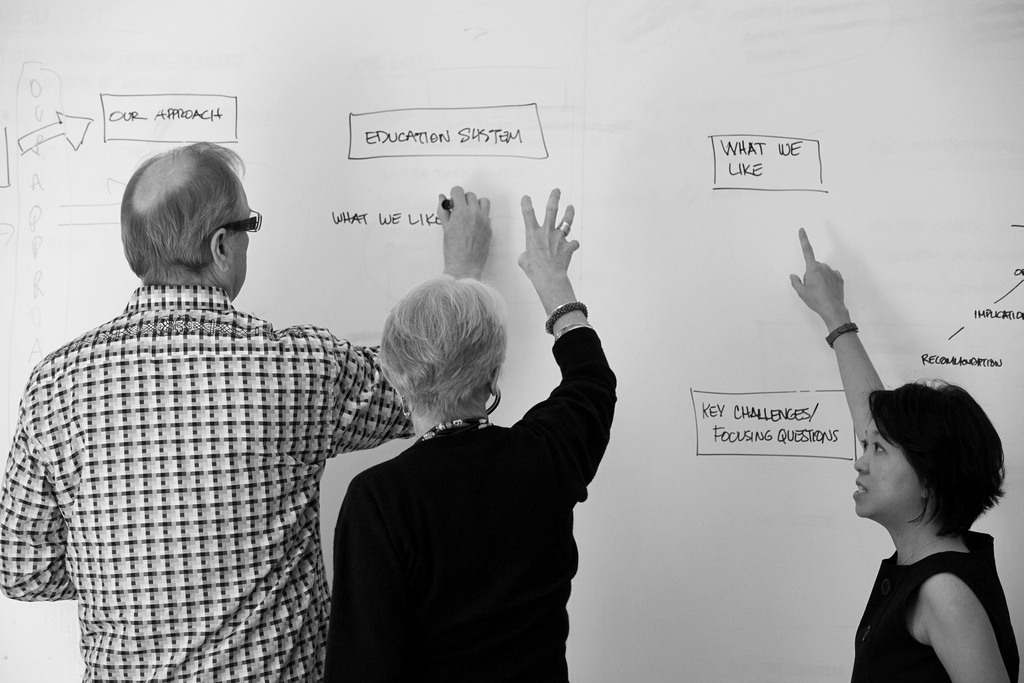
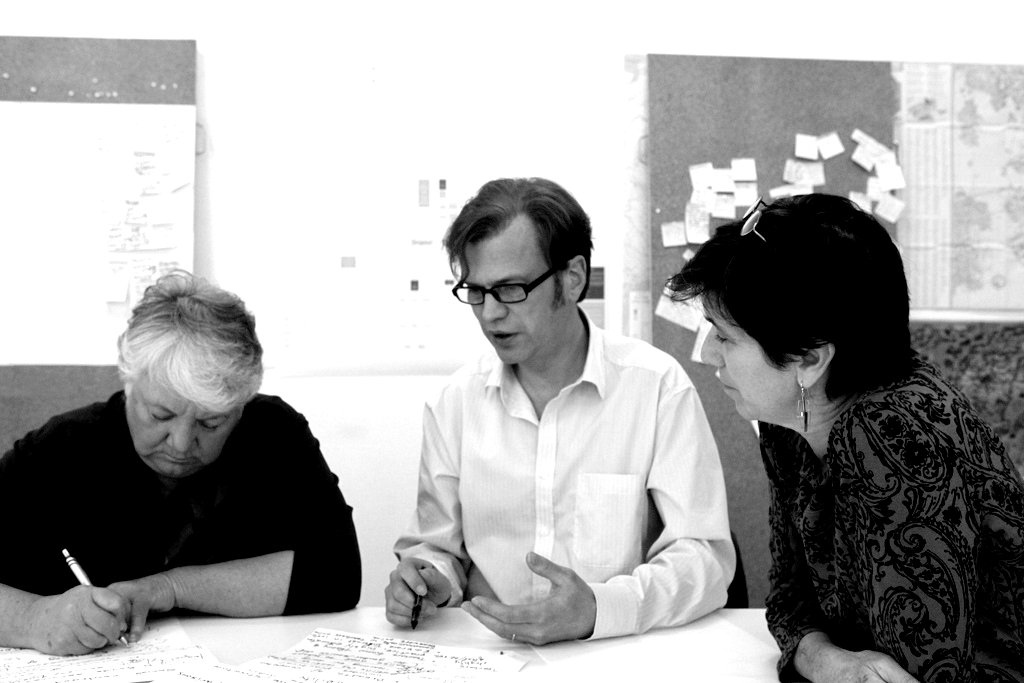


Timo Lankinen, director general at the Finnish National Board of Education, discussing the Studio's recommendations
More photos from the studio on Flickr. Photos by Ivo Corda.
Posts tagged with "How-To" contain reflections on designing, organizing, and operating the HDL Studios, a series of three collaborative, multi-disciplinary problem solving experiments we held this summer. These posts are meant to be informative for others who may also be exploring ways to put the design process to use in new ways or those who find themselves struggling to work between disciplines or silos.
—
The best way to share ideas depends on the specific ideas and the audience you want to share with. In other words, the mechanisms of knowledge transfer are every bit as much a design project as is the development of whatever knowledge one aspires to share. This post is about some of the techniques we're using to share our work right now.
In the past, printed reports have been one of the dominant tools for sharing new information, be it research, analysis, or evaluation. For a number of reasons, these reports seem almost mandatory—or may even be legally mandated, depending on your organization's status. But what good is a report that no one reads? And how useful is a report that takes so long to produce it's out of date before the ink dries?
At this early stage in the work of Helsinki Design Lab we've taken a different path, which is to focus on conversations rather than reports. The printed (and online) documentation will come—we're beginning to work on them now—but at this stage the emphasis is on bringing people together with enough time, space, and quality input to have a good conversation.
Review
The model we used in the HDL Studios is based on the "final review" concept which is borrowed from design education. In design school, a studio is comprised of 10-15 students working on their own individual response to a project assignment which is issued at the beginning of the semester. There are interim "pin ups" every couple weeks where the whole studio gathers around to look at in-progress work literally pined up on the wall, while the professor critiques, or "crits" for short, the students' projects in terms of what's working and what's not. The culmination of the design school semester is a "final review" where students present their projects to a panel of 4-6 professors who offer a more substantial critique of the work. This discussion is where the ideas of the semester are teased out, compared, and tested.
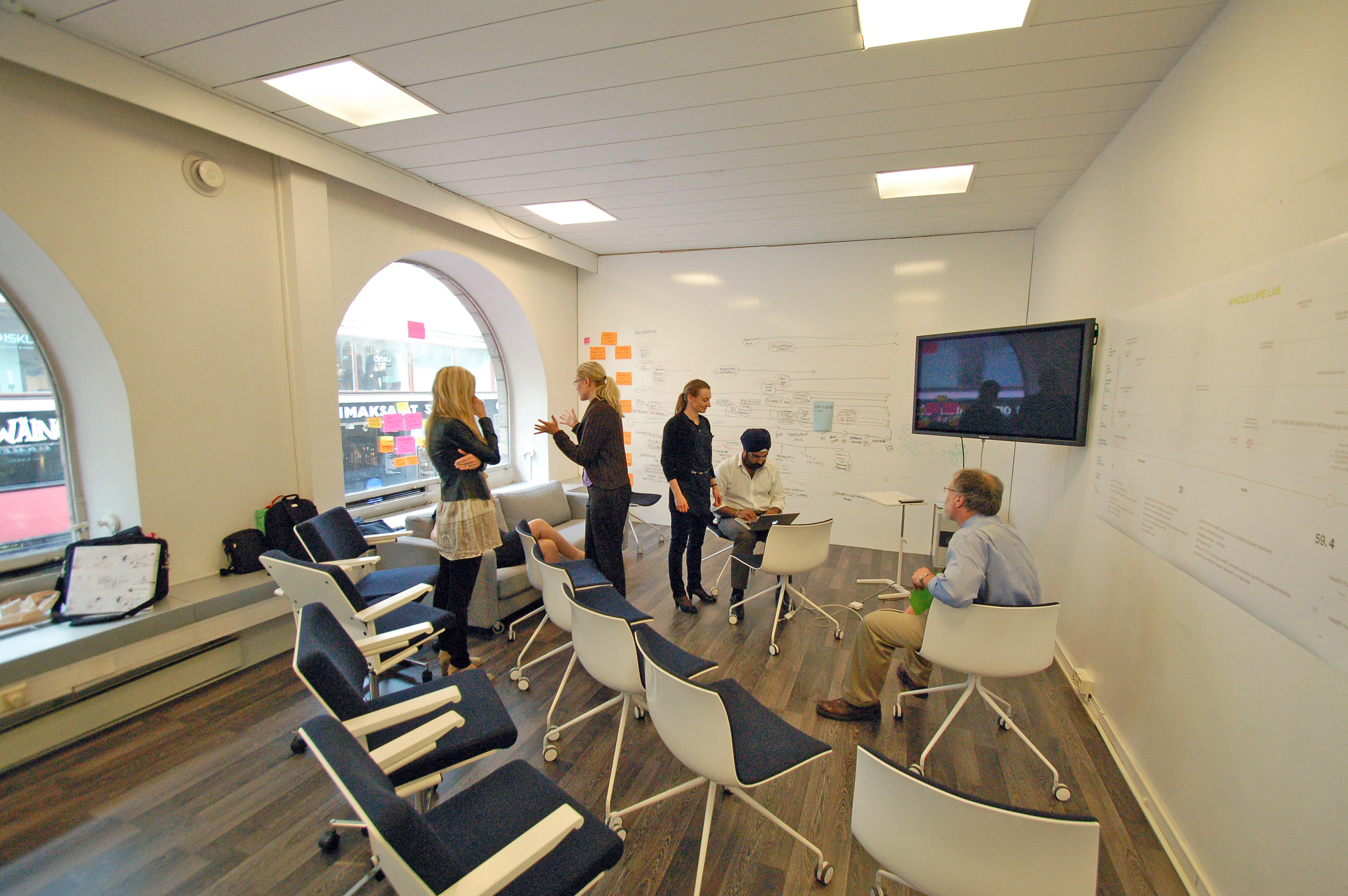
Finishing up slides just before the final review
An HDL Studio works collaboratively on a single holistic proposal and then shares its findings in a final review similar to that discussed above. Months before the studio started we were working to secure a group of 3-5 high level guests from Finland and Brussels who have a vested interest in the theme of the studio. Having the right audience who is both committed to the topic and acutely aware of the nature of the challenge is very important because it makes them good critics, and ultimately good champions.
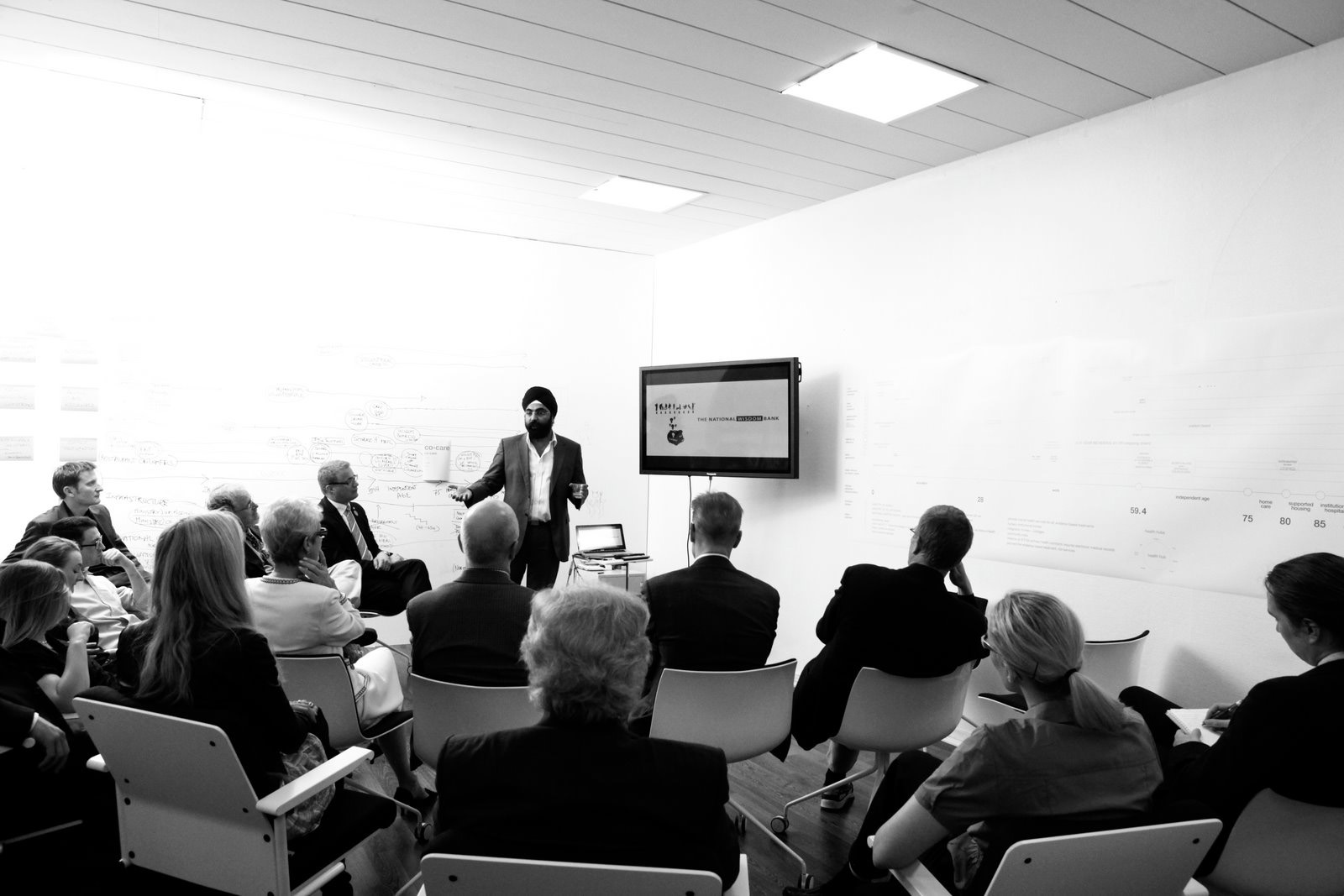
Indy Johar presents the HDL Studio on Ageing's findings. Photo: Ivo Corda
The studio gives a presentation of 30 minute or less sharing how they define the challenge, what opportunities they see, what barriers they perceive, and then outlines a collection of specific project ideas that coalesce into a "roadmap" towards strategic improvement. This is the synthesized outcome of their week in Finland and it may be accompanied by slides, videos, whiteboard drawings, handouts, or any other medium they see fit to use.
After the presentation concludes, we transition into a conversation. This is a moment where the specific nature of the physical space is very important. For these final reviews we pushed the main work table out of the way so that there's nothing between the person presenting and the audience. Once the formal presentation is over, the presenter can sit down and a conversation among peers flows easily. Would there have been a pedestal, table, or other barrier in between the interaction would be too rigid. Making these transitions seamless is important because they are the points where momentum can easily be lost.
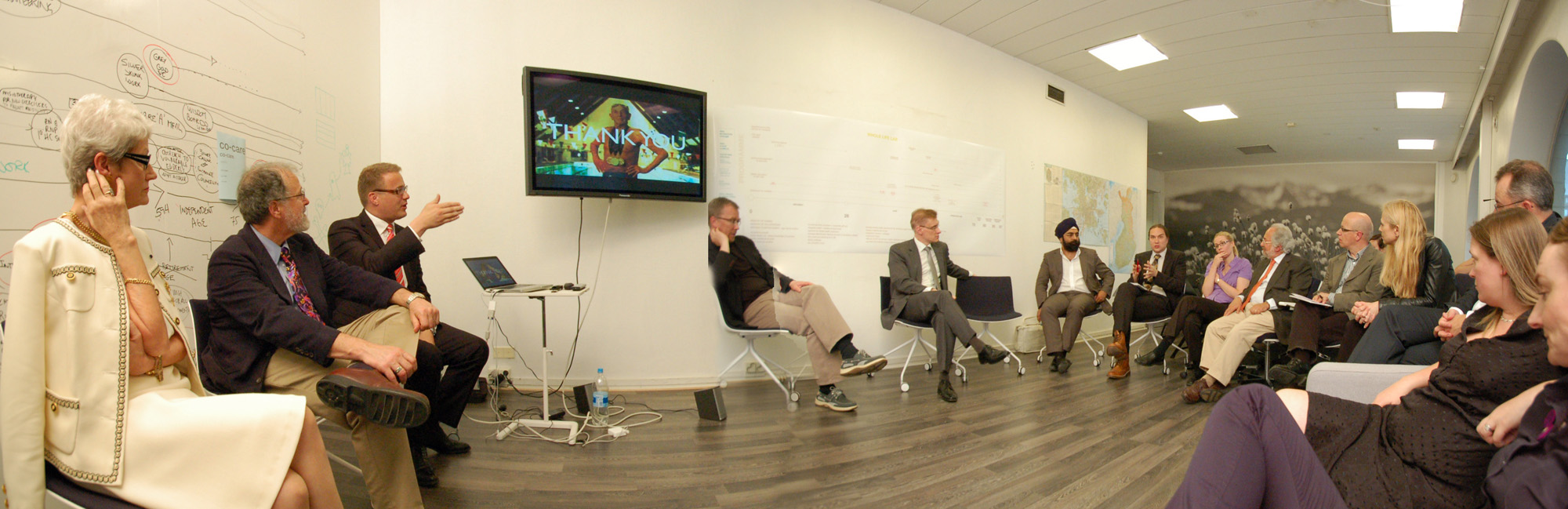
As simple as it sounds, having the chairs in a circle really does yield a more active conversation
The worst thing after a presentation is to leave too little time for conversation, condemning what dialog does happen to be mere platitudes and clarifications. Since the two-way exchange of ideas during conversation is our focus in these review sessions, we leave ample time to discuss. In the case of the HDL Studios this summer we had 60-90 minutes of conversation after the review, which is just about enough to process some of the new knowledge which has been shared by the team.
Dinner
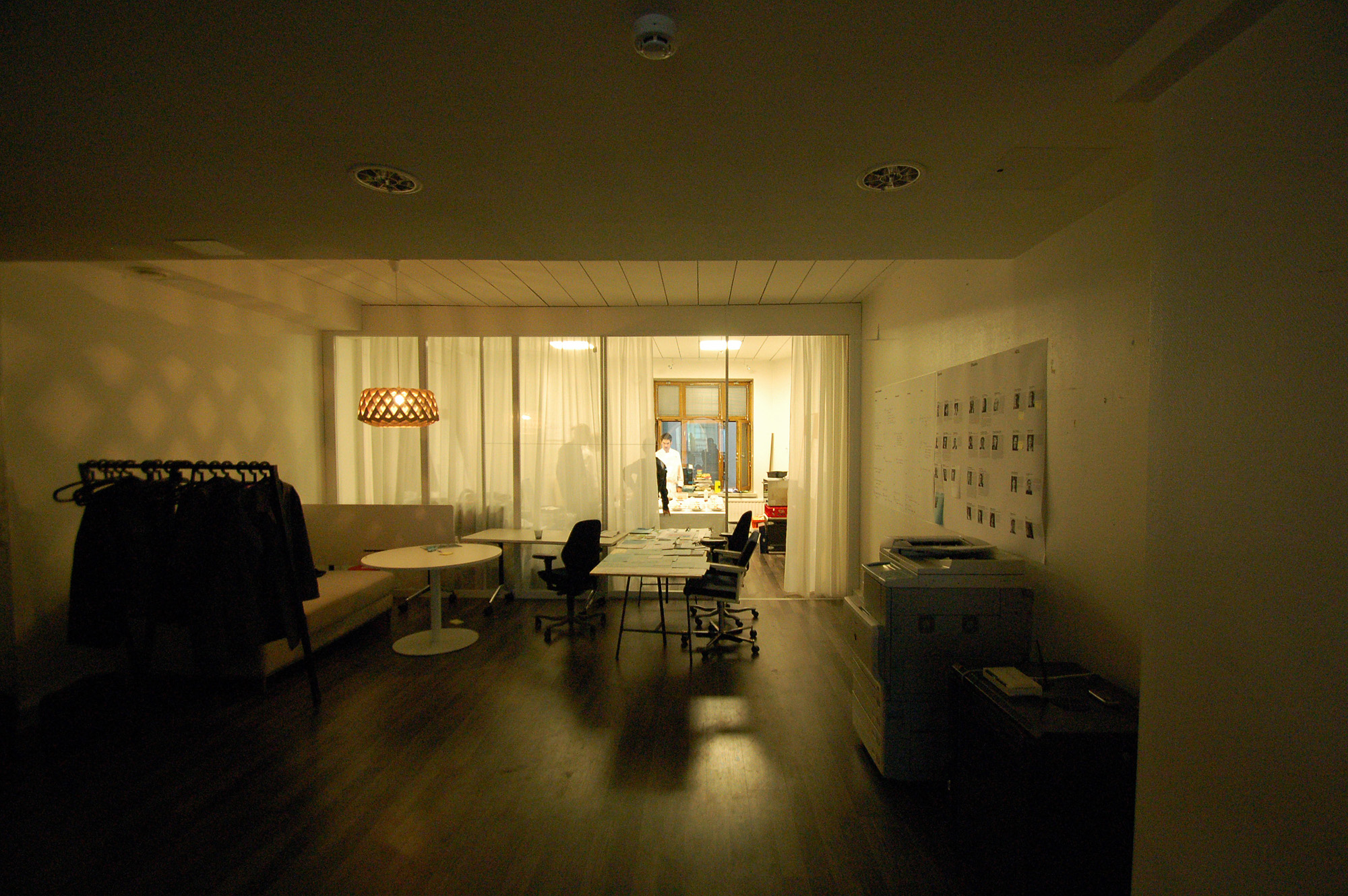
The research office doubled as a field kitchen for the catering staff
After a good stretch of discussion about the presentation, we transitioned again from the review to dinner. Since the studio table had been pushed out of the way, the catering staff could set the table for dinner while things were wrapping up. Having dinner in the studio space with the studio, our guests, and HDL/Sitra team members allows the ideas of the week to settle in through a different, more casual mood. It's both a celebration of an incredible week of effort and a real working dinner wherein the review conversation is revisited and continued. Perhaps most importantly, moving from the review to dinner allows us to spend more time together stewing on the ideas without resorting to an awkwardly long meeting.
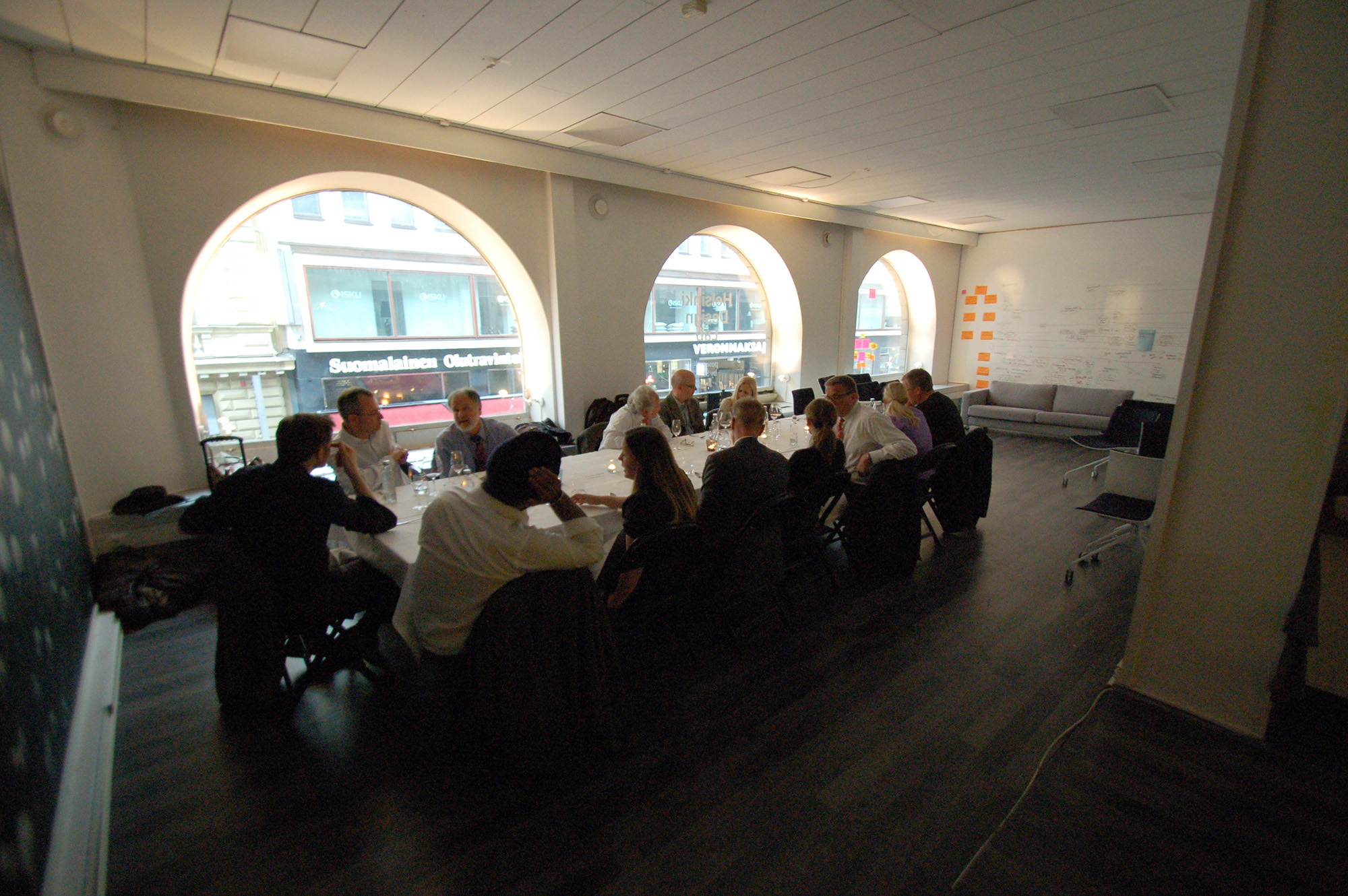
Dinner in the studio
By the time everyone leaves on Friday night, there will have been a good four to five hours of intense conversation around the recommendations of the studio team. Especially when dealing with strategic questions that are often complicated and messy, having a solid bit of time to properly talk through things is important. The danger of a short conversation without enough opportunity for back and forth is that the participants use the same words without ever sharing a common understanding. It's a fact that understanding takes time, and that's what the review/dinner pairing is designed to deliver.
Next Steps
We'll address next steps more specifically in an upcoming post, but while we're on the topic of the Friday knowledge transfer it makes sense to discuss a bit of the practicalities of how the conversation moves forward. If the review and dinner are about developing a sense of shared commitment and understanding, next steps arise out of shared opportunities. To help narrow down and specify the nature of those opportunities, HDL will continue the conversation with our stakeholders in Finland over the coming months. To aid this longer phase of discussion, the review and ensuing "critique" were recorded and documented in a summary pamphlet by the studio assistants. We designed the review/dinner from the point of view of what would make that experience as effective of a knowledge transfer environment as possible and then added into the mix a documentary capacity which can add longevity.
Sample schedule
- Months before review: identify and confirm guests
- Weeks before review: set up dinner and other logistics
- Friday 10:00: presentation "dry run" with Studio team and HDL to test the story and work out the bugs
- 15:00: move studio table and arrange chairs for review
- 15:45 guests arrive
- 16:00 presentation starts
- 16:30 presentation concludes and conversation begins
- 17:45 conversation slows down as people get hungry
- 17:50 a short toast before sitting down to dinner
- 18:00 dinner begins and the conversation continues, lasting as long as the table likes
Posts tagged with "How-To" contain reflections on designing, organizing, and operating the HDL Studios, a series of three collaborative, multi-disciplinary problem solving experiments we held this summer. These posts are meant to be informative for others who may also be exploring ways to put the design process to use in new ways or those who find themselves struggling to work between disciplines or silos.
—
Last time we discussed how to put together a great Studio team. The flip side of assembling a talented group of people is that they tend to be incredibly busy, meaning that we were lucky to get a solid week of their time.
In this short window of time, the studio members had to meet and get to know each other, acclimate to the culture and locality of Finland, soak up the specifics of the Studio challenge, and—oh yeah—they also needed some time to work together towards developing a holistic, integrated framework for thinking about the challenge and then document it in a way that would spur conversation. With only a week to accomplish all of this, we had to make every minute count.
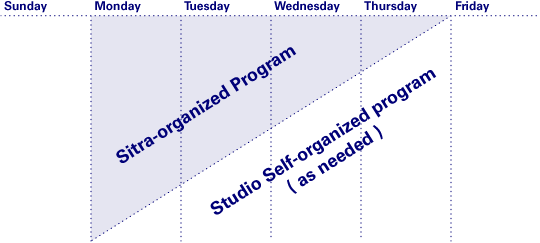
The basic outline of the week starts with stuff HDL arranged ahead of time and ended with a self-directed schedule
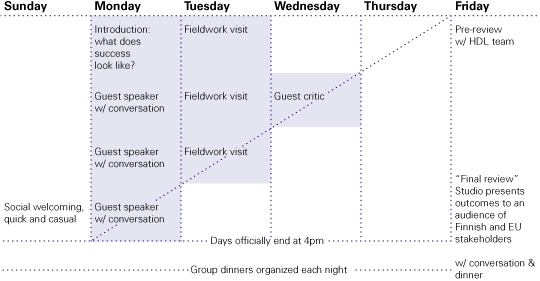
The actual schedule for each of the studio weeks was something like this
The general scheme for the Studio week started with Monday and Tuesday full of pre-arranged meetings and visits, trailing off to allow the team to define their own schedule in the second half of the week.
On Sunday we gathered for a very casual, quick dinner in the evening to welcome everyone to Helsinki and give them a chance to get to know one another. This ended early so that everyone could catch up on sleep before the busy week, some guests having traveled from overseas.
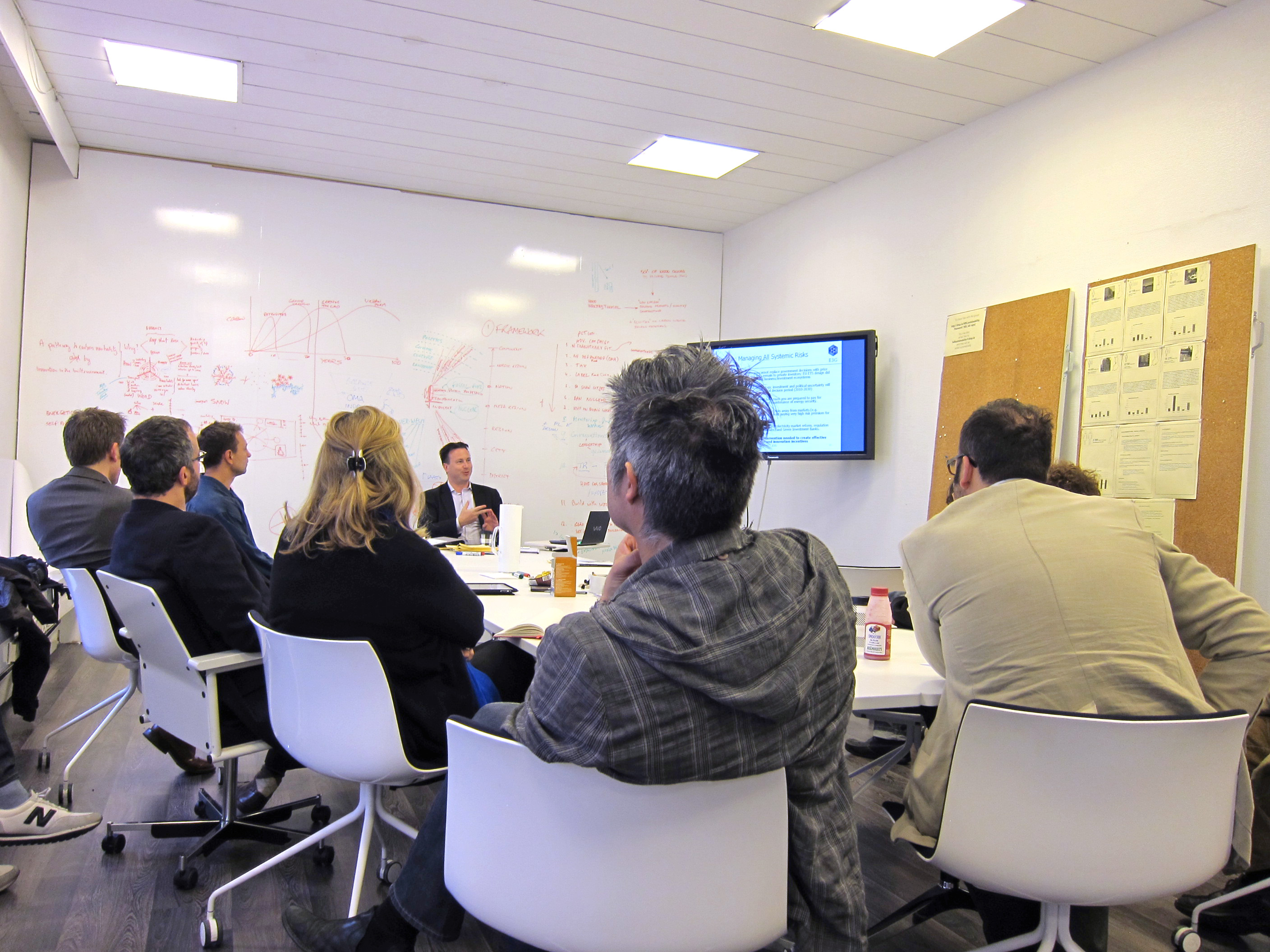
Mondays began with an introductory session where Marco shared a bit of material to explain "what success looks like" and give the studio and the studio members had another opportunity to introduce themselves and their thoughts on the challenge as outlined by the challenge briefing.
The primary goal of Mondays, however, was to give the studio a solid overview of the context that they would be working within. This was conveyed through a series of 3 or 4 guest lectures, each followed by a discussion period of about an hour. For example, the education studio had speakers talk about the socioeconomic development of Finland, the Finnish bureaucracy, classroom education and teacher education, and policing and prevention related to at-risk youth.
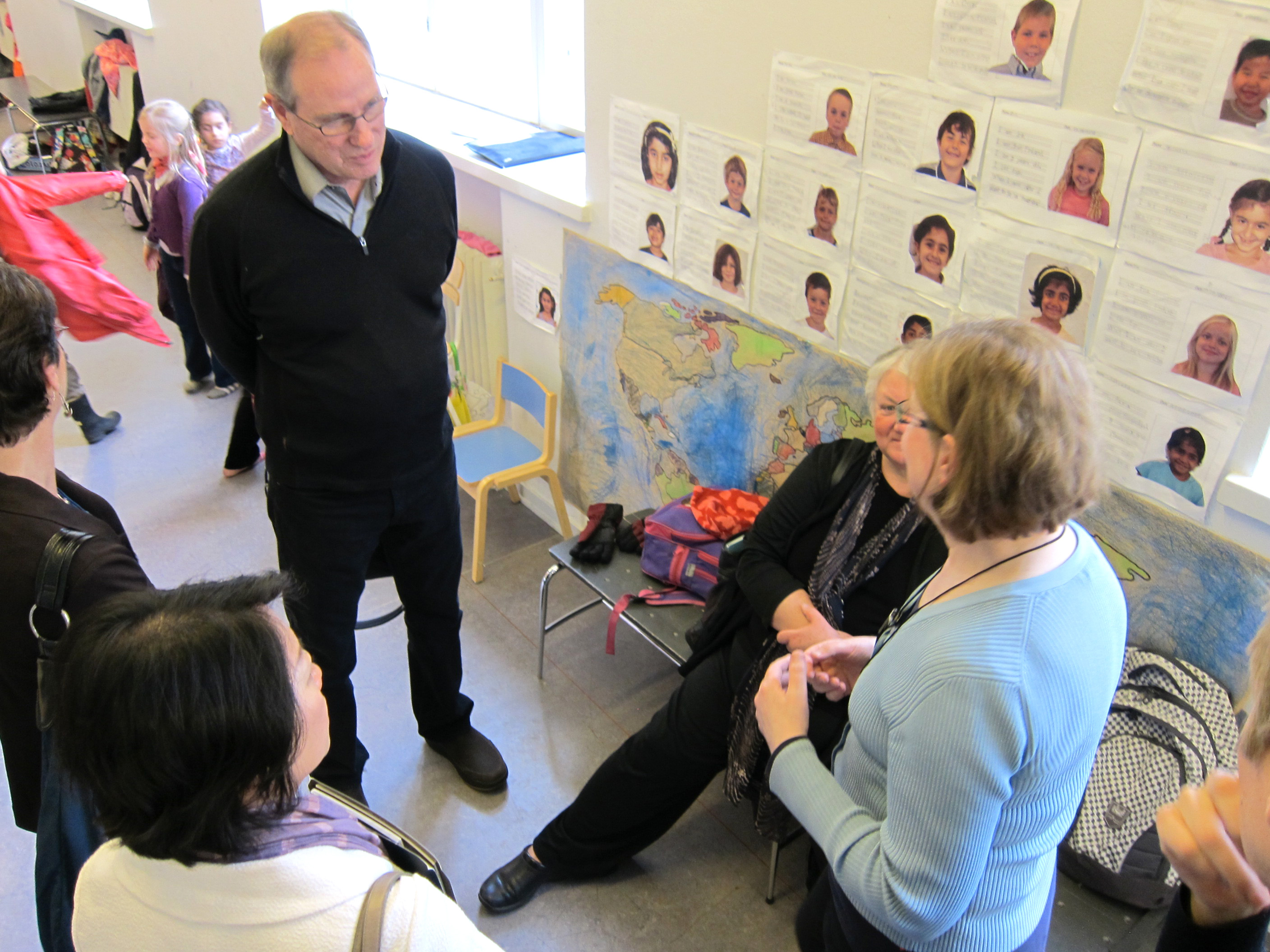
Tuesday of each studio was then spent in the field, out and about around Finland seeing first hand the reality of the challenge. To continue using the education studio as an example, this included visits to a primary school and a youth culture NGO.
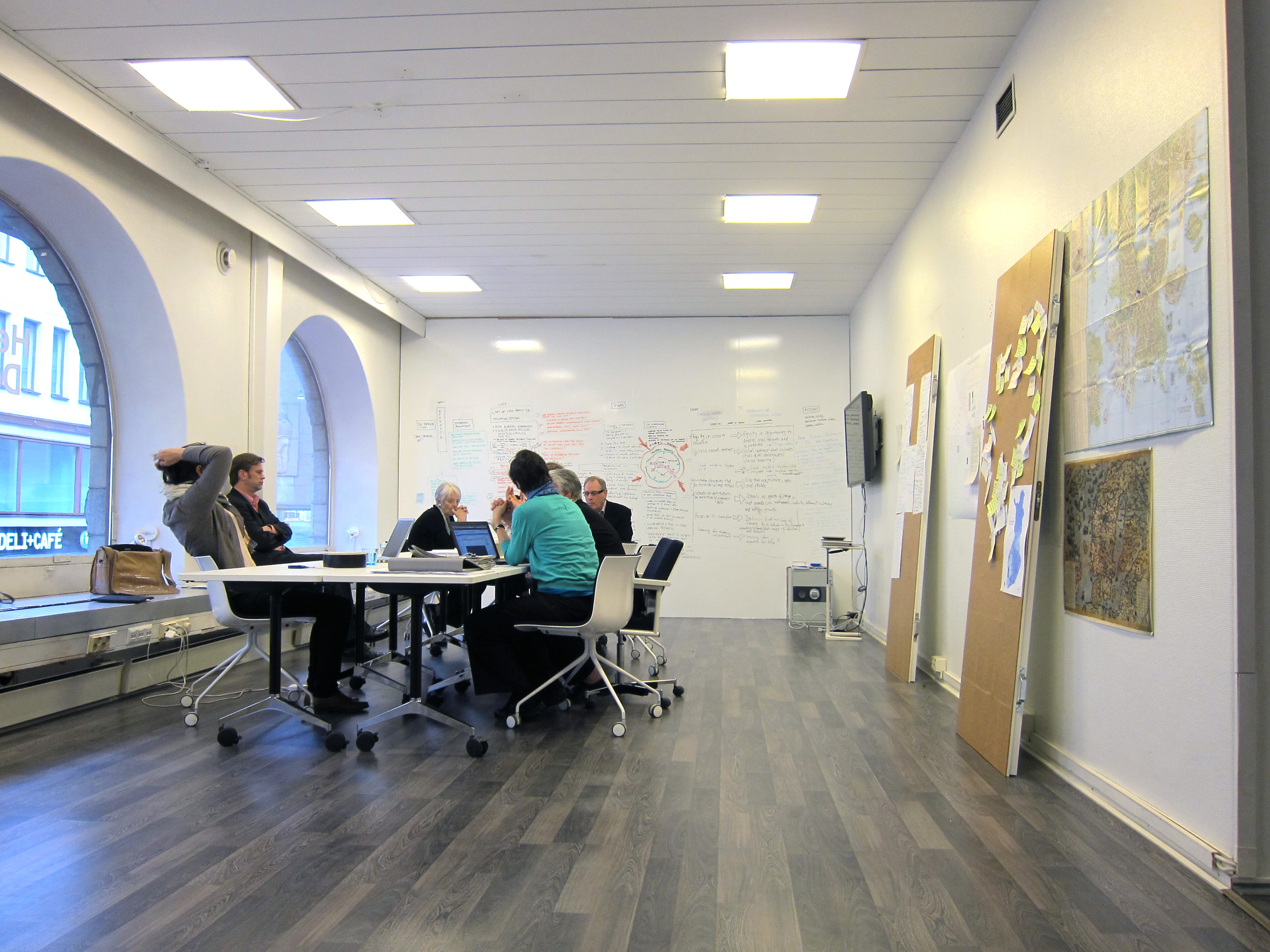
Wednesday and Thursday were left relatively un-scheduled for the studio to self-organize and use as they saw fit. During each of the three studios we found that there were requests for additional meetings, so we were able to quickly arrange additional site visits or bring in more speakers on an as-needed basis. Meanwhile, the bulk of these days were spent in deep discussion and debate as the studio team developed a synthetic and holistic response to the challenge.
The ultimate target for the week was a "final review," a brief presentation and conversation with key stakeholders that occurred at the end of the day on Fridays. To help keep things on track, Marco and I sat with the studios on Friday morning to hear a dry-run and provide some feedback on the clarity of the story.
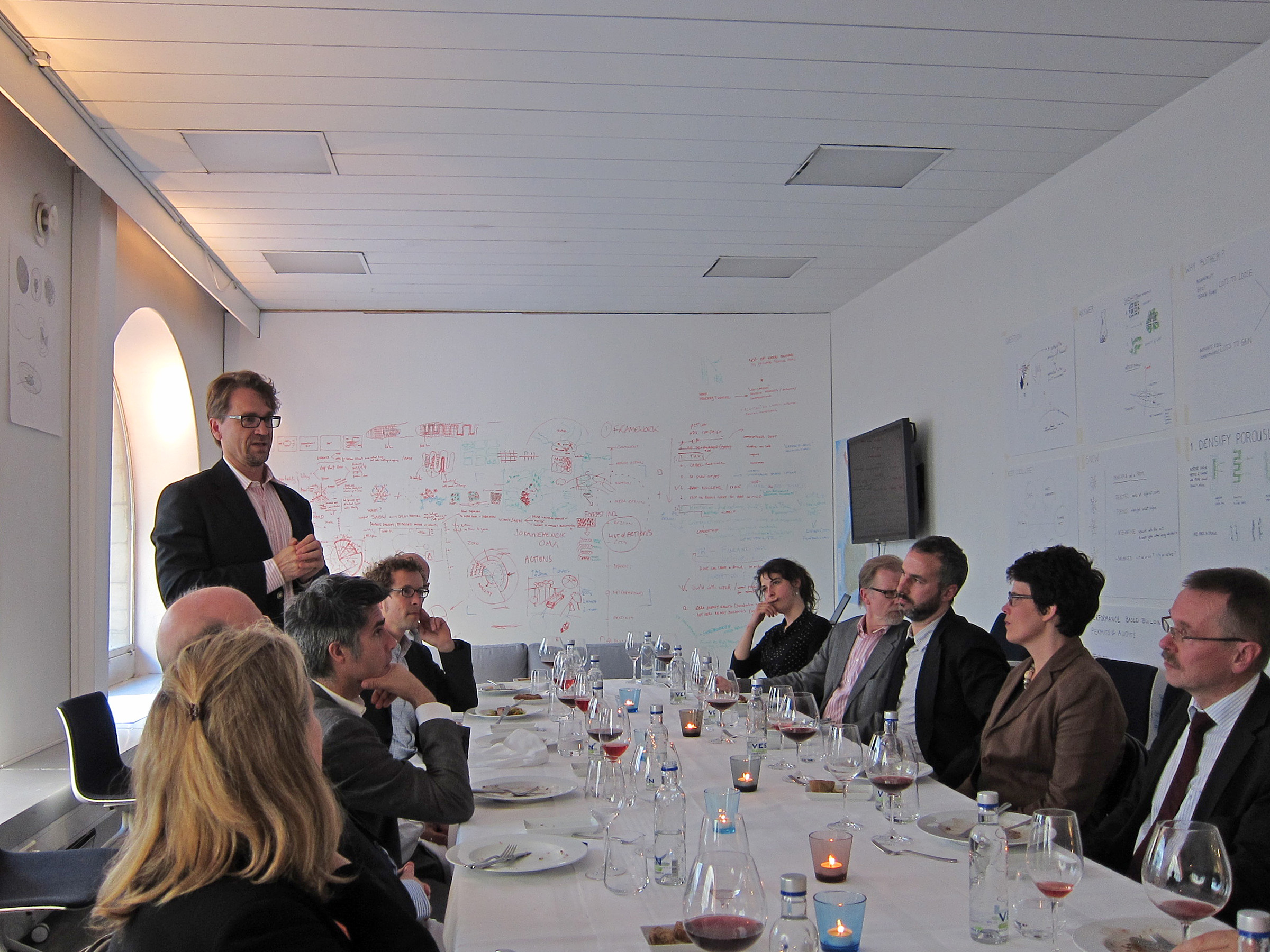
At 4PM on Friday, a group of 3-5 guests arrived and we pushed the conference table out of the way to make room for a presentation and discussion. Afterwards, we continued the conversation over dinner in the studio space, with the work of the studio's intense week covering the walls.
One week disappears very quickly during such an intense experience, and the teams were all very conscientious people who dedicated the entirety of their mental facilities to the challenge we gave them. As a mental 'steam valve' we set the end of the day at 4PM so that everyone could have a chance to rest or relax before dinner (typically at 7PM).
Dinners were pre-booked for each night of the week with the agreement that studio members could opt-out if they needed to rest. However, the majority of the dinners were with the full studios and this proved to be a very important venue for fleshing out ideas and developing the team's social bond. With only four days to really develop the bulk of the work, the Monday-Thursday meals represent a total of about eight hours of conversation—essentially another full work day.
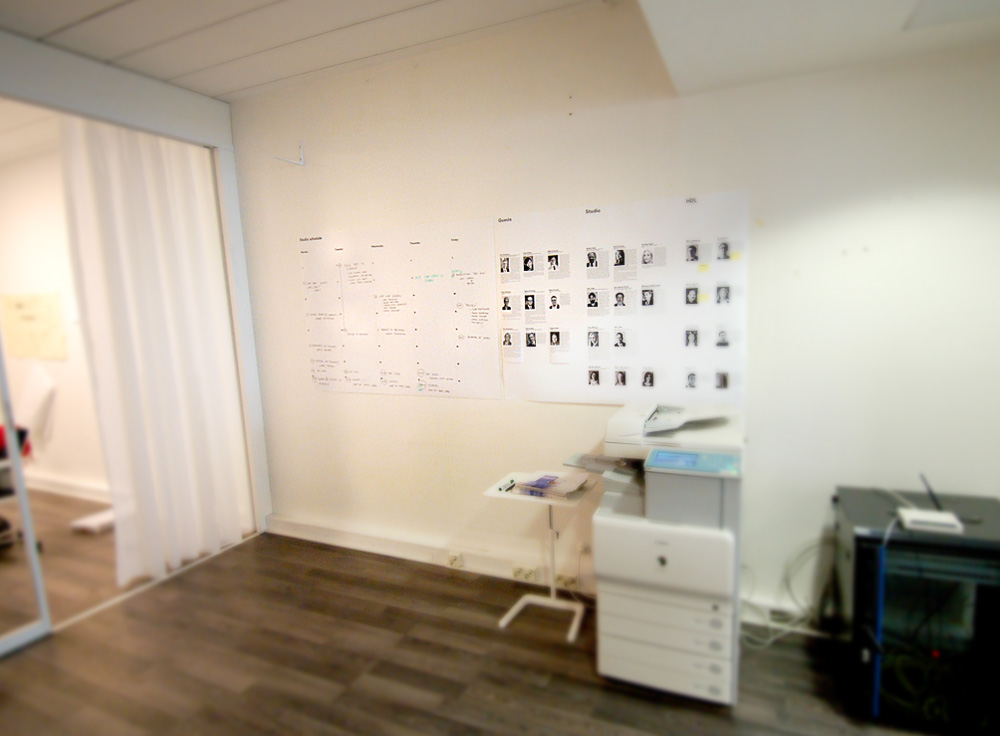
Our hightech solution to keeping the schedule up to date: a laminated poster and some whiteboard markers. We hung this live version of the schedule in a convenient corner of the studio
We also learned the hard way that it's very difficult to control a schedule that involves tons of moving parts. People change their arrival time, or become unavailable, things run late, etc. For this reason, the printed schedule that we handed out at the beginning of the week was just an overview, and we put up a wall-calendar which was updated as-needed the old fashioned way: with a marker.

 CASE STUDY Redesigning surgical instruments with careful ethnography and strategic design