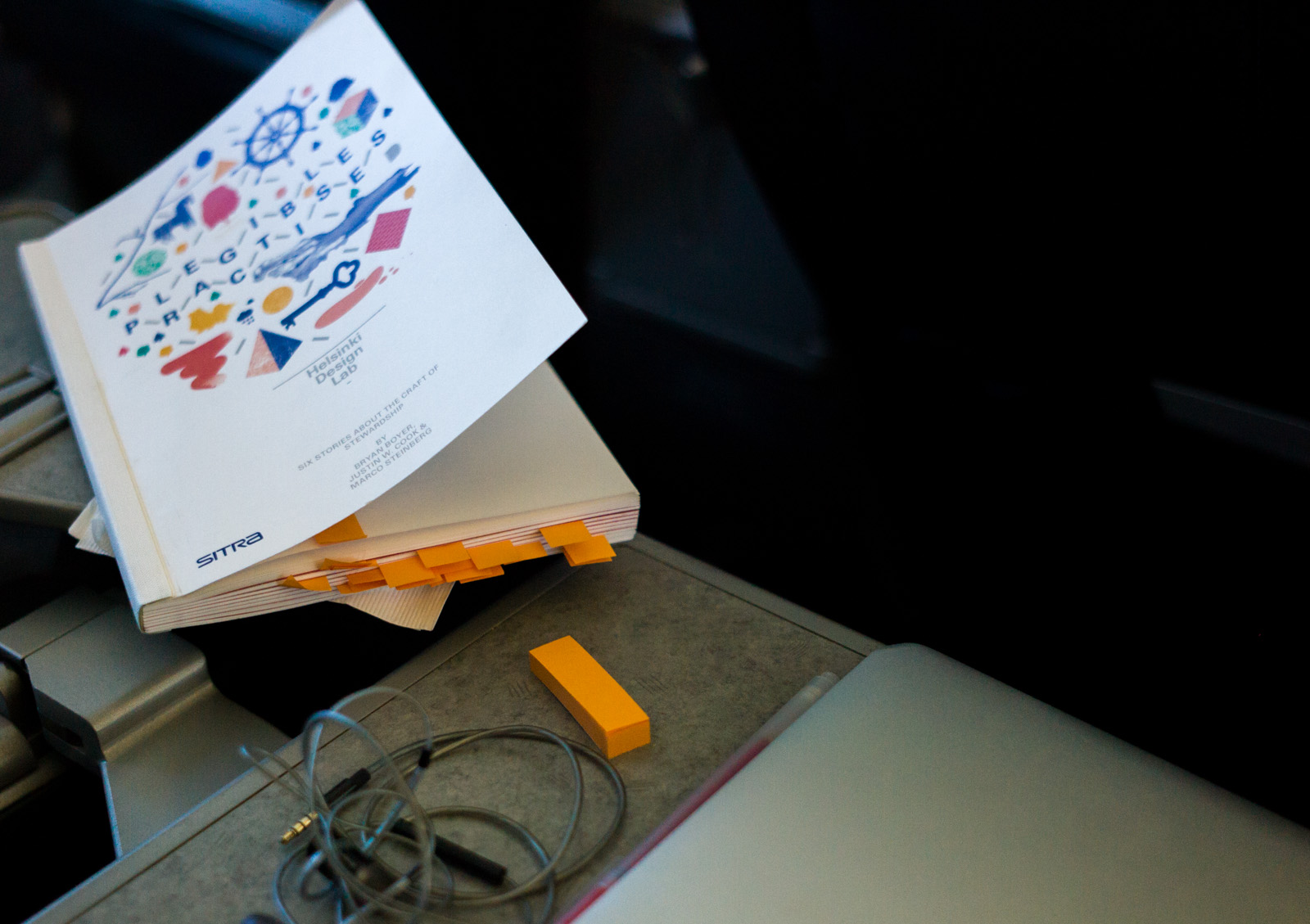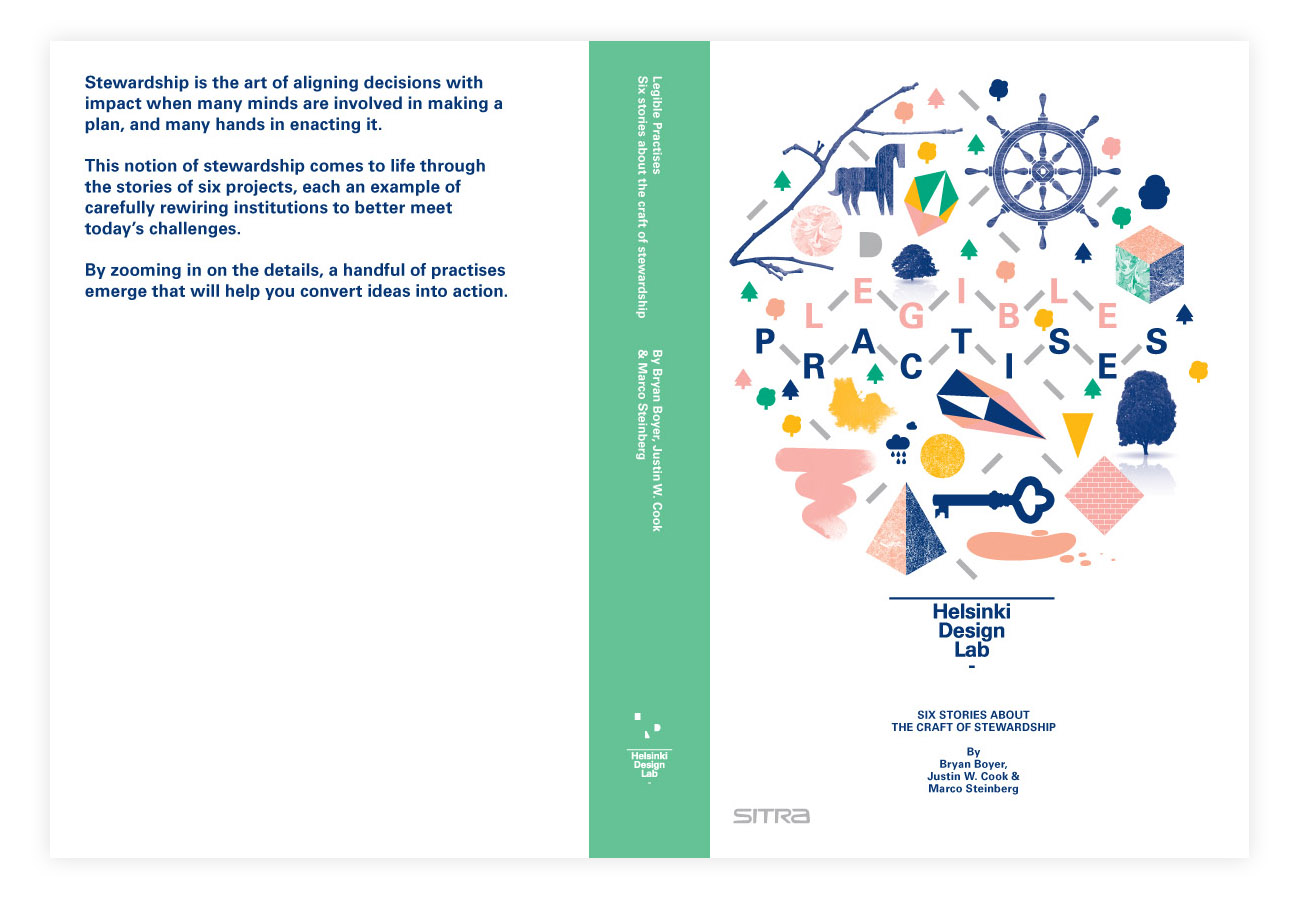
Weeknotes
On the 14th floor of the Sitra tower the view is gray through and through. A fog has set in, obscuring the horizon and veiling not-so-distant Espoo. Autumn has come to rest in Helsinki and we're welcoming the season for its crispness.
This end of the year is a time for being shipshape, and last week that meant launching Open Kitchen. Here's what that's about:
We won't teach you to cook. We teach you the business of food.
Open Kitchen is a programme that demystifies the business of food by creating a forum for you to learn from the city's experienced culinary business people who've been there and done that, and then working with your peers to build and run a prototype restaurant for a week.
Or you can watch Antto, one of Helsinki's most accomplished chefs and restauranteurs, explain it. We're very happy to be working with him, and a slate of other fine people to be announced in the near future. Needless to say, if the idea of learning from Antto and others is appealing to you, and you're located in Helsinki, please apply! You have till October 3rd.
For more on the development of Open Kitchen you can read about how we pivoted from our original idea of establishing a sustianable Grilli towards the current implementation as a sort of dark matter academy.
Maija is busy with Brickstarter, still posting a seemingly endless quantity of fact cards, whilst also working on a set of service journey mappings for self-initiated urbanism. At the macro level, Dan and I are working on the longer term future of the project by refining the scenarios I mentioned last time. That makes it sound more coherent that it is, really. There's a lot of scribbling on paper, sometimes on a whiteboard. More lines than words often.
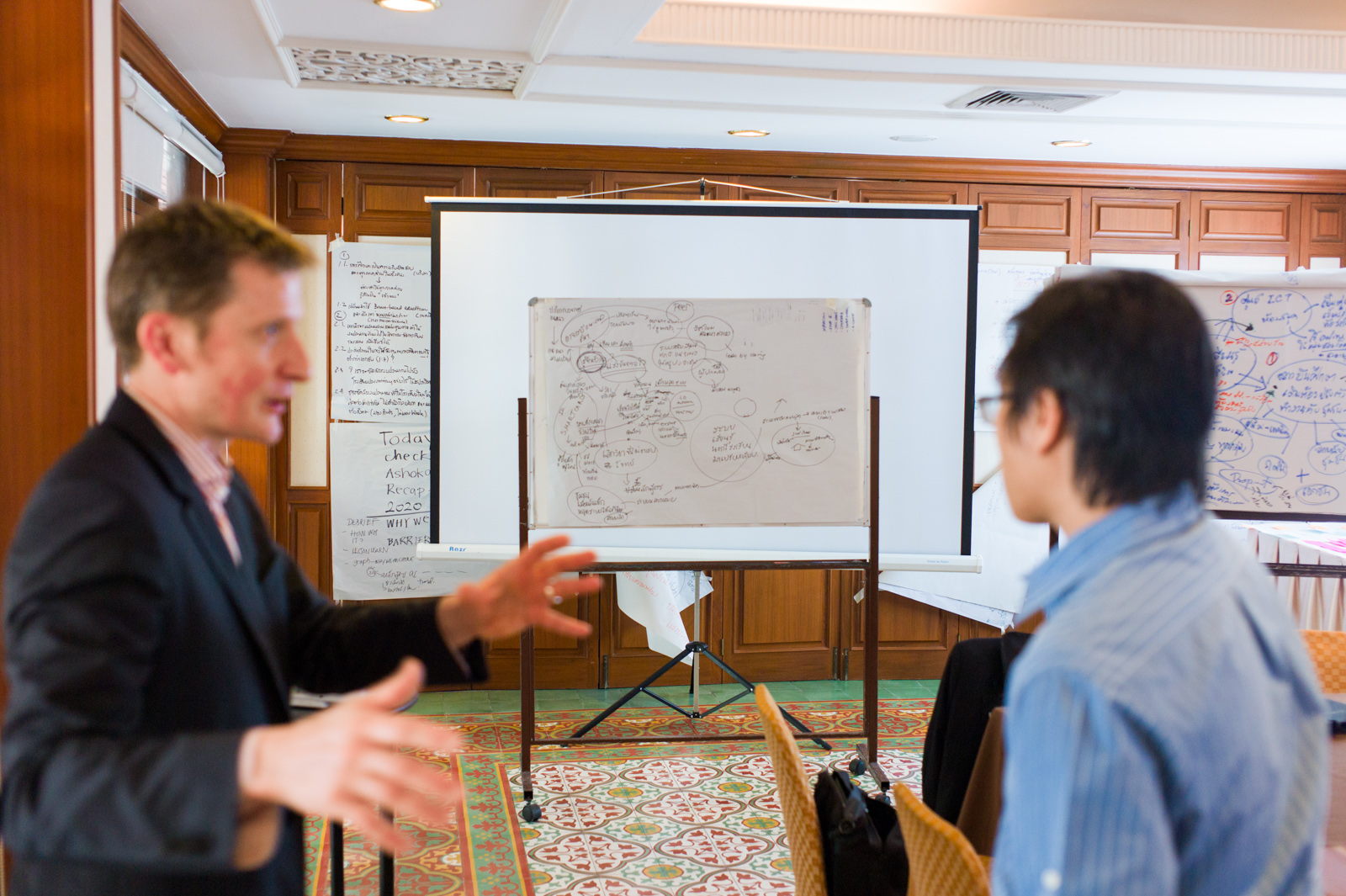
We spent the first half of last week at MindLab in Copenhagen with Runa, Niels, and Christian, as well as Tom Loosemore and Russell Davies from Government Digital Services, part of the UK Cabinet Office. This was the third and final HDL 2012 case study pairing and it was—like the previous two—a brain-smacking experience. Lots to take in, lots to process. Our challenge is going to be choosing what to focus on with such a wealth of craft knowledge generously shared by MindLab, GDS, and the other case partners.

"Mission badges" from GDS. A nice touch of material culture inside their org.

Russell brought a time lapse camera to the meeting.
As with the previous sessions, we looked at one project from each team and left ourselves with a rather wide open agenda so that there would be plenty of room to follow the conversation as it goes. Dan has started collecting his notes from that session. I'll do the same shortly and then we'll have a brainmelt with Marco and Justin to collate the brightest spots from all six projects we've learned about.
Our first pass is via language. What are the words that people use to describe their work? What are the terms that they use, and the meaning they imbue those terms with? This is less of an arbitrary choice than it may seem: one of the threads of consistency that bind the six projects we looked at is that they're all driven by hyper-communicators. People who just really know how to explain things, to share them, and to make them real for others.
HDL 2012 is beginning to consume my calendar, and increasingly eating into others' as well. Maija, Marco, and I spent an afternoon checking logistical details. All is well there, though some items remain outstanding.

On the boat to scout out locations

Are you the right place for us to have HDL 2012?
The Design Exchange Programme is growing a bit. Jaana Hyvärinen has joined the City of Helsinki Social Services department, where she will be helping build a culture of service design. Sara has a new blog post describing her busy autumn. We should have two more posts open shortly. As ever, we'll post here and on Inside Job when they're live.
Marco has written a blog post on the Low2No site explaining how that project has changed tack a bit. Worth a read if you've been following our work on that one.
And just now the infinite gray outside has broken, giving the Baltic back to us in shades of dirty cobalt. Welcome to Monday.

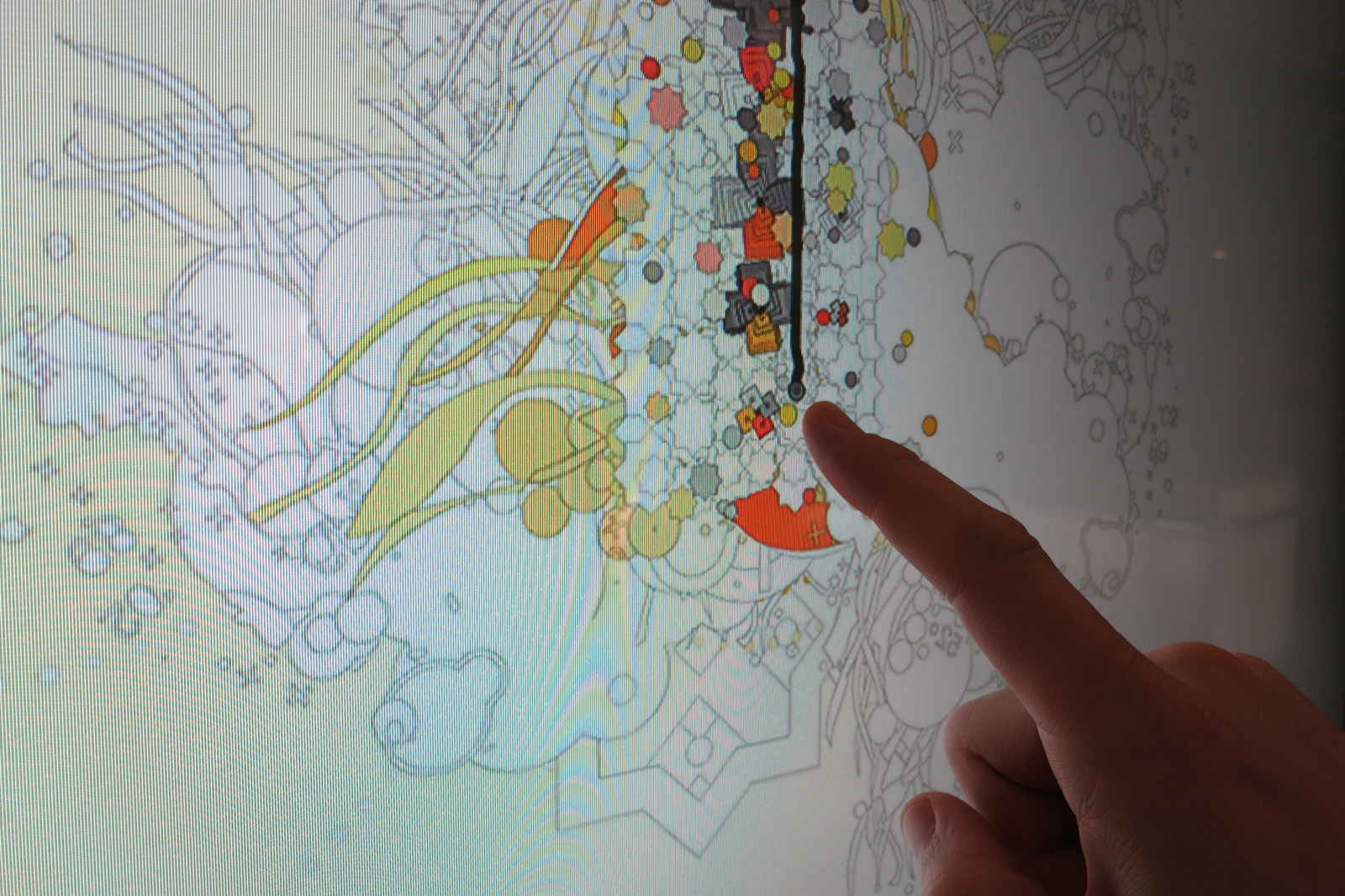
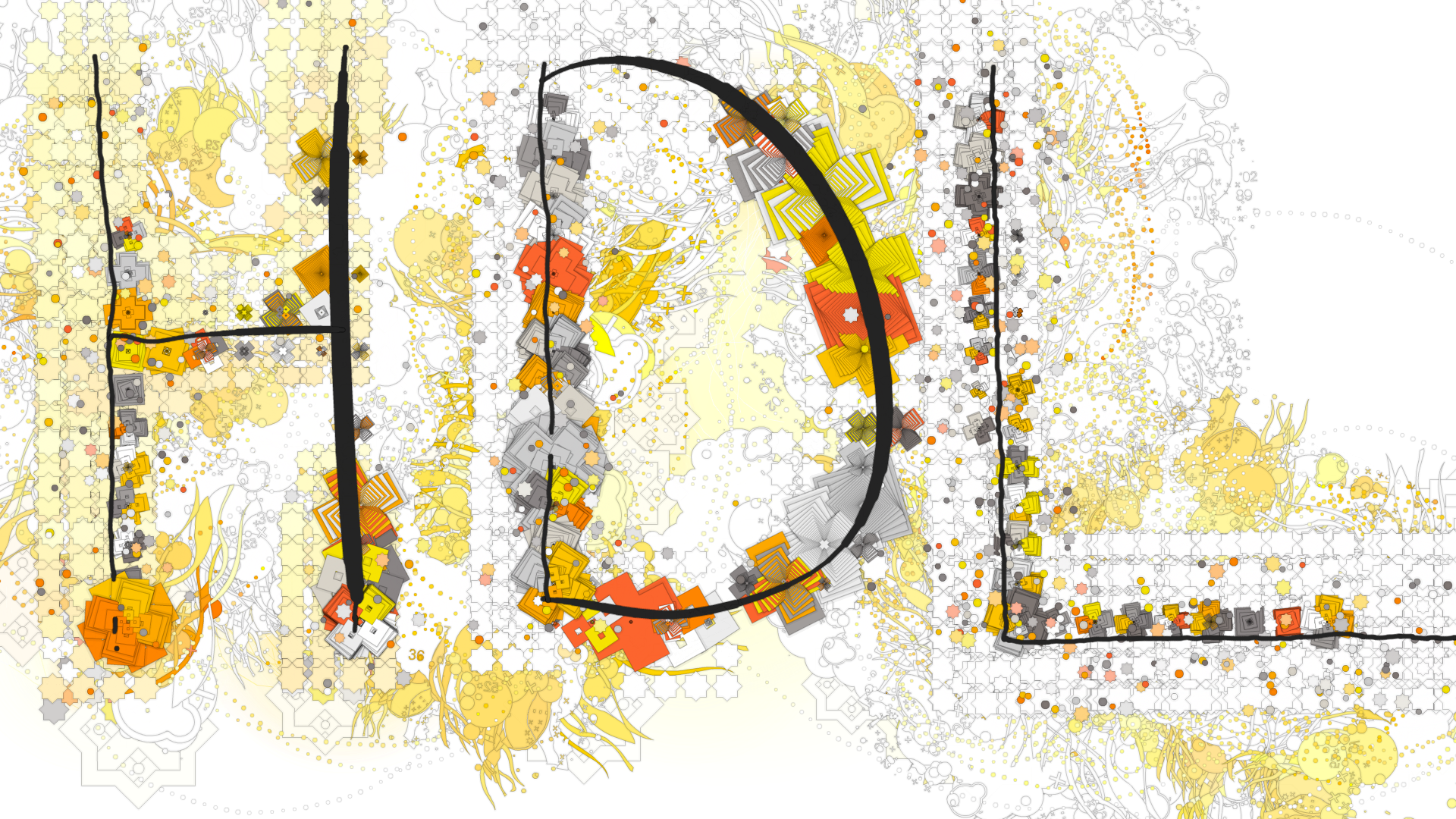
Some scraps from the production process for the Open Kitchen video, included for no other reason than they look nice. Starting from the top: digital text, hand traced text, cloned to fill out the words, and then being animated to write itself onto the screen.

Rory Hyde has written a book about future trajectories for architecture and design practice. Dan wrote the forward and I'm one of the subjects, so we're happy to have Rory in town for a book launch/talk at the Paviljonki tomorrow, Tuesday the 11th at noon.
In all honesty, writing this weeknote is taking some effort on my behalf. My brain feels sintered to the details of our various projects and stepping back to take stock—let alone reflect upon—the lot of them requires more effort than it should.
But we do this weeknote thing so that we have a sense of history. It's useful to be able to look back and remind ourselves what last week was like, or what was going on one year ago, even how we felt today-minus-104-weeks. We value this sense of perspective, so we push ourselves to write even when there are other things to be done.
First the facts. Dan spoke as part of Nokia's Designed in Finland talk series. Marco was in Copenhagen midweek to give a talk at MindLab. He managed to work diapers into his talk.
I found something new in Helsinki:

Helsinki's smallest park. A moment of pure joy. No explanation needed and none available.
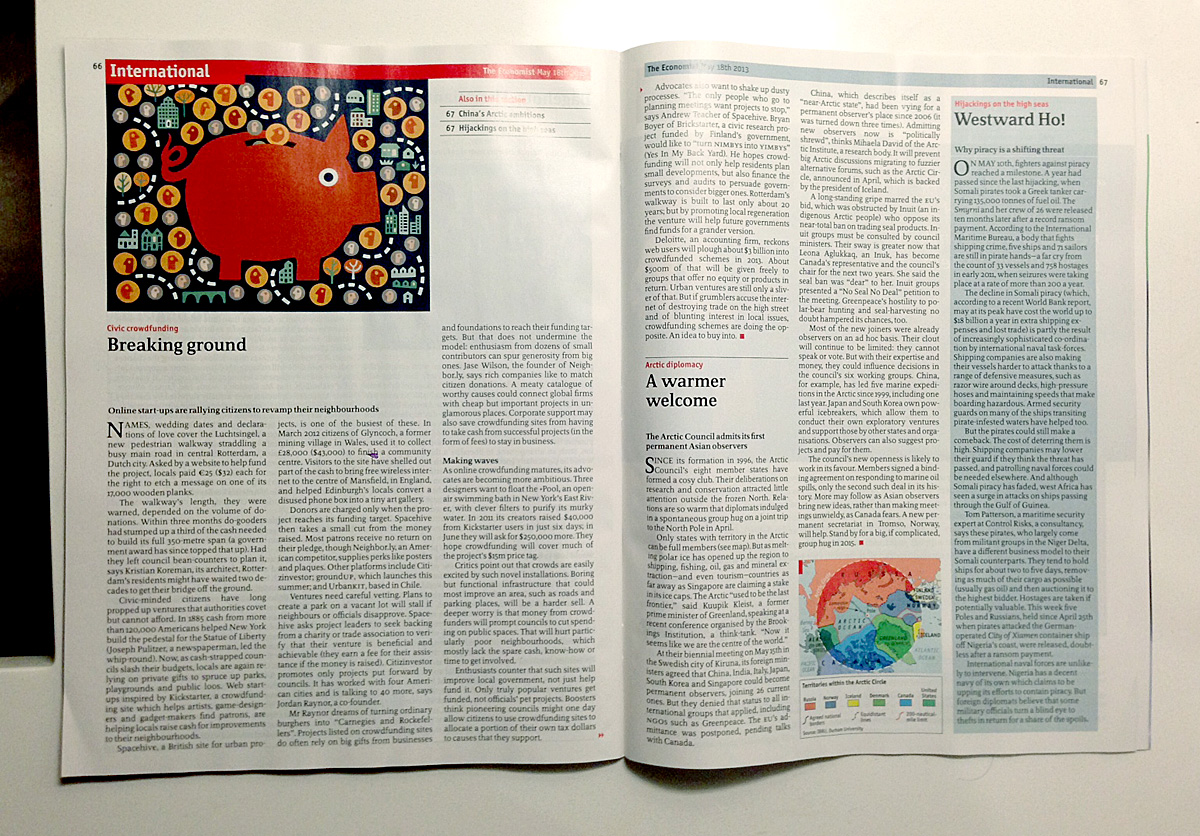
Speaking of new parks in town, the week's haul of Brickstarter-shaped doings included Dan on the horn with the Guardian, resulting in this excellent article about crowdfunded urbanism including Brickstarter. Maija continues her diligent and careful documentation of other projects that overlap with the Brickstarter conversation. Having worked through all of the examples we could find in Finland, she is now turning her attention to international precedents and analogues. Meanwhile, we've had a few sessions with the larger project team including Erkki and Kali to balance out the portfolio of mini-projects under the Brickstarter umbrella.
Dan tweaked the Brickstarter introduction to make it more clear that we are working towards a prototype or a sketch of the service, and not intending to develop and operate a service ourselves. Attentive readers will remember that last week we were assessing a variety of scenarios for next steps, and that discussion continued this week. We're hoping to have some decisions here sooner rather than later, and when we do it will be easier to be explicit here about where Brickstarter is headed.
Kalle's video editing spilled over into Week 179, but we won't give him a hard time about it since he had never used Final Cut before last week. How's that for a learning curve! We finished a draft of the Open Kitchen call for applicants video and have sent that to Antto and Elina for comments. We're planning to begin accepting applications the week after next and getting the video nailed down is one of the larger outstanding to-dos. Lots of other to-do items before then, including minor things like crossing the tees and dotting the eyes on the wording of the dual language Finnish/English application. Oh, but before that we have to finalize the application process… and write it all up.
On a related note, congratulations are due to friend-of-HDL Cynthia Shanmugalingam and her partners over at Kitchenette. They're just launched a street food incubator programme based in London and we will be following along with great interest.

Restaurant Day happened again. Note to would-be amateur restauranteurs: dancing, human-scale versions of your foodstuffs are a surefire way to draw a crowd. Delicious empanadas also help.
Last on the project rundown is HDL 2012. We're operating on a couple different wavelengths at the moment: Dealing with near-term logistics for our third and final case session in Copenhagen next week, beginning to coalesce the content from the four cases we've already heard from, and ramping up the pace on logistical and content development for the culminating session in Helsinki. Venues, printing timelines, writing rotas, invitations, and moments of "why are we doing this?" are in the stew right now. We know why, of course, but we've been revisiting the framing of the discussion—in a healthy way.
My bedside reading list has been forming useful bridges to the daily work including, in particular, this assertion put forth by Richard Sennett in The Craftsmen [sic]:
"We are more likely to fail as craftsmen, I argue, due to our inability to organize obsession than because of our lack of ability."
The best way to rectify that is to organize our obsessions, no? With HDL 2012 we are looking at public sector innovation and trying to codify the crazy.*
*Only those crazy in a good way.
Signing out of my hotel in London today I made the mistake of putting the date down as September. Not yet, Bryan. Not yet. But this calendar mishap does reveal my state of mind. As our projects become more concrete new details emerge. New things to be taken care of, things to be considered, and somethings things to be deliberately ignored. But anyways, a lot to keep track of.

Team calendars are an indication of what our life is like right now
Maija and Kalle have been buzzing around making movies. Maija and another Kalle were shooting a pitch so that we have some plausible content in place when we release the Brickstarter mockups as clickable pages (soon!). Kalle spent an afternoon with Antto Melasniemi in Tukkutori filming the call for applicants video for Open Kitchen. They're both now heads-down editing.
(Aside: we've been watching lots of pitch videos on Kickstarter and elsewhere to learn what makes them effective. This is one of the gems we came across:Informative, unique, and hits exactly the right tone for their audience, one suspects)
Open Kitchen is seeing a smörgåsbord of activity, suitably. We're (still) wrapping up contracts, commissioning work on the brand and logo, booking ad space for the fall, and finalizing the application process so we can open that at the start of September. Elina and Antto have a good feel for most of these, and collaborating with them on the project continues to be a joy.
Although we like to do things in the open, and this project even has "open" in the name, it's kind of nice that there is not much of a public presence for the project just yet. Beyond the book we have not released many details which means we're not having to answer lots of questions. In September we will publish the call and this will change, but we'll be ready.
Brickstarter, on the other hand, has been getting tons of attention. This is all immensely positive, of course, and we've been happy to see interest from across Europe, North America, and elsewhere. Marco, Justin, Dan, and I spent an afternoon out of the office sketching scenarios A through D for Brickstarter (more like A through X).

Helsinki doing what it does in summer
As we decide next steps we're balancing scenarios based on our understanding of the needs of citizens and municipal governments, Sitra's abilities, and what sort of interest we can attract from partners and collaborators. Do we build Brickstarter as a running service? If so, who will operate it long term? Do we build half of it and ensure a good handoff to another team? Maybe, but who will that team be? These questions have been part of our dialog since the start but we're approaching a decision point, thus scenarios A through D.

In the middle of the week Dan and I did a book reading at the Paviljonki. Sure is going to be sad to see it close up for good in September.
And then there was London. Marco and I came here under the auspices of HDL 2012 to learn from Nesta and IDEO about how they make innovation happen. Our focus this year is on stewardship, or the craft of innovation. During the session Philip Colligan pointed us to W. Brian Arthur who is very compelling on the subject of "Deep Craft" (conveniently, coincidentally, transcribed by Matt Jones):
Deep craft is more than knowledge. It is a set of knowings. Knowing what is likely to work and what not to work. Knowing what methods to use, what principles are likely to succeed, what parameter values to use in a given technique. Knowing whom to talk to down the corridor to get things working, how to fix things that go wrong, what to ignore, what theories to look to. This sort of craft-knowing takes science for granted and mere knowledge for granted. And it derives collectively from a shared culture of beliefs, an unspoken culture of common experience.
I like this a lot because it encapsulates in a more elegant way something that I've been calling cultures of decision making. As we study the craft of public sector innovation—this particular culture of decision making that's emerging—we're approaching it as anthropologists might. In conducting these sessions with high-performing innovators we're attempting to understand the rituals, trinkets, roles, and spaces that populate their work. And often, I should note, our own.

The 18 pages of dense notes in my sketchbook are testament to the caliber of conversation. Thanks to Philip Colligan, Katy Bentham, and Melani Oliver of Nesta; John Craig of Innovation Unit; and Hailey Brewer and Suzy Stone from IDEO. Many thanks also to Nesta for hosting the sessions, including a top notch picnic!
This took longer than it should have. We've been back from the summer holidays for a solid week now, but as you can see there is some lag getting back into the habit of writing.
Last time I was just heading to New York to meet up with Justin for our first of three HDL case study sessions. We had a very packed day with Rosanne Haggerty and her team from Community Solutions sharing their work in Brownsville and Rodrigo Araya and Alejandro Aravena reflecting on the reconstruction of Constitución. Justin and I are now processing those conversations and distilling it with the goal of writing two short case study papers.

Monitor kindly loaned us one of their stunning conference rooms
On a meta level the session was instructive as well. Despite careful planning and logistics (and excellent facilities thanks to the Monitor Group), the agenda for the day was too ambitious. We spent more time on introductions and basic context than expected and felt the crush of the clock at the end of the day. In the next two sessions we are going to attempt to spend a day and a half total. Try, learn, adjust, repeat.
Next week Marco and I will zip to London to conduct the second (day and a half!) session, this time with Nesta and IDEO. Nesta are bringing their Creative Councils project and IDEO are going to share some work they've done with the US government. In other words, there's not a direct overlap in terms of content. Huh?
In organizing these case study sessions we've paired teams with slightly different content focuses as a way of ensuring that the conversation is about how innovation gets done. Our hypothesis was that by pairing up mismatched content the overall conversation would naturally veer towards the intersections between the two groups, the methods and approaches that they use to move forward. The first tentative evidence we have from the session in New York is that our hypothesis was correct: the conversation swayed back and forth between 'what' and 'how' but the room was most engaged and excited when discussing the practices rather than the specific details of poverty alleviation or urban planning.
With each case we're trying to understand the work on two levels: the 1:1000 high level overview and the 1:1 on the ground reality. The high level view is about getting the narrative of the project in order before we zoom in to look at specific important and instructive moments where something critical happened such as when funding was secured, where a key stakeholder gave their buy in, where the scope of the project changed, and so on. How did the project prepare for this, how did they weather it, and how—ultimately—did they come out the other side successfully? The impetus for this as a focus comes from a number of threads, but we can sum it up quite simply with a quotation from none other than the American boxer Mike Tyson:
Everyone has a plan until they get punched in the face.
Back here in Helsinki, our Brickstarter and Open Kitchen projects are revving up. We were very pleased to see a nice piece on Brickstarter on Wired.com last week and that gave up the impetus to do a bit of a press roundup.
Dan and I were in Kalasatama to meet with Antto and Elina about Open Kitchen. That is trending in the right direction and is about to get very busy. Next week we'll film a quick video as a Call for Applicants that should go public in early September. We want to make sure the eyes are dotted yadda-yadda-yadda before it all goes out the door, so more on this soon.
This year's Flow Festival features an installation by Nene Tsuboi and Åbäke depicting a number of unbuilt designers for Helsinki's Grilli kioskis, the city's hot dog stands. They asked me to contribute a micro manifesto about food and the street, to which I submitted the following. See also: Helsinki Street Eats and Dan's earlier piece for Artek's Manifest I. Lots of manifest(o)s.
The most visible food in the streets of Helsinki today has already passed through the human body and been reborn into the world as site specific installations of urine and temporary constructions of vomit. While we're a city that's comfortable with pissing in the street, eating is puzzlingly hidden. It's mostly reserved for the drunken stumble to a grilli (which everyone hopes to forget the next morning) and slurping porridge in a tori (where one is hidden amongst the ubiquitous orange tarps).
Despite Helsinki's architectural commentary by bodily function we have all the right ingredients for an urban culinary renaissance. In 2012 Nordic food is the envy of the world and Helsinki's specific architectural heritage gifts it a variety of iconic lippakioskis and grilli structures waiting to be linked into a city-wide network of grub hubs. If only they served something worth remembering.
Oh but they will! Bring on the curry siika, poro bratwurst, and birch soda. This is anything but a trend. It's a sign of a culture that embraces diversity, in a meal and on the street. Street food is about relearning how to make the city our own not just for occasional festivals but a real—and really delicious—part of everyday life.

Tukkutori's edible garden is blooming very well in a series of grow bags. This will a great addition to Kalasatama when it's finished later this year.
In both Brickstarter and Open Kitchen we're increasingly turning our attention to how the projects will grow beyond Sitra. How far will we take the work? When do we look for partners to carry it forward? What does that handoff look like? This is a necessity of the work, on one hand, but we're also trying to use it as a point of innovation in and of itself. From the perspective of strategic design is there a different way to transition projects from in house to out of house, for instance? Early days on these thoughts.
Marco was quoted talking about Low2No and our Design Exchange Programme in the July issue of Wallpaper Magazine. They don't seem to have the article online, but the author has posted the full text on his blog. And speaking of Design Exchange, our second placement has started work at the Helsinki Department of Social Services. She will introduce herself soon on the DEP blog.
Juha Kronqvist is himself an embedded designer doing good work with a hospital in central Finland and Aalto University students. Recently he released this video that shows some of their paper ptototying of hospital spaces. You can also read more on their blog.
Lately we've been holding our project meetings in a construction site. The renovation of Sitra's 12th floor that we have been working on for a couple months now is finally complete. The space is light, bright, flexible. Personally I'm very happy with the way it has come together. It's definitely a step forward for our facilities and will take some getting used to, but the net effect is that we now have the kind of collaborative work environment that was hard to come by previously in the Sitra tower. Once people have settled in to the space we'll be posting some further thoughts on the relationship between workspaces and working cultures.

When this was taken there was still some electrical work to be done, as you can see

Our new kitchen, featuring an invisible coffee machine (until we get a new one)
Last but not least, if you are in Helsinki on Tuesday, August 14th you are very welcome to stop by the Paviljonki located between the Design and Architecture museums in Ullanlinna for a double whammy of strategic design.
Dan will be there to talk about his Strelka press book Dark Matter and Trojan Horses: A Strategic Design Vocabulary and I'll be sharing In Studio: Recipes for Systemic Change. Come have a coffee with us!
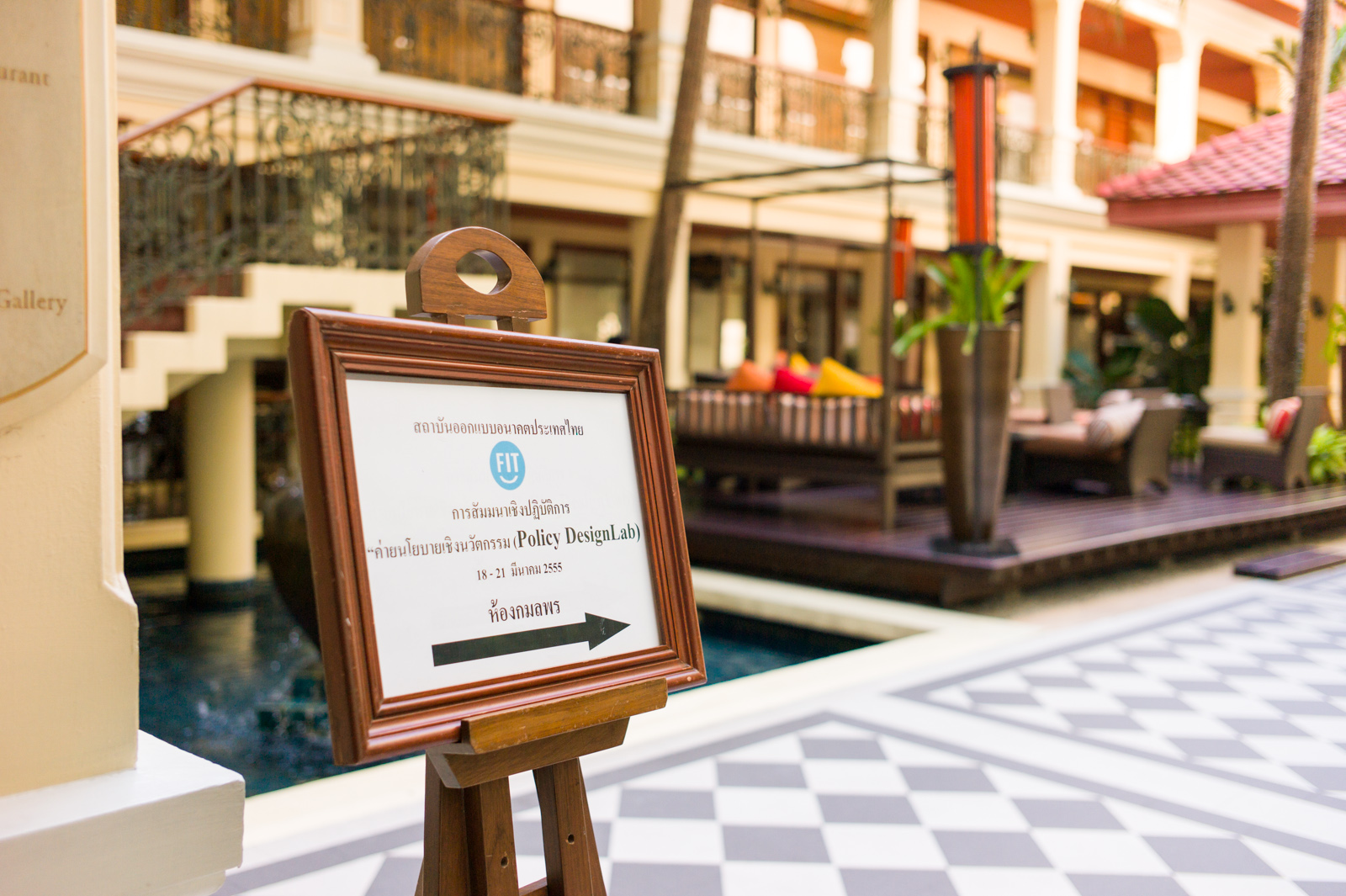
As I write this, my mind is a few days in the future, thinking about Friday at 9:30 when we will kick off "official" HDL 2012 activities. That's a rather serious-sounding way of saying that Justin and I will spend a day with six smart people in a nice room. Where HDL 2010 was about distilling a grand challenge into an actionable strategic intent, Helsinki Design Lab Global 2012 is…
about stewardship; or in other words, how innovative things get done. With the global conversation increasingly invoking the (re)design of systems, institutions, markets, and even the social contract, HDL 2012 is an opportunity to reflect upon the necessary innovation required of innovation itself. How do we shape policy through projects? How do we connect strategy to execution? How do ‘clients’ of innovation maximise their value and agency?
New practices, new themes, and even new vocabularies emerge as this community grows. Helsinki Design Lab 2012 is an opportunity to take stock of these emerging practices and begin to codify new ways of doing.
When we wrote the first three HDL case studies back in 2009-2010 we did so because the best innovators in the world rarely have the time to step back from their work and codify it in ways that others can make use of. And understandably, it takes time to reflect and then package those reflections, and that's time which can be used doing more good work! So beginning with those cases and now continuing with what we expect to be six more cases between now and October, we are using HDL 2012 to gain a deeper understanding of how innovation is accomplished by different cultures of decision making.
It's a comparative study of innovation practice, really. We've invited two public bodies, two NGOs, and two private entities to contribute one project each. Together these six practices span Europe, North America, and South America, and they work in areas ranging from community planning to business oversight.

Summer in Åland, the archipelago between Sweden and Finland
The sheer diversity of the group was one of the things we were equivocal about for some time. A typical comparative study might seek to minimize the variables to down one—a range of public, private, and third sector organizations all addressing homelessness, for instance, and all in the same geography. But this year we will be juggling multiple variables that change from case to case, and the reason is rather straightforward: we have tried to recruit from the best of the best in public innovation, and that means accepting a more diverse set of projects. It would be crazy to assume that the best of contemporary practices are captured within any single field.
We're also experimenting a bit with the format. Rather than Sitra conducting one-on-one case studies, we're bringing together two cases at a time and asking the teams to help us interview and analyze their counterparts. This means that we'll have extra brain power in the room to ask the right questions and evoke the right discussion. Our hypothesis is that having practitioners interview practitioners will help us keep our heads out of the clouds. Someone who has been-there-done-that has a unique ability to stop things and ask questions like OK, but how did you really pull that off?
The kind folks at Monitor Group + Doblin have graciously loaned us one of their conference rooms (thanks especially to Helen Walters!) where we will spend the half the day discussing the reconstruction of Constitución, Chile after the 2010 earthquake and tsunami and half the day focusing on the revitalization of Brownsville, NY. Alejandro Aravena and Rodrigo Araya will be sharing their experience with the work in Chile and Rosanne Haggerty will be joined by a number of people from her team on The Brownsville Partnership. We're lucky to have been following their work for a while, and personally I'm looking forward to getting a good chunk of time to understand their recent efforts in depth.
Friday will be the first of three case sessions leading up to a culminating event in Helsinki in mid-October. It's going to be a small affair with only about forty people, but as always we will do our best to make sure that the learnings are shared as widely as possible.

Outside of the intensifying work on HDL 2012, I've been hosting the occasional group for a talk at Sitra (thanks for coming, EGOS) and working on some back burner projects (more on those in a second). Kalle is in the office tending to our food work which now has the beginnings of a web presence. Marco, Dan, Justin, and Maija are enjoying various depths of the summer holiday.

Clear evidence that Marco has been in the office, and so have his kids.

The renovation project we've been working on in the office continues to inch forward. I'm looking forward to this being done.
At the risk of making us sound obsessed with codification, I've been taking advantage of the slow pace of the office in summer to revive a long overlooked "manual for creative collaboration." We had the opportunity a couple years ago (!!!) to commission the Open-Ended Group to write a pamphlet on how to get the most out of collaborative work, but we've been so busy with everything else that it's only now that I've found the time to open those files again. It's good, simple, clear text and I've allowed myself the indulgence of devoting time to experiment a bit with the layout, taking inspiration from the lovely Bauhaus typography I saw at the Barbican in London recently. Eventually this will sit alongside the Design Ethnography field guide as a small practical manual.

Draft layouts of the collaboration booklet.
After spending two extremely intense days in Copenhagen with a group of people running various "design labs" at the beginning of the month, I'm once again struck by how much shared territory there is in the various approaches, and yet such significant differences in the way that different groups describe their work. That these practices are being cobbled together from a combination of social science, design, media, entrepreneurship, public administration, and other backgrounds means that a common ground doesn't come naturally but must be willfully created. The lack of shared vocabulary makes the true overlaps harder to see and positive differences harder to highlight.
Take "participation," for instance. Different groups use the term "participation" variously to mean working with people to create novel ideas, conduct due diligence on proposals, or secure wider buy-in for a course of action—and sometimes a combination of these. But those are three very different ways to use "a bunch of people in a room doing something together," each with their own nuances, pitfalls, and benefits. No wonder Markus Miessen refers to the Nightmare of Participation!
Thanks to Banny Banerjee, Christian Bason, Tim Brodhead, Luigi Ferrara, Sam Laban, Cheryl Rose, Frances Westley for the generous discussion. There will be a summary paper coming from that meeting which we'll post here when it's available.

Banny explaining the Stanford d.School design process.

There's a CNC fabrication shop in that basement. Copenhagen knows how to make a courtyard.

That you can buy mini turbines at a toy shop in Copenhagen says a lot about deeply renewable energy has soaked into Danish culture.
For a final and more entertaining note on collaboration, codification, and getting things done, I leave you with this video introduction for new employees of New York-based artist Tom Sachs' studio.
Summer was here, but then it left. We're back to gray and rainy skies. This has given me license to indulge, temporarily, some of the more arcane reaches of our team discourse. It starts here:
We talk a lot about dark matter because it's the focus of our work, really. But the problem with dark matter is that you can't see it and you can't detect it by definition. It's out there shaping the things we can see, but dark matter itself is known to us only by virtue of the effects it creates. Since we can't see the thing, those effects crop up at unexpected moments and in unexpected ways.
This means we need instruments that help us flesh it out, ones that show us the shape of the dark matter, and reveal its boundaries. If we were physicists we would be building space probes, but since we're not we make projects. For the strategic designer, a project (making a thing or interaction) becomes a way to flesh out the unknowns.
Or if we borrow from Joi Ito again, doing projects is often a cheaper way of identifying needs and innovation opportunities than it would be to analyze a situation. So that booklet floating in space becomes this...

Names blurred out, for the moment
...a token that's launched into as many situations as possible, to bump into as many edges as possible, and eventually send back details of its voyage. Now that our food booklet has been floating around the city for a few months we're building up a decent understanding of the situations it has ended up in—and hopefully the dots it is connecting. It's not the only tool we use, of course. We're also in regular meetings with various stakeholders. But that's the point: the probe/project takes on its own life.
This is (slowly) leading to two bodies of work: one within other institutions, where Sitra can act as a neutral host for shared discussions and decisions. Another in the community, where we hope to be announcing a programme in September which will offer a way around some of the blockages and knotty bits that our space probe has sent us details of.
So, yes, we obsess over the documents, websites, spaces, and other things we're stewarding into the world, but those details are not the source of our motivation nor the locus of ambition.
Some examples:
- 12 floor renovation: enabling a new culture of collaboration at Sitra
- Food booklet: mapping out the diverse field of 'owners' of food business and bureaucracy in Helsinki... helping us define the opportunity space
- Brickstarter as a product: creating concrete discussions about frictions existing in the regulatory & financial sectors and increasing community know-how around civic entrepreneurship
Speaking of Brickstarter, things continue apace. Maija has been doing a good bit of research on other crowdfunding and crowdsourcing initiatives, for example the Avoin Ministeriö or "open parliament" which is set up to receive suggestions for new laws. This is the first in a series of 10-20 summaries of relevant efforts from Finland and elsewhere.
It's great to have an expanded team and the impact of Maija and Kalle is already starting to show.
Marco spent the better part of an afternoon with Sara from the Design Exchange Programme, talking through the strategy for the next couple months. He was also working with the Helsinki Department of Social Services to finalize the selection for the exchangee who will begin working there in August. We'll reveal the name of that lucky individual after the summer holiday.
From his homebase in Boston, Justin has been contributing to the ongoing development of Sitra's sustainable economy thematic area which is under 'construction' at the moment. He has also been in talks with a Boston-based group who's interested in utilizing the Studio model.
On that front, we're officially done with the first edition of 1000 copies and the second edition has arrived. There are some small tweaks, of which my favorite is an adjustment to the page edges in the appendix so it's easier to flip to the each of the individual challenge briefings. There are other minute changes throughout such that if the book had a version number this would be 1.1. We're going to try to get some copies up on Amazon for those of you who've mailed asking about how to get a physical copy.

New on top, with the vertical lines making each of the three challenge briefings. Old on bottom.
Otherwise: on the horn with Chicago, Geneva, San Francisco, and London. Partially for HDL 2012 prep but also for other assorted bits.
With July hitting next week we're a bit in scramble mode. Finland more or less shuts down completely for the month, which is both amazing and maddening. If you're on holiday it's great. If you're not, it can be a big impediment to getting work done. One of the open questions for us is whether the renovation of our 12th floor, a project which Dan and I have been spearheading, will actually be completed before our target of August 1.

Scenes from a recent meeting on the building site
A strategic design challenge of significant difficulty: convince the Nordics to split their holiday month into shifts so that no more than half a country is away for 2-6 weeks at any given moment.
Right. While some bright young designer is figuring that out, we'll be in various states of holiday! During the next month or so updates will likely dwindle but Maija, Kalle, and I will be holding the fort down while Marco, Justin, and Dan enjoy some well-earned time off.
Hyvää kesää kaikille!
And another two-for-one, which illustrates a) that we're busy, which is good, and b) that for many of us, holidays are approaching rapidly, like a broad sweep of clear blue sky appearing on the horizon, which is also good.
Summer is here, by the way.
After giving a talk at the European Centre for Living Technology in Venice, Bryan then took the opportunity of being in Italy for a quick well-earned break featuring la dolce vita, I believe. ECLT seem to be doing some really interesting work regarding "economically viable"/sustainable mountain communities in Italy—definitely worth a look, according to Bryan. Meanwhile, Marco and Justin have been knee-deep in Low2No as usual, partly working on this aspect, amongst other things. And Maija Oksanen has joined us too, as a summer intern. With Kalle, we now have a fuller team, and thankfully some more native Finnish speakers. That is already helping us hugely, though Maija and Kalle bring a lot more than just their exemplary language skills.

Part of team SDU, now featuring interns.
In the last few weeks I've been to Milan, London, and Amsterdam. Oh and I had to unfortunately cancel a trip to Moscow, which is probably just as well given that diary. (But still, Russian visa timelines! Why, in this day and age, is it still so difficult for non-Russians to do business in Russia? Legacy dark matter.) I'm sorry not to have made it to Moscow, but these trips are always a whirl of talks, lectures, meetings, logistics, and brief, stolen moments of peace and reflection amidst the bustle of these fine, old cities.
The Russia trip was to be a talk at Strelka Institute, which I'm hoping to be able to do later in the (northern) summer. Strelka are one of the more interesting design schools in Europe at the moment. They also happen to have recently released the essay I wrote about six months ago (Bryan referred to it last time): "Trojan Horses & Dark Matter: A Strategic Design Vocabulary."
This is part of the new Strelka Press series, curated by Justin McGuirk, which features other essays by the likes of Owen Hatherley, Sam Jacob, Keller Easterling, Julia Lovell and Alexandra Lange, as well as Justin himself. It's an interesting approach, exploring the e-book format for essay-length writing, and priced at a level that makes it accessible to a wide audience.
My essay covers a lot of the terms, and background conversations and thinking, that underpin some of the things we've been writing about — and more importantly, trying to get done. It's intended to be a kind of primer, or "playbook", which presents the idea of a vocabulary - as a way of starting and developing conversations in this new area. With that in mind, please do let me/us know what you think.
The other trips were to the Politecnico di Milano's architecture summer school for a talk, but with a short hop over to Frog Design Milano to discuss strategic design with them. Also, Joseph Grima of Domus magazine, to talk Istanbul Design Biennale amongst other things.

Milano Frogs, about to get a talking to.
London was more of a meeting-based trip, featuring a catch-up with the indefatigable Tom Loosemore, an old colleague from BBC days, who is now doing great things at Government Digital Services, which is part of the UK Cabinet Office (we mentioned their design principles previously). They, too, are going well beyond "this is just a website" work. Also, a useful catch-up with Philip Colligan and Laura Bunt at our sister organisation NESTA RE Helsinki Design Lab 2012, and a good chat with Laura afterwards. Plus a meeting with Gill Ereaut of Linguistic Landscapes, who do fascinating work working with organisations (often public sector) to understand and unpick their habitual behaviours through the prism of their everyday working language.
I also met up with Ricky Burdett of the London School of Economics 'Cities' programme. Burdett is a hugely influential figure in the field of urbanism and cities generally, so it was a pleasure and privilege to meet him. It looks like we'll be working together on a new LSE Cities conference in London at the end of the year, where I'll be talking Brickstarter and beyond, hopefully, in the context of "smart" and "not so smart" cities.

Visiting the London School of Economics
Ricky and I are also on the advisory board - with Sir Peter Hall and Saskia Sassen - for a new Young Foundation project called "The Social Life of Cities", in association with Cisco. We had a first meeting of that last week, for which I had to endure a visit to a terrible business park in Espoo. The irony of being there - virtually alone, surrounded by concrete flyovers and lazy, ugly, damaging buildings - and yet talking about "the social life of cities" was not lost on me. Perhaps it's useful research just to be there! Still, the project could be very valuable and we got off to a good start with an engaging discussion.
Back in London, I spent a long but enjoyable day at BERG London, judging the Core77 Interaction Design awards, with Bonnier's Sara Öhrvall, BBC's Julia Whitney and BERG principals Matt Jones, Jack Schulze and Matt Webb. Results out in July.

Sara Öhrvall & Matt Jones, breaking for lunch.
While at BERG's studio, Sara and I were addressed by a certain Little Printer.

Little Printer's little print-out.
Finally, Amsterdam was a speech at the start of the 'kennisdag' (knowledge day) for the 500 staff of the City of Amsterdam's "spatial sector" (architects, planners, engineers, real estate etc.) The City had lined up a very impressive day of workshops for their staff, all held at the wonderful Felix Meritus building on beautiful Keizergracht. It was great to see a city government actively working at shared thinking and discussion, particularly given the challenges all city governments are beginning to face (and so the Brickstarter work was again germane to their thinking.)

City of Amsterdam folk, arriving for the "kennisdag".
For Brickstarter, we brought energy policy expert Robert Brückmann (of Eclarion) over from Berlin, to talk to Sitra and a few other representatives from relevant sectors in Finland. We had a great discussion about Germany's energiewunder - also discussed previously here. Again, we are hugely inspirted by what Germany have done here. This follows previous Brickstarter talks from Marcus Westbury and Rodrigo Araya, and more to follow after the summer break.
We'll have some major updates on Brickstarter.org shortly. I've been handling the stewarding of a clickable prototype "conversation starter", and that will soon be up. Maija has been plugging away researching 'adjacent' services. Expect to see lots of little 'fact card'-like blog posts up there soon. Kalle has also been developing some similar 'fact cards' around food scenes in cities - focusing on the legislative environment (dark matter), rather than cuisine as such - for use in our food-related projects. (Just after that, Kalle, who is a barista, headed off to Vienna for the World Cup Tasters Championships, where he placed ninth. Amazing. Well done Kalle!)
That food work is progressing rapidly now, in partnership with Antto Melasniemi & Elina Forss, as well as the City of Helsinki (Ville Relander) and will soon be appearing on its own project blog.
We'll also give you an update regarding our Design Exchange project shortly, which has been progressing nicely in Lahti, as well as our renovations and reworkings of the Sitra tower.
Meanwhile, it seems that every other week we're discussing what we do with representatives of various pioneering Canadian social innovation organisations and foundations - they seem like they are on the brink of becoming the most fertile place for that kind of work, interestingly. A couple of weeks ago, Bryan had a chat with Lisa Tjorman, of the aforementioned excellent Labs report, and last week, we were happy to discuss our work with Allyson Hewitt, also of Social Innovation Generation in Toronto. Watch that space, is all I'll say for now, but they're heading somewhere very interesting over there …
And finally, as they say at the end of British news broadcasts, we're spending a lot of time on internal culture, and particularly the notion of "ideas", "projects" and the relationship between those things. Which, of course, is not always self-evident, or simple.
With that in mind, Bryan forwarded on this post from Adam Mathes, formerly a product manager at Google, about his practice:
My conclusion after a few years is that the best product management is about providing the vision of what to build and why and then creating the context where great things can be made. That context usually involves the right people, space, time, and patience...
But for truly innovative and creative products, project management may not matter as much. If you are making something new and creative and different, it’s hard to know exactly how to make it. You may be building the tools and technology you need because they don’t exist yet. And may be impossible to properly estimate how long it will all take.
More on Adam's blog.
And finally and finally, we spied our "In Studio" book on John Thackara's bookshelf in the lovely "virtual tour" of his workspace recently posted. It's apparently creeping its way towards him, day by day. As it should you.
When a weeknote stretches to two weeks, we're flat out. This is a two-week-note. Marco's in Chicago with the mayor, Dan's in Milan giving a lecture at the Politecnico, and Justin's about to board a plane bound for Finland. In Helsinki, Kalle is with the Sitra gardening club planting herbs on the roof of the Sitra tower and I'm here, in my chair, typing this for you.
The Cumulus conference bought a torrent of design educators to town, old and new friends both. We enjoyed seeing Liz Danzico again, a prolific designer, author, educator, and tourer-of-Helsinki. Mariana Amatullo was visiting from Art Center in Pasadena, California where is the director of the Designmatters department. She spent a day and a half doing research for her PhD by interviewing stakeholders in our Design Exchange Programme and grilling us with thoughtful questions. Eduardo Staszowski and Lara Penin from Parsons School of Design Strategies dropped by too, and we had a good conversation about the differences between strategic design practice in a place like Finland which has a strong public sector and somewhere like the US which has a more fragmented landscape. Brenton Caffin was here briefly at the beginning of last week too. This is what the World Design Capital year is like.
With learning in the air, one of the things that popped up in each of these conversations was our position on the practice of strategic design and innovation more broadly. We call it legible practice and I've written up those notes in a separate post:
Doing things in the open is not the best way to help them grow. To encourage scale, we must do work in ways that are inviting, easily read, and digestible.
Dan has ben writing too. He has a book out as part of Stelka Press' inaugural series. It's called Dark Matter and Trojan Horses: a strategic design vocabulary and it rather provocatively argues for...
...A new vocabulary of design, one that needs to be smuggled into the upper echelons of power... Increasingly, effective design means engaging with the messy politics – the “dark matter” – taking place above the designer’s head.
If you're in Moscow on June 18th you can hear about this at his public lecture at Stelka.
Brickstarter continues apace. Right now we have a local web shop coding the first clickable mockup. It will be viewable on the Brickstarter website in due time, but not just yet. We're also reading, reflecting, and interviewing existing projects about their experiences with self-initiated development.

Tuomas Toivonen and Nene Tsuboi telling the tale of their Kulttuurisauna in Merihaka, Helsinki.

Tristan Hughes explaining a community-developed alternative masterplan proposal for Meri-Rastila.
It's basically impossible to get Kalle to stop talking about food, which is a good thing since that's what he's here to do. During the last Ravintolapäivä he operated a pop-up coffee stand which also served as a community idea collection point, resulting in some telling (and often humorous) drawings. Most of his time is spent wading through city webpages, collecting and sorting information about getting a food business off the ground. This will eventually be part of something we're calling This Is Not A Cookbook (a guide to Everything But The Food?) which will be part of the food entrepreneurship bootcamp we're planning for later this year.
I've been on the horn with groups US and Chile, coordinating a meeting for this summer to dig into two case studies for HDL 2012. It's constant logistics on that front at the moment as I attempt to wrangle diaries of 28 people in five time zones across the total of six case studies we're hoping to pull together. To amuse myself, I tinker with the spreadsheet that keeps all of this straight (and on budget). Two words: conditional formatting.
Marco and Justin are both 110% on Low2No at the moment as some critical decisions get made. On a much smaller scale, we had a few triage meetings about the renovation project that's ongoing in the current Sitra tower. Finland shuts down for all of July, which is a wonderful and maddening fact of the way of life here. This wreaks a special kind of havoc on production timelines and there was some danger that our 12th floor renovation would get pushed until after summer. After some decisive action I think we've narrowly managed to avoid that delay, and we're still currently on track to have the new spaces by August. Hyvää.

Left: the existing space. Right: after basic demolition. Renovation has begun.
Then this happened:
The city has exploded into greens and blossoms as the trees come back to life, dusk and dawn melting into a continuum of tarry daylight. Welcome, summer.
Hello, it's me again, and so predictably this is a few days late.
Before I run through last week's events, I thought I'd share this. Bryan tweeted a Dezeen article about the new Shard tower in London—an interview with the lead architect, Renzo Piano—noting in particular the usefully low car parking provision. There are 87 floors in The Shard, 72 of which are habitable, and it has 47 parking spaces, essentially to cover the requirements of disabled people, according to Piano.
Having worked on a few so-called sustainable developments in my time (admittedly mostly in car-dominated Australian cities) this is extraordinarily impressive. Piano also notes that the direction here came from Mayor Ken Livingstone, which is also impressive—politicians driving that number down is rare; usually they're in a defensive mode, worried about their constituents (often underestimating their constituents' own ability to change, actually) and pushing back against the design teams.
Here in Helsinki, every day we look out onto Jätkäsaari, which is one of the city's strategic sites for sustainable development. A typical block there will be designed to have around 7 floors and have to make space for approximately 120 parking spaces. Both cities are well-served by public transport (in fact, Helsinki has previously been voted as having the best public transport in Europe) and Helsinki being a compact city, you could walk to most bits of central Helsinki from Jätkäsaari. This quite different parking ratio here is also directed by the city council, of course.
This disparity seemed so ludicrous I had to draw it. First, the two developments: The Shard at 87 floors, and 47 parking spaces; a new "sustainable" development in Helsinki's Jätkäsaari has 7 floors, and 120 parking spaces:

Parking spaces for The Shard tower, London versus parking spaces for Jätkäsaari sustainable development, Helsinki.
To put it another way, the ratio for The Shard is around 0.5 parking spaces per floor, whereas Jätkäsaari's ratio is around 17 spaces per floor. What if you applied the ratio for The Shard to Jätkäsaari and vice versa?

Parking ratio for Jätkäsaari block applied to Shard tower, and vice versa
Thought for the day.
Anyway, last week's thoughts had a big public holiday-shaped hole in them on Thursday, but the rest of the week was full of life.
I was knee-deep in designing Brickstarter mock-ups—more on that soon, but some old sketches are now up at brickstarter.org—and working with the Sitra management team on our new working patterns, workspaces and so on. Kalle was researching street food legislation in global cities, roaming (via the web) from Portland to Stockholm.
Meetings-wise, I had time for a poor cup of coffee but a good chat with Melinda Sipos, a Hungarian designer/artist whose provenance includes the seemingly excellent Kitchen Budapest. I met up with web developer Ville Kolehmaimen from Fusion Inc, had lunch with our own Pekka Salmi to discuss what we (Sitra) might research around crowdfunding legislation in Finland, and Kali Auvinen and I had a fascinating Brickstarter-related conversation RE NIMBYism and sustainable development with the chairman of the Finnish wind power association.
Meanwhile, Bryan was in the USA for an equally full week, culminating with a panel at the inspiring Studio-X NYC (run by our chums Geoff Manaugh and Nicola Twilley) which centred around the future of design practice in a plural, political world. He also was part of a panel at WantedDesign about the possibility of entrepreneurial design to sketch out new cultural possibilities, including +Pool, Brickstarter, and games that reveal the richness of the spectrum of possible social interactions. In between he was meeting and on the phone to line things up for HDL 2012.
Working across the Helsinki-Boston axis, Marco and Justin were embroiled in the usual intense stewardship required by our Low2No project.
Meanwhile, back in Helsinki, by the end of the week we were privileged to have Marcus Westbury of Renew Newcastle/Renew Newcastle fame in town. Marcus is an old colleague and friend from Australia, and we took advantage of him visiting London to bring him across to Helsinki for a couple of talks, as part of our Brickstarter research (for more on Marcus's work in this context, read the notes from this discussion we had a few months back, or this old post on "emergent urbanism" from my blog a few years ago.)
As those notes describe the general area I won't go into the ideas again here, suffice to say Marcus did a great talk for Sitra colleagues over lunch ...

Kalle asks a question while Kalle looks on

Marco reveals his Italian heritage
... And then Marcus repeated the feat for a public audience at a Demos Helsinki-curated "City 2.0" event at the World Design Capital Pavilion on Friday night.
Although it was so chilly that the pavilion felt like a wooden memorial to optimism, we had a good crowd of 40 to 50 or so (thanks!) and a good discussion after too.

An Australian suffering the Helsinki spring.

Finns suffering the Helsinki spring.

Marcus's talk generated a good Q+A, including discussion of similar projects here in Helsinki.
Thanks to Marcus for coming over, and sharing his numerous insights, and thanks also to Tommi and the Demos crew.
Fortuitously, the following Saturday was Ravintolapäivä, Helsinki's festival of pop-up restaurants, and so I was able to walk Marcus around that too. This was in no way a hardship—it was the city at its best—and easy on the stomach too. Ravintolapäivä demonstrates a different kind of urban activism to Renew, but they're derived from similar instincts: creating a framework for encouraging everyday experimentation within the city. Saturday also demonstrated to Marcus that spring in Helsinki can be warm.
I've written all that up over at City of Sound, so do have a read over there if you want to learn more about the wondrous event that is Ravintolapäivä aka Restaurant Day, and what it might mean for cities like Helsinki. While you're there, note the use of Kalle's coffee stall as a honey-pot for design research—more on that soon from Kalle.

Ravintolapäivä is wonderful. Here, gourmet Italian food on the street.
OK, latenote for last week. The highlight was perhaps a great conversation with various representatives of Canada's Social Innovation Generation partnership (SIG), who were in the neighbourhood (well, Stockholm) and were kind enough to swing by Helsinki for a chat.
They're doing really interesting work scoping out what they call the "change lab" model, preparing the ground in Canada. We were visited by Cheryl Rose (Associate Director of Waterloo Institute for Social Resilence and Director, Program Development for SIG), Tim Brodhead, (JW McConnel Family Foundation, SIG, MaRS Discovery District), and Sam Laban (Education Program Manager, SIG). We have lots of visitors to Sitra and HDL, and always enjoy and learn from the discussions and connections, but rarely has a group been so well-prepared and asked such perceptive and insightful questions.
I'm intrigued by Canada, having never been but idly marking it as a kind of mirror/inverse of Australia (vast, sparsely-populated, resource-rich, echoes of empire, Anglo in bits, fine cities, incredible landscape, great cities etc. etc.—and it is of course completely different, I'm sure). And we've been delighted to see the thinking emerging there—as noted previously, their summary of lab-like iniatives ("Labs: Designing the Future") is definitely worth a read—and so we're really pleased to open up this diaglogue. It looks like I'll be visiting Canada in return, this November, which I'll update you about nearer the time. Thanks to Cheryl, Tim and Sam for popping in.
Bryan had to rush off after lunch with the Canadians, heading over to Derry. After noting the preponderance of wind turbines in the Irish countryside ...

Turbines in the Irish countryside.
... he took part in the Academy of Urbanism's Annual Congress on The Resilient City, and he reports that It Was Good. The level of conversation was excellent, and the very particular context of Northern Ireland perhaps lent the affair a seriousness and motivation that is often lacking in similar events.
Bryan pointed me at one project—a comprehensive regeneration plan for Derry-Londonderry [read the full PDF or summary PDF]. It looks to have a good strategic edge, which foregrounds what I'd call the real drivers of cities (economy, culture, community) but views them holistically alongside some necessary strategic interventions (improving health, approaching sustainability) and then draws in secondary or tertiary matters like infrastruture, buildings and so on. Have a squint at the diagrams on page 7 and 8 of the shorter PDF:
Meanwhile, lots of work on Brickstarter. I've started designing the first 'alpha' version of the web service, which we'll share some details of shortly. As ever, we're using the website as a kind of token in order to open up wider, systemic issues—but you have to build the thing in order to flush them out. So it's been very interesting, and very rewarding, to finally be discussing the details of the various interactions we want to explore i.e. crowdfunding versus voting? What do we mean by voting? How do we balance a democratic model alongside crowdfunding? How explicit do we make the council? How to do a slow reveal on the dark matter so as to enable a low barrier to entry yet subtly unpack it over time such that the project proposals are robust enough to be taken seriously? All this and more emerging over at brickstarter.org shortly.
I love getting to this stage of a project, as everything starts to come together. With a project straddling governance and democratic models, crowdfunding and emergent community actions, sustainable development across use of shared space, shared resources, energy and so on, it actually helps crystallise the project considerably. Then our job is to draw out the shifts in this otherwise imperceptible dark matter implied by such a product or service, such that we might enable their productive reshaping. (I also happen to love spending hours in Photoshop and Illustrator, frankly. For the strategic designer, the challenge is always to balance the lure of exercising your craft skills with the requirements of the strategic, systemic view. But one enables a better view of the other, and vice versa.)
We finally got our first Finnish post up there (thanks to Kali!) and there's a good overview of crowdfunding platforms by Bryan, too.
Kalle's been doing some nice background research on 'food profiles' for other cities, for Helsinki Street Eats. We'll have a set of cards emerging for different cities shortly, to enable productive comparison with Sydney, looking at the regulations, governance culture, scene on the streets, and so on. We're also now in discussions about how and what we can fund in this area—more on that shortly.
I've also been helping out with the organisation's imminent reorganisation in our building. With Bryan, we've been leading a renovation of one of the floors, but again, really we're looking at the organisation's culture, the way we work, and interract, and so on. (Again, the balance of crafting a specific output with the wider strategic, cultural view.) We have a 'bootcamp' with the management team next week to draw up the first sketch of a new organisation.
And two good lunches. First, Bryan and I with Artek's Ville Kokkonen (design director) and Anna Vartiainen (marketing director). Artek are one of the genuinely great Finnish brands and operations, founded by Aino and Alvar Aalto (a bit of background). Their 2nd Cycle concept is a particular favourite in the Sitra office, indicating a form of "resilence" in which the firm buys back its own products and re-sells them, a simple concept that gracefully indicates the ongoing value of good design and production, as opposed to "throwawayism".
Secondly, I had a good catch-up with Tommi Laitio of the powerhouse that is Demos Helsinki, covering many topics: Baana, Brickstarter and beyond. In particular, we discussed the forthcoming event that Demos are curating at the World Design Capital pavilion (or "paviljonki" as it's known here), where we've invited Marcus Westbury of Renew Newcastle/Renew Australia fame to speak, on an afternoon/early evening session about urban development dubbed "City 2.0" (read a previous conversation with Marcus here.) More info on Facebook, and if you're in town, do come on down. (By the way, a tilt-shift time-lapse of the WDC Pavilion going up. It's designed at Aalto University's Wood Program.)
Oh, and it's the Helsinki-originated increasingly global sensation that is Ravntolapäivä (Restaurant Day) this weekend (May 19th) (for background, read our "Helsinki Street Eats" book-let). Make sure you visit Kalle's coffee stall—"Gaffebaari"—in particular!
Finally, some quick linkage: Brickstarter was mentioned in another scene-surveying post about crowdfunding urban development, this time at ArchDaily; John Thackara asks whether we need an Arne Jacobsen of urban food systems, and "Making Planning Popular: A Manifesto" (related to "Sub-Plan".)
And a little more controversially, an interesting take-down of the open data and transparency movements and a reaction to the perceived over-spending on buildings and infrastructure in Valencia, Spain, homing in on Santiaga Calatrava. Sadly, there's little public controvery here about the proposed (or is it?) road tunnel under central Helsinki, which is apparently still sitting on the city's plans somewhere, and has been for years—or is at least alive in the minds of the current generation of city planners. Not only is this a ridiculously outdated idea ("sell by" circa 1970) it is apparently preventing or otherwise hindering other projects from happening. The local media is asleep at the wheel on such matters, as far as we can tell. More here if/when we get it.
Oh, and I forgot to report: Vappu, a couple of weeks back, was a blast. Very special indeed, and no way near as bacchanalian as I had been led to believe (caveat: I went to bed early.)