All posts tagged Food
We've been taking care of infrastructure lately. Still some work to be done there, but not a ton. This means: being on the horn to convince people to help us with publications and other wrap-up related efforts; writing contracts to hire them; organizing bits of the office; catching up on email so that we're free from that nagging feeling of being behind.
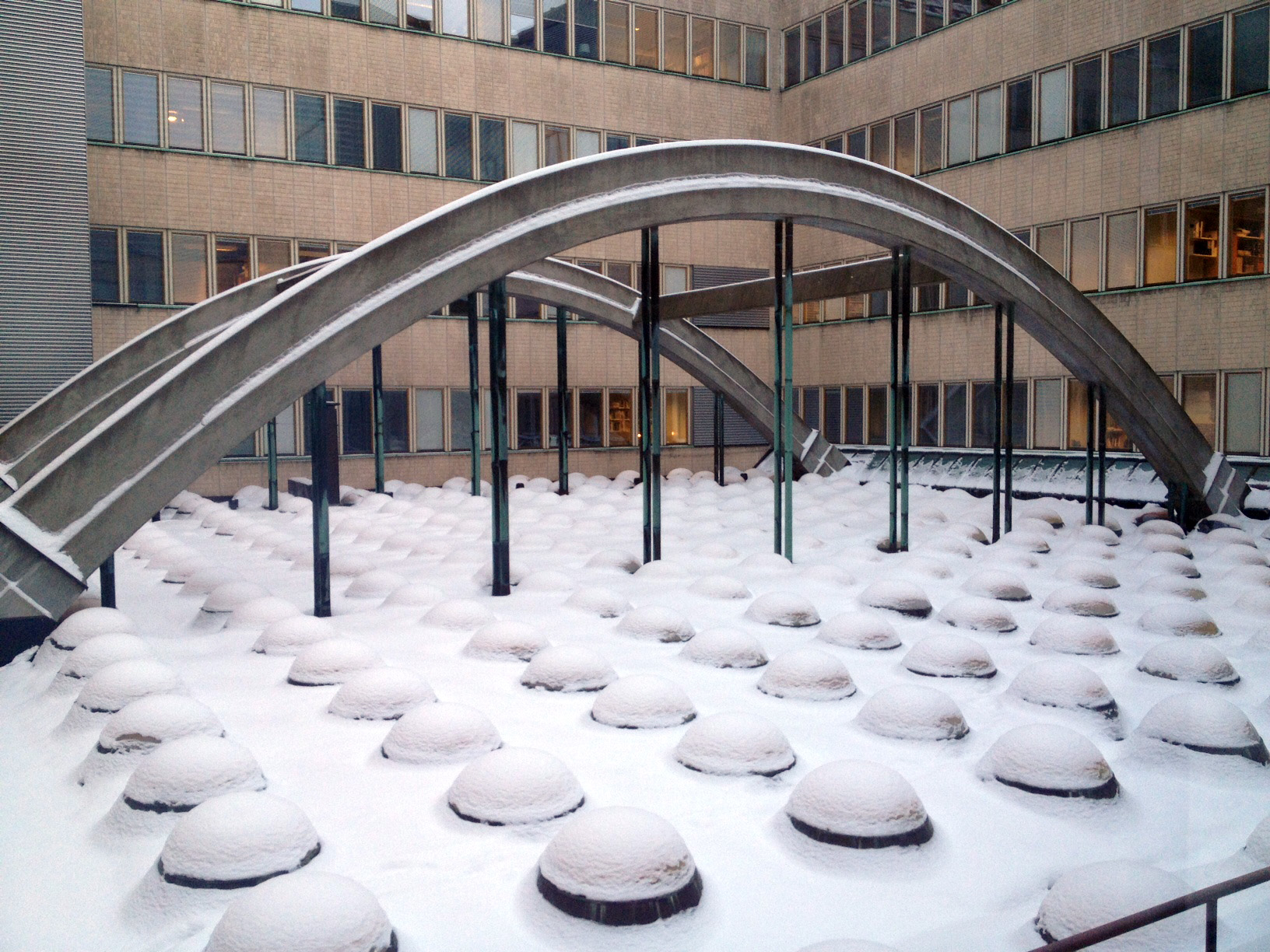
Winter!
The Design Exchange Programme is hitting its stride. Sara is finishing up her year-long placement in the city of Lahti where she was helping them redesign their approach to public engagement. As Sara is also having a baby (congratulations!) she will not be continuing and we're sad to see her go. Nevertheless, her story has been blogged here (mostly in Finnish) and will remain for reference. Thanks for being our first very courageous embedded designer, Sara!
Sirpa at the Ministry of Employment and Economy and Hella at the Ministry of the Environment have also been blogging actively, including short summaries in English.
We ended last week by hosting a breakfast with members of the city, Tekes, and other organizations around town to talk about the possibility of taking Open Kitchen forwards. If this works, we'll have been able to play exactly the role that Sitra is best at: develop a new concept, test it out, and pass onwards bettered by iterated findings.
I've enjoyed following along the developments of some of our participants as they take steps now towards opening their own ventures. You can follow Jerome as he mounts a sourdough bread revolution in Helsinki. If you're lucky, you'll get a chance to try his products; the bread wowed us all during Open Kitchen.
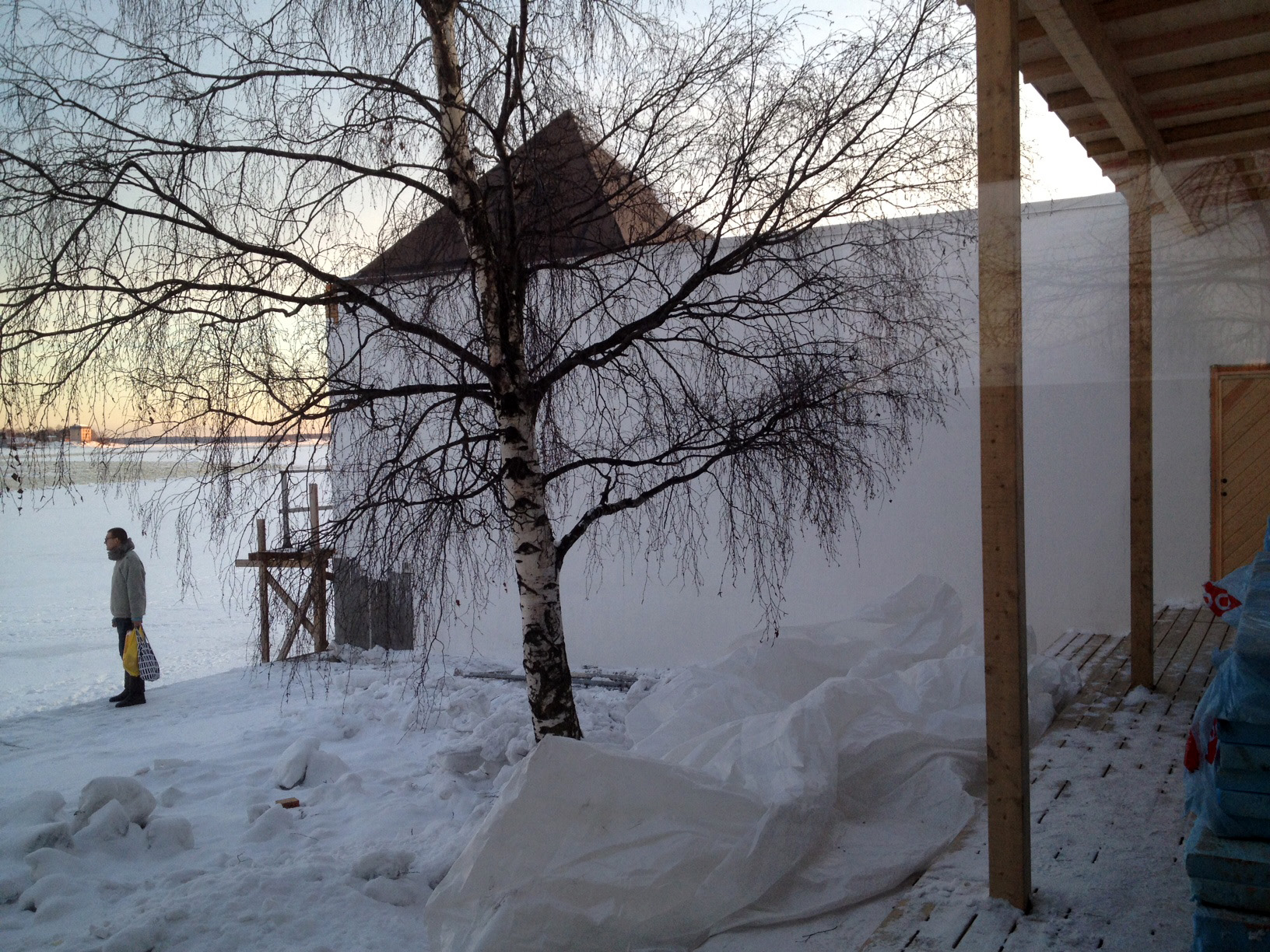
Snapshot from a visit to the Kulttuurisauna which is nearing completion.
Rory is waiting on me for final updates to the Brickstarter manuscript as I coordinate with Kali and Dan to get things just right. Meanwhile Rory is working with Bitcaves to take the manuscript forward into a book. This also serves as a reminder that I will soon need to think about revamping the Brickstarter website as we transition the active prototyping there to a project called AvoinKotka (Open Kotka).

We were very happy to see Brickstarter included in a recent issue of the magazine form, The Making of Design, with an essay by Justin McGuirk. There's also now an online video of a talk I gave at the World Design Forum in Eindhoven last autumn which discusses Brickstarter and our other projects:
Not so sure about the graphics of this video. Those are not my slides!
This week Marco is back in the office after a busy trip to the US. He and Justin were visiting the Cleveland Clinic to see an implementation the work we put together during Stroke Pathways, a research project at Harvard that served as a proving ground for our current strategic design approach. Sounds like it was an enlightening trip but I haven't had a chance to catch up with either of them for more than a minute. That's because as Marco returns I'm packing up. Tomorrow I move to New York and will be based there from February onwards as we wrap up HDL. A big change, for sure, but since we've been traveling more or less constantly for the past four years it's not going to affect our collaboration much. Though it does mean I will be waking up for some very early phone calls.
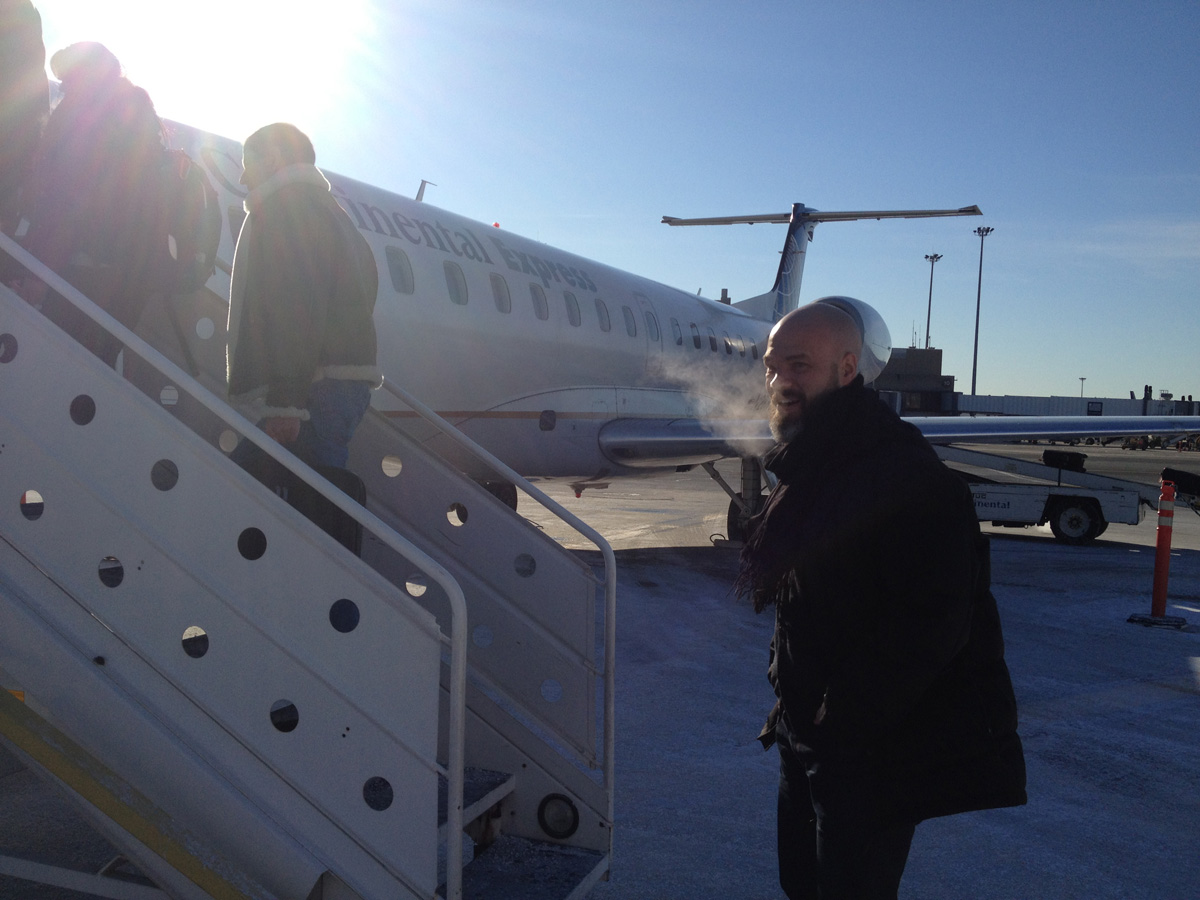
On the way to Cleveland.


Justin and Marco visit the salad garden at Clover food lab.
While in the States Marco also had some meetings at MIT and then gave a talk at HarvardxDesign conference, which Justin and I have been advising and helping to get off the ground. Great stuff there and I swear the color similarities are just a coincidence!
We're still working through the responses to our HDL road show announcement, which means there's time for you to throw your name in the hat if you would like us to come give a talk.

Undoubtedly, readers of this blog have already read Marco's post from last week, but in case you missed it, we've recently made an announcement about the future of HDL. Hearing from the community around HDL in the wake of the announcement has been encouraging. Thanks to all of your for your continued interest in our work. I hope we are able to sustain it for the next five and a half months because we have no intention of slowing down.
On the contrary, there's still lots to do. With the ending point for HDL clearly marked on the horizon, we're entering a kind of Benjamin Button mode. We'll be getting back into the habit of writing how-tos, working from practical issues ("how to budget a project", "how to brief a photographer") through to some of the more fundamental aspects ("what abilities are needed in a design lab", "how do you pick projects"). We'll be talking through and explaining how we set up HDL so that the site becomes as useful an archive as possible for others, elsewhere looking to do something similar.
Marco and I have been spending time at the whiteboard tracing out a loose plan for the HDL closing event on June 10th. It's going to be free and open to all, so I hope you'll sign up and consider joining us. We're also keen to hear your feedback and questions about HDL and the work we've been doing. This will inform our efforts to ramp things down.
Back on the whiteboard, we've also been revisiting our proposed table of contents for the forthcoming book on stewardship as well as generally trying to get a handle on all the things we want to do before sweeping the floor and turning out the lights. Tomorrow we'll have a conference call with Justin and loop him in. This is one of the ways we usually work: a couple people bat ideas around until there's something there, then we make a little presentation to the others and start over.
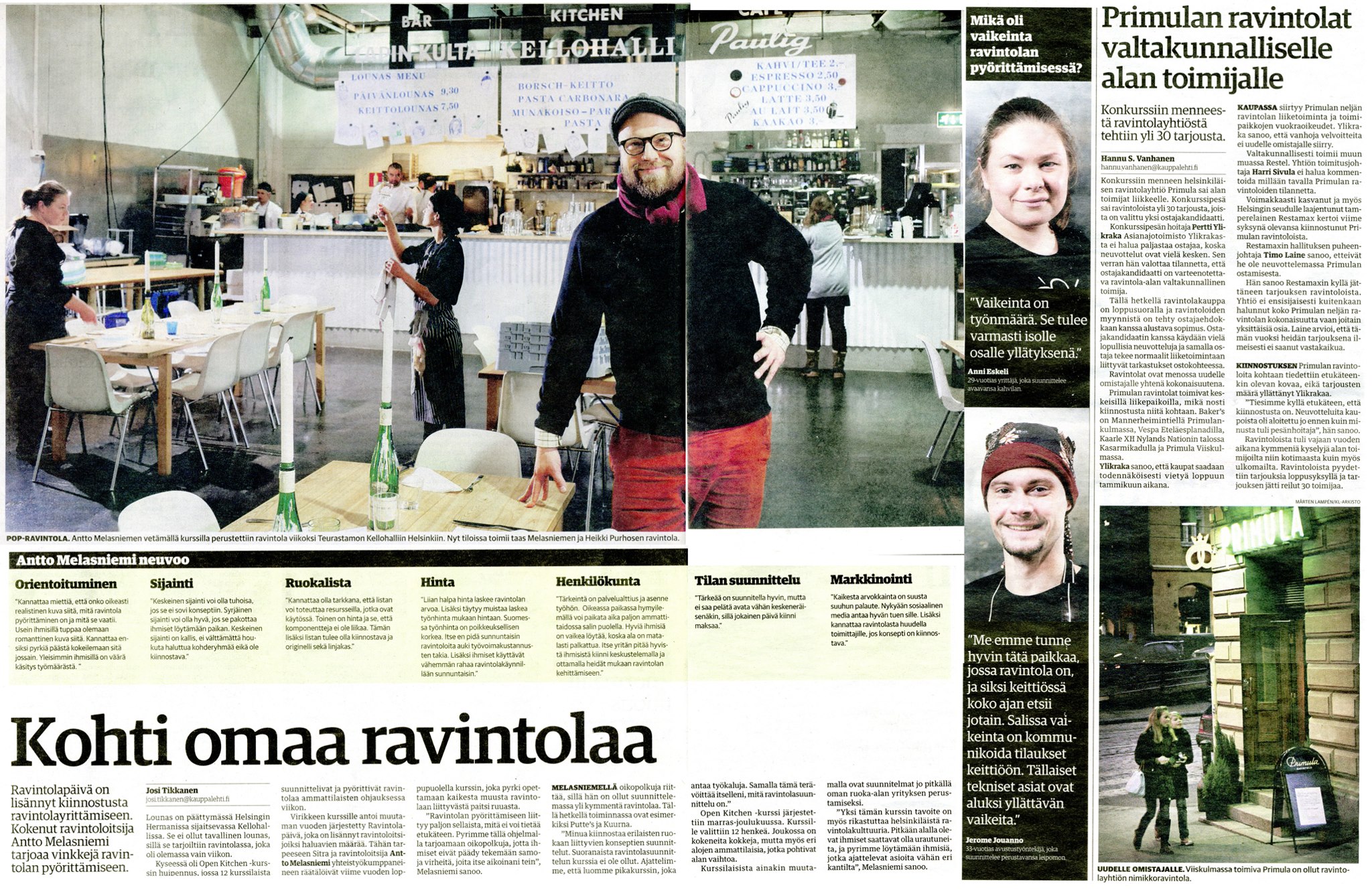
Open Kitchen got a nice write-up in Kauppalehti recently. We're happy to see the Facebook group for the participants still active and are hoping to join them for a small reunion next week. Right now Mariaana, a journalist we asked to sit in on the programme, is writing up notes from each of the courses and we will be publishing those online as soon as we can. Next week we're also hosting a small gathering with some local stakeholders to see if we can find a more permanent host for the programme.
This blog post is the second of the night, behind what I just put up on the Brickstarter site. Over there we announced that Sitra will be publishing a Brickstarter book in 2013 (yup, more writing) as well as beginning a very small experimental effort with the city of Kotka in eastern Finland.
My main focus at the moment (and through much of the holiday) is getting the manuscript into shape. We're using the blog as a starting point for that, but revising and updating things with new content as well as making sure they work equally well on the page. I particularly enjoyed writing the introduction, which includes the epic battle between wind turbines and glider squirrels. You'll have to read the book to find out who wins.
We've also been working on a quick project with Two Points, the graphic designers who created the HDL visual identity. I'll leave the content of the project a surprise for now, but here's a small clip from one of the files they sent. It's part of a poster.
Next week Marco takes off on a trip to the US where he will be participating in the By Design event at Harvard. He'll also meet with some people at MIT and make a visit to the Cleveland Clinic, which is now testing some of the ideas developed during Stroke Pathways, a project that Marco led at Harvard (and Justin and I contributed to) which laid the groundwork for our strategic design approach here at Sitra and HDL. We're anxious to hear how it's going there.
On the theme of travels, we're going to make an effort to be out and about even more than usual in the coming months. If you're interested in having an HDL or strategic design perspective at an event near you, drop us a line. No promises, but we'll try our best to be accommodating.
Onwards!
In another window I'm working on a draft of the feedback form we will send to the 12 Open Kitchen participants. That makes this weeknote a procrastination technique. Again.

A snapshot from the opening of Open Kitchen. And a bunch more photos below. Photo: Matti Tanskanen
We've been heads down these last three weeks.
Maija and I are working on a publication to wrap-up the work on Brickstarter. Sitra's not in a position to build the whole platform ourselves at the moment (though we are probably building a nano-micro-proto), so we're transferring our momentum there into a publication that coalesces three things: urbanism, governance, and emergent initiatives (or perhaps Peer Progressivism?). The goal of the publication is to simmer down our blog a bit and prepare a limited primer on these issues that will hopefully benefit anyone interested in building a platform to support bottom-up urbanism, and perhaps people who are using such platforms to build the city.
A recent call with Dan Parham, co-founder of Neighborland, helped clarify my thinking around the next steps for Brickstarter. As Dan Hill and I have always tried to emphasize when showing the Brickstarter mockups, the ideas are not the hard part necessarily, so I've been a bit embarrassed by the press our project has received because the attention should really be directed to Neighborland and others who are putting the ideas into practice.
Since we don't have a live platform we haven't been prototyping with users, but we have been prototyping with another group: civil servants. The reason we jumped right to high resolution mockups is so that they're plausible, and perhaps even a little scary, when we show them to our colleagues in city hall and elsewhere. Part of our challenge has been to find a language and a narrative that helps the public sector recognize the potential "threat" of citizen-initiated urbanism, and in doing so help them lean into it, rather than shy away. Because, of course, it's not a threat at all—quite the opposite. We're getting close to having an agreement with a town in eastern Finland to put a subset of the Brickstarter ideas into practice.
After talking with Dan, I'm retooling my thinking on the publication a bit and focusing more on how our work might offer a language and narrative that helps others build the connective tissue between government, citizen groups, and the technologists who build collaboration platforms. If we can do that, I would be very happy.
We've brought in Rory Hyde to help us as an editor for the Brickstarter wrap-up. It's great to have him, not only because his own work on unsolicited architecture overlaps with Brickstarter, but because he also brings structure to our work. Thanks to Rory's careful work on the table of contents and overall structure I'm now hyper conscious of the fact that our introduction is 35% too long. Time to lose 1000 words. This is my favorite part (really).
Maija's working on some text to summarize the Fact Cards, as well as a set of diagrams that map them out relative to each other. We'll crunch on this right up till the end of the year, but I'm resolved to have the final draft of the manuscript done by the new year.
Marco was in Chile to give a talk at the Architecture Biennale there, and a number of other things. He reports back that it's an exciting moment in Chile, but then again readers of this blog know that we're fans of the strategic design work happening in that country.
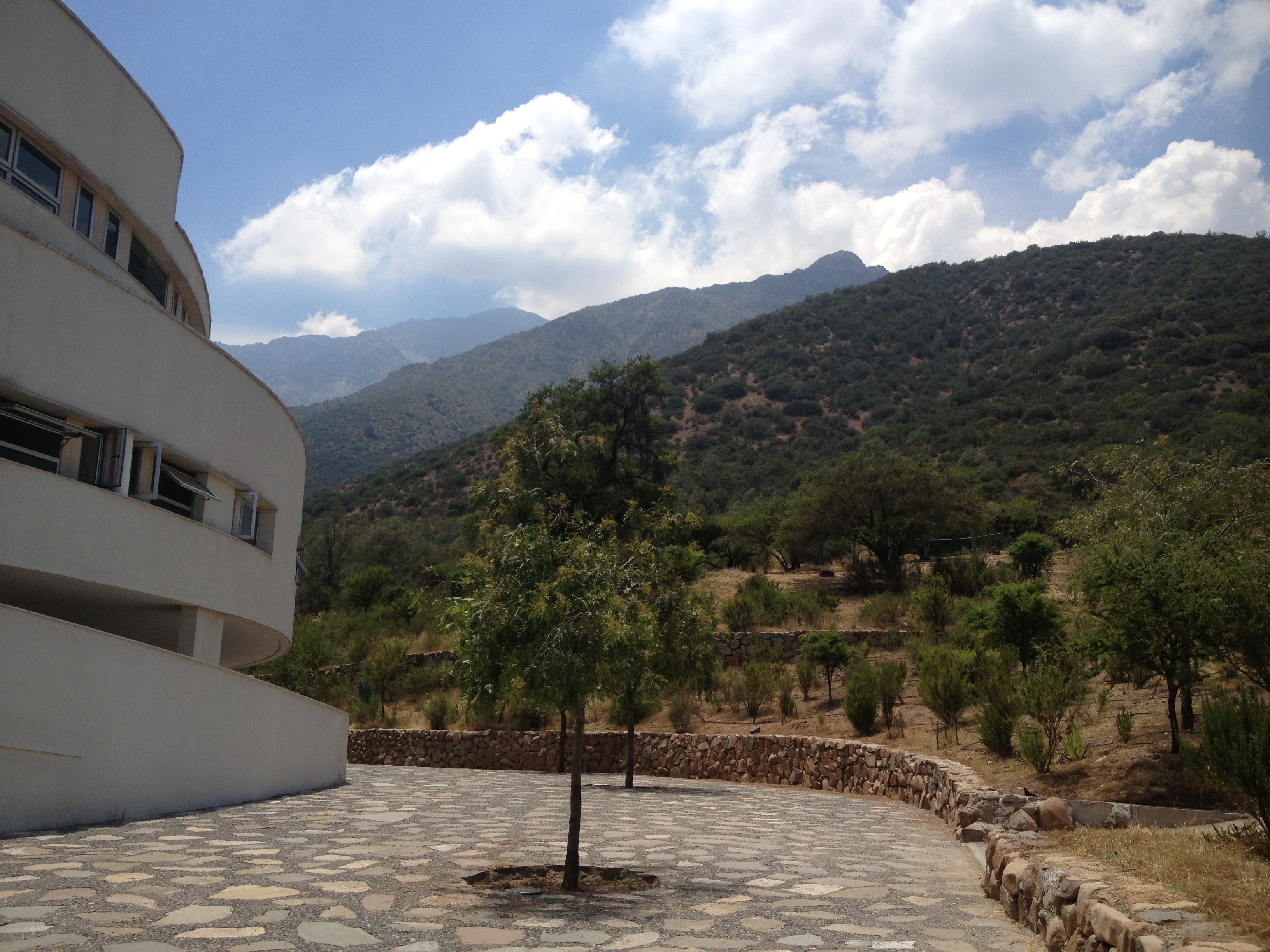
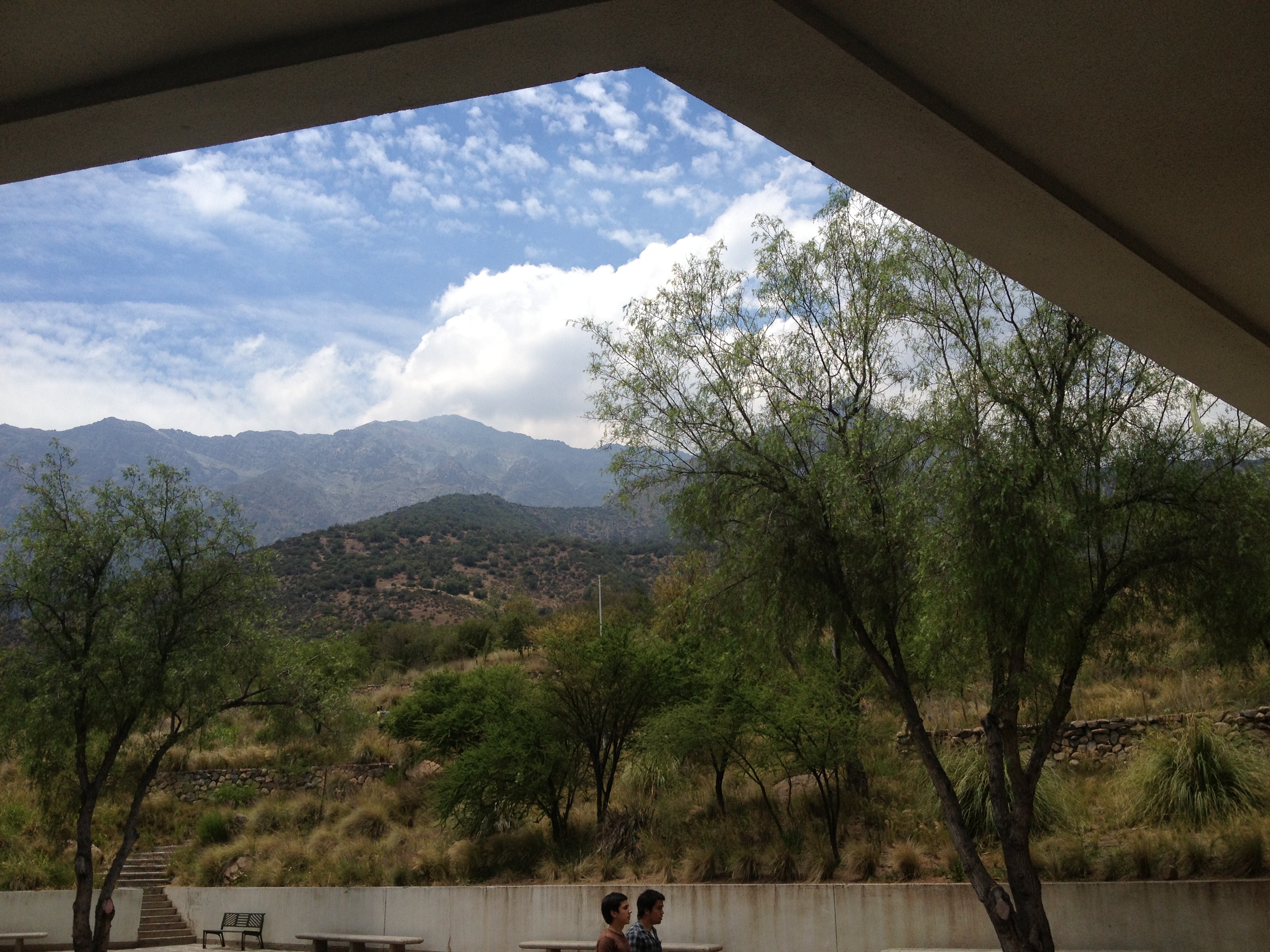
Marco was quite happy about summer in December.
Justin was in town for a week, wherein he and Marco spent a good portion of it sequestered in a conference room hashing out a publication on Low2No. With that project transitioning to our market partners VVO and SRV this is a good moment to step back and reflect on what we've learned. That's the gist of the book, but I'll let Justin introduce it more properly when things are more fixed.
Somehow without trying to we've become a publications house. I'm glad that words are a renewable resource, or we might be in danger of using them all up.
Open Kitchen launched on December 3rd, but I think it's best to start with this, a new video that Kalle and I finished to coincide with the launch:
The Facebook page for the project is the best place to get a sense of how things have been going. Our participants spent about 1.5 weeks learning from experienced food entrepreneurs around the city, then the second 1.5 weeks have been dedicated to figuring our a shared restaurant concept and putting that into motion. Last night I had my second meal at Open Kitchen and it was—forgive me for bragging on behalf of the group—excellent! I'm really proud of what the participants have put together.

Inka Kosonen and Mari Sollman, two Aalto University Masters students, have been working with the team to create and execute a visual identity for the materials and interior at Open Kitchen… all in 3 days.
With things running more or less smoothly, we're now turing our focus to next steps for the programme. In January we'll be hosting some sessions to see if we can match the programme with a funder who would be interested in taking it forward on an ongoing basis. From this perspective, we've treated Open Kitchen as a mechanism to produce evidence. It is testing the viability and usefulness of a 3 week course as well as proving the market for such a thing. Sitra has taken the upfront risk in hopes that we will find a partner to carry it forward. That's always easier with even a modicum of evidence.
There will be more to say, but for now I'm going to end this post with some photos that document the first 2 weeks of Open Kitchen.
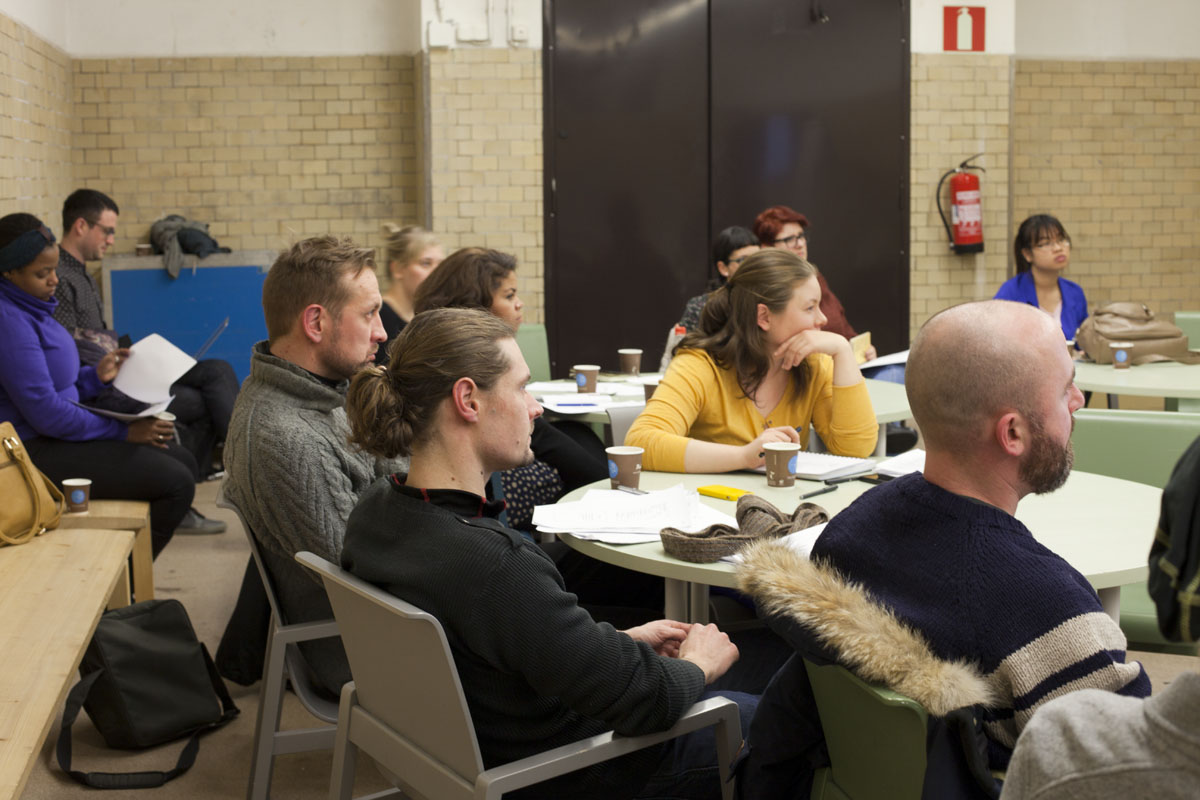

Tuuli Kaskinen of Demos Helsinki talking about food sustainability.

Aimo opened his first restaurant for the Olympics in 1952.
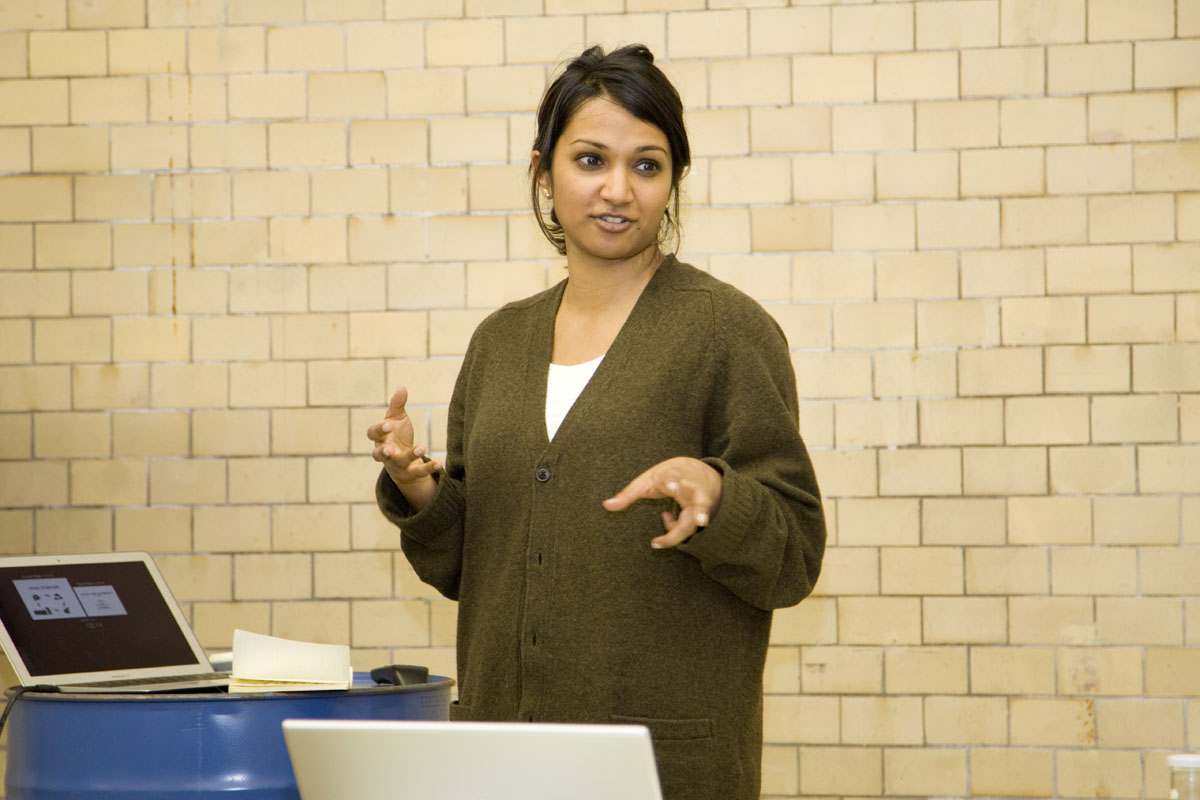
Cynthia Shanmugalingam of Kitchenette talks about food trends in London. Photo: Matti Tanskanen

The team! Photo: Matti Tanskanen

Jérôme putting bread in the oven. Photo: Matti Tanskanen

Beetroot gnocchi in the making. Photo: Matti Tanskanen
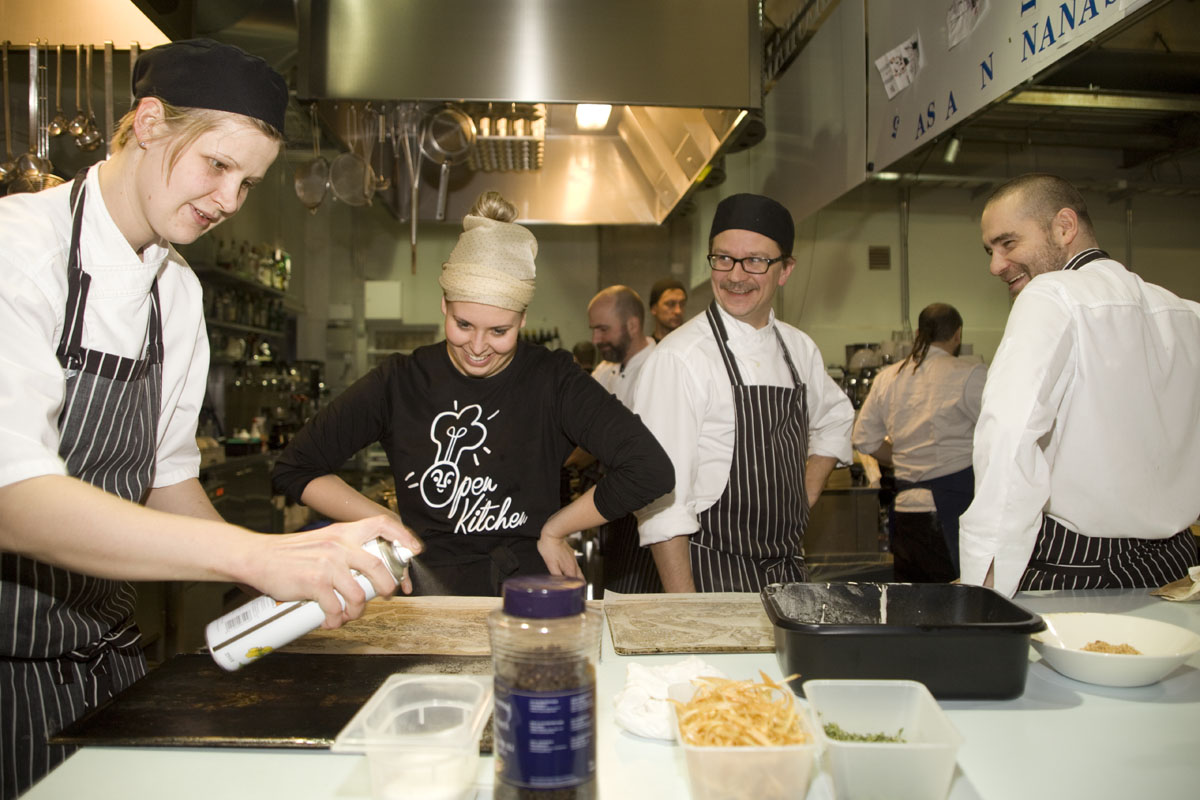
Saila working with the Marrot team in the kitchen. Photo: Matti Tanskanen

Antto doing this thing. Photo: Matti Tanskanen
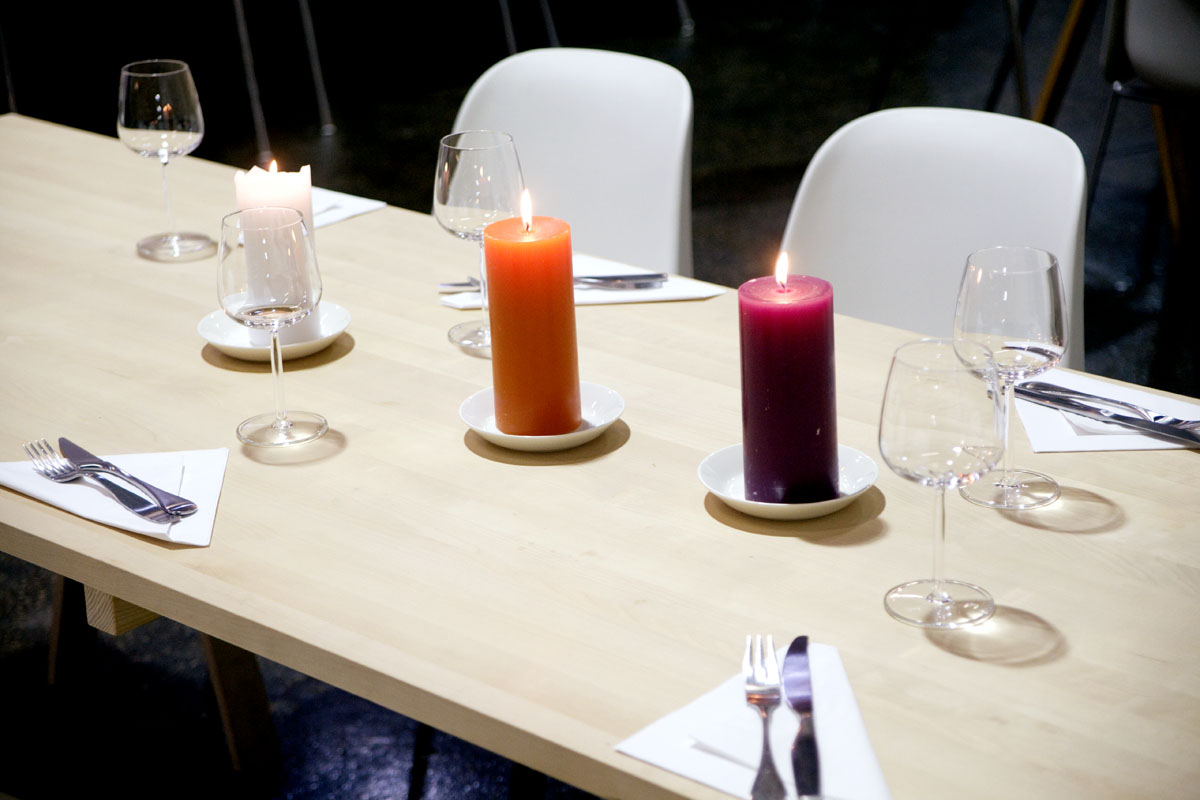
A simple, pleasant nordic interior. Photo: Matti Tanskanen
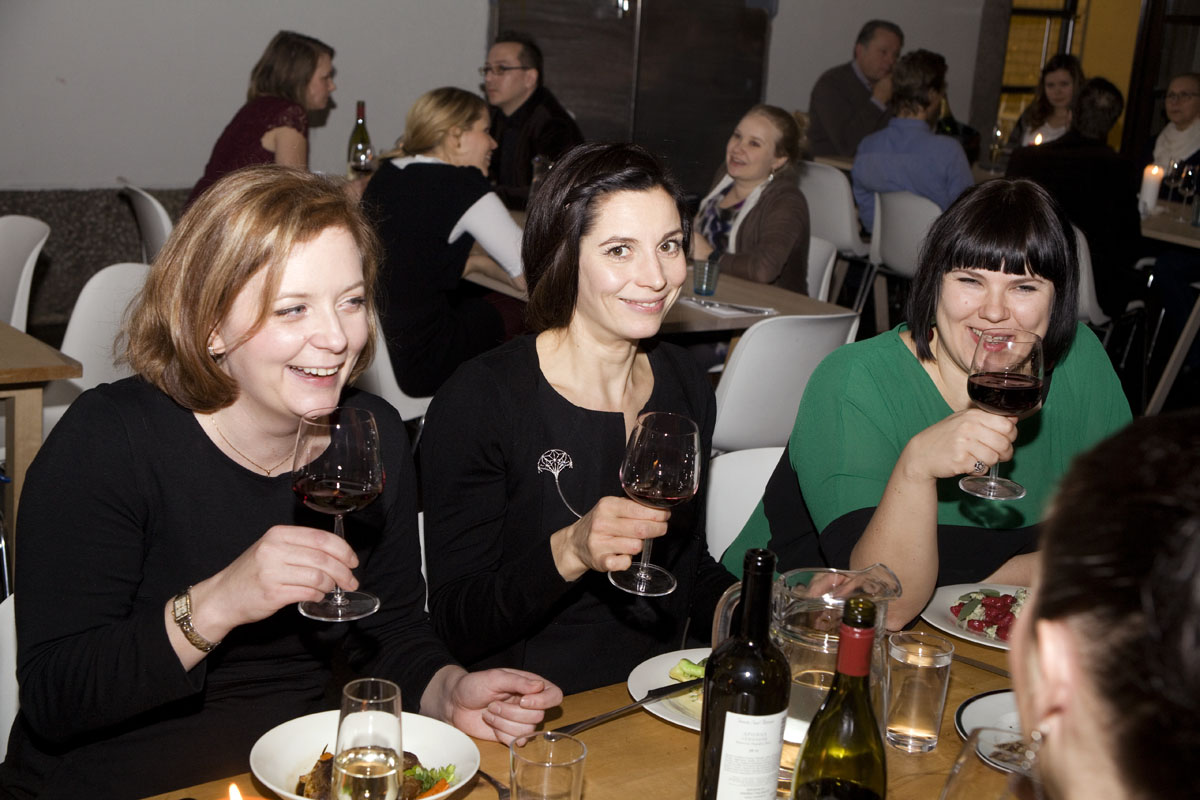
Happy customers! Photo: Matti Tanskanen
Between all of this, Marco, Justin, and I have been finalizing the goals for HDL 2013. I think we have a shared understanding of the goals now, but more on that in the new year.
Note: Lately I've been returning to the habit of writing prepared remarks in an effort to stick to the strict time limits of various events. As an added bonus, this means I end up with a transcript that can be posted with relative ease. Below is one such example, originally presented at the World Design Forum (previously mentioned here) on October 19th in Eindhoven and curated by the indefatigable intellect of John Thackara. Attentive readers will notice that the starting point shares something with an earlier post, but it quickly diverges. And so...
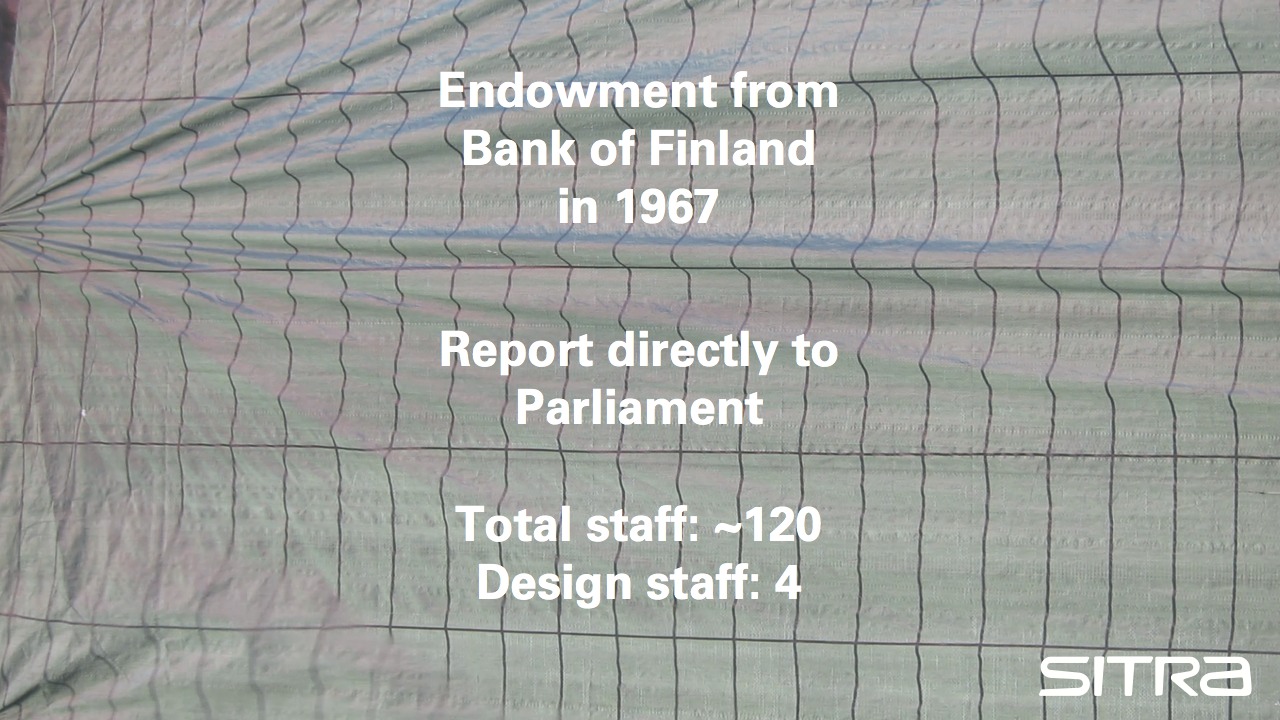
I'm an optimistic enough to believe that humanity will find a way to weather the immense and multiple crises that are mounting today. I'm less optimistic for our institutions, however, and this is why I've chosen to practice design inside a government agency. I believe that our institutions are outdated technology and that the tools and attitudes of design are part of the fix.
At Sitra we've been testing this notion since 2009 with Helsinki Design Lab. We have projects at different scales, from 10s of thousands of euros to tens of millions.
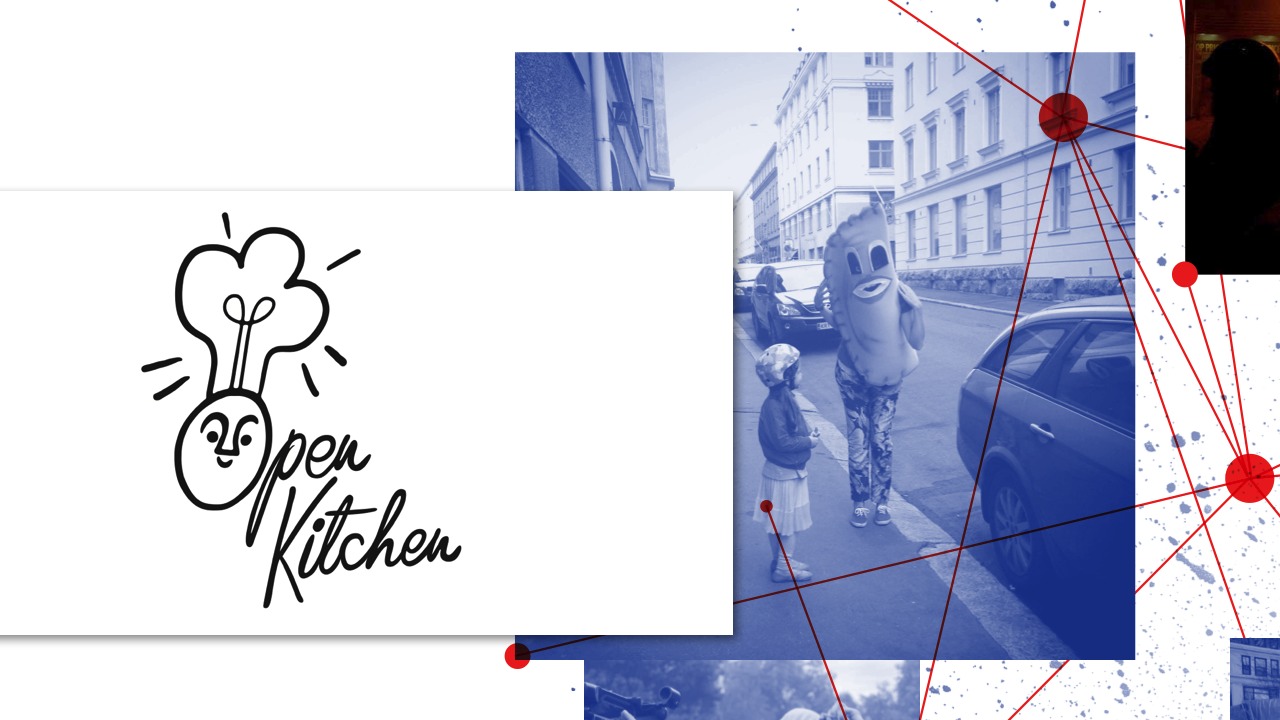
On the small end, that includes projects like Open Kitchen, which is a bootcamp for food entrepreneurs. We've had an explosion of pop-ups thanks to Restaurant Day, a festival that happens 4 times a year which you can see an image of here.
But what pops up inevitably pops down. Open Kitchen is designed to fill a missing rung on the ladder of innovation. In doing so we hope to help restauranteurs move from pop-up to permanence. This is important because we want to combine the faster cycle speed of pop-up innovation with the reliability of everyday businesses.
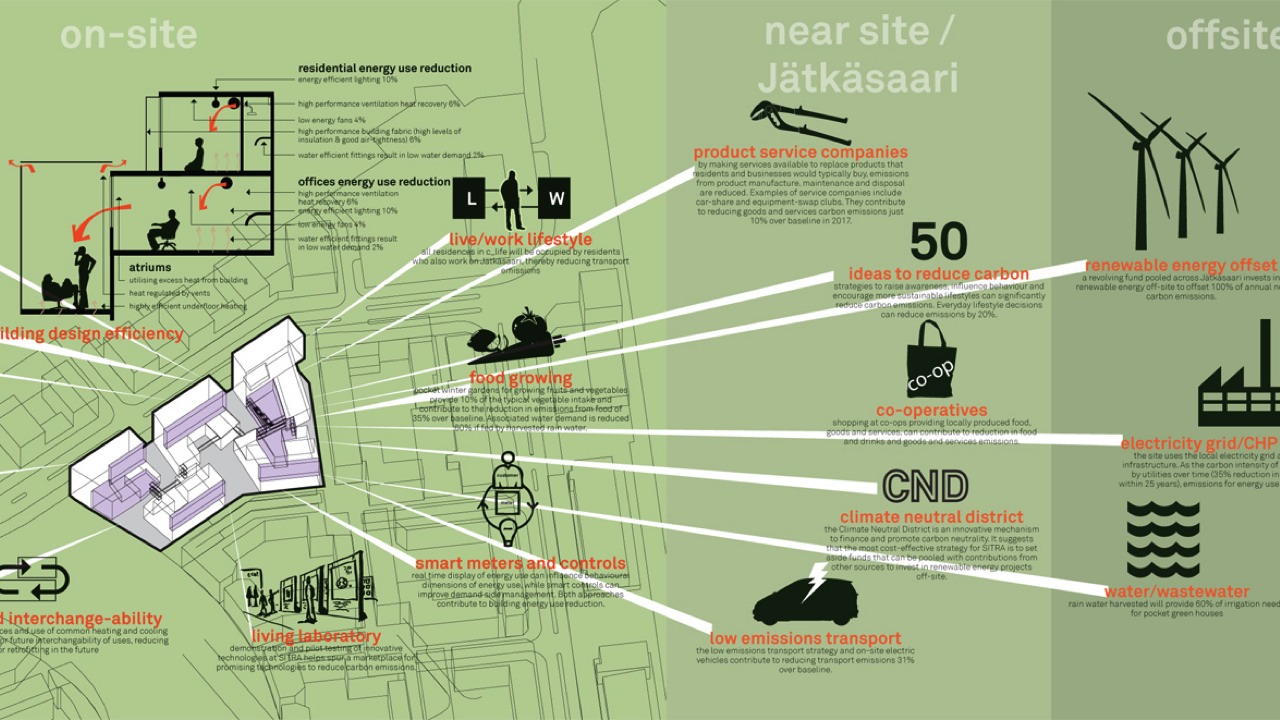
On the bigger end of the spectrum, we do things like Low2No, a sustainable urban development project that looks like a block of 5 buildings, but it's actually a vehicle to work with the ministries, the city, and private developers to create climate friendly regulations and business models. We use the messy reality and imperative of the construction project to bring urgency to regulatory change.
One early success has been a change to the fire codes to make it legal to build large buildings out of timber—something we had never expected when we began but discovered and acted on along the way. We call it a success because 4 other timber buildings have been announced since the change, so this is early but important evidence of scale.
What links both of these is an interest in using tangible projects to help organizations, as Jan Van Der Kruis noted earlier, to "witness change."
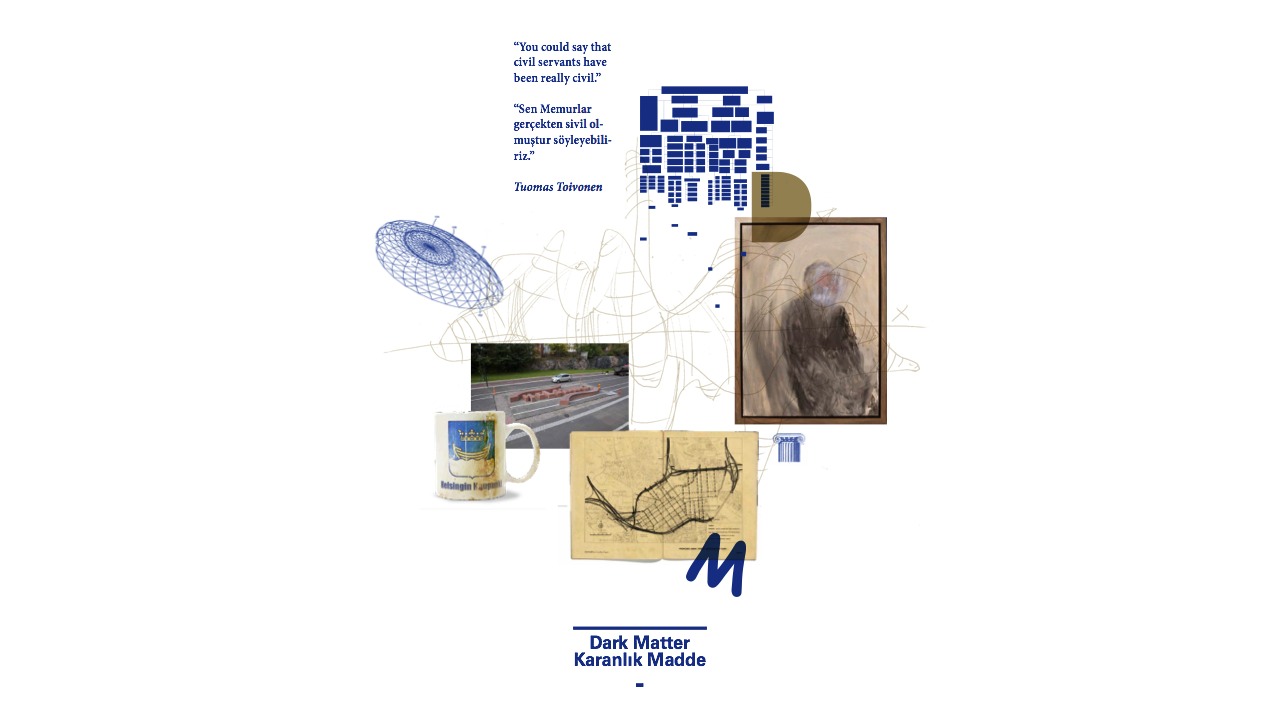
We have not designed roads to have traffic jams, hospitals to have queues, services to remove personal agency, and tax forms to be confusing. Institutions and their procedures can appear immutable and static, but they are nothing more than an accumulation of human choices. We can make difference choices today, and have different institutions tomorrow.
To do so, we need to develop ways to grapple with something that Dutch architectural historian Wouter Vanstiphout calls "Dark Matter". It's a metaphor for the complexity of institutions: all of the invisible things like incentives, pay grades, organizational culture, and other issues that nevertheless shape an institution's interactions, behavior, and output.
Dark matter is not a barrier because it's massive or negative. Rather it impedes change because it is inscrutable and opaque. We use our projects to help us find the texture and grain of dark matter, and in doing so find specific opportunities for change at the systemic level.
Let me switch now and share a bit of recent history in Helsinki, which nicely explains the imperative for another of our projects.

This is part of a cargo freight line in Helsinki that was renovated into a recreational path earlier this year. It was designed for skaters and it opened on June 12th. Exactly 3 months after it opened, the city of Helsinki came back and vandalized their own work by digging a moat around it to prevent skating. This was done in response to complaints by citizens who live nearby.
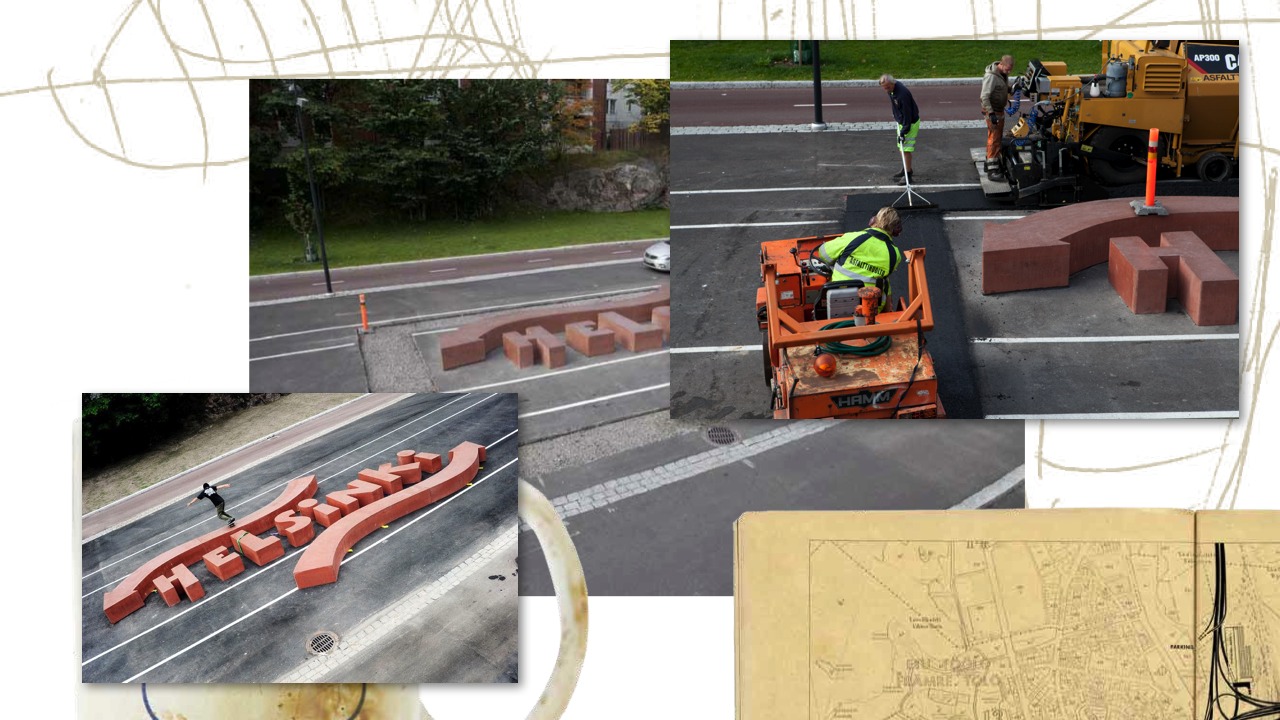
One week later, on September 17th, the city came back and filled in their moat after other citizens complained about losing the skate park. By the way, the original project passed through all of the required due process. The city built the thing, defaced it, then restored it, all within a span of four months.
Why?
Because the city was responsive to its citizens —and quickly! But responding in a series of transactions is not the same as fostering an inclusive debate about how we want to live together. Technocratic silos can only respond with technocratic answers. Why not a sign with hours, for instance? Because public works only have trucks and shovels!
Ascriptions of incompetence would be too easy, too simplictic. Instead we find that the institution itself is not in a fair fight with today's society. We are connected through fast and agile networks. We expect engagement from those we take the time to interact with. We want to contribute, not just receive.
But our institutions are without inboxes. In most western countries we have a democratic right to say NOT IN MY BACKYARD, but how easy is it to say YES?
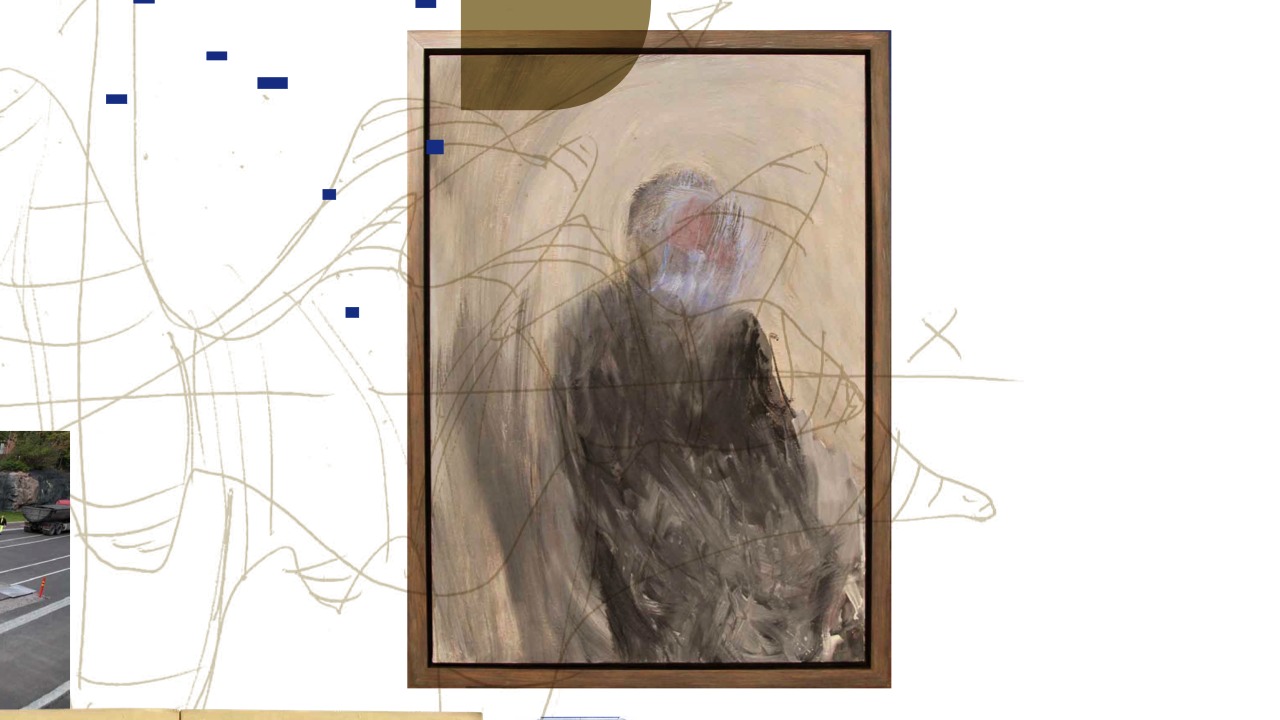
In Helsinki this dynamic is summed up rather poetically in the official portrait of a recent Director of City Works, seen here, seemingly without a face. One wonders if the metaphor was lost on them. And although this is from Helsinki, it's a useful emblem for many institutions in many places, I would guess.
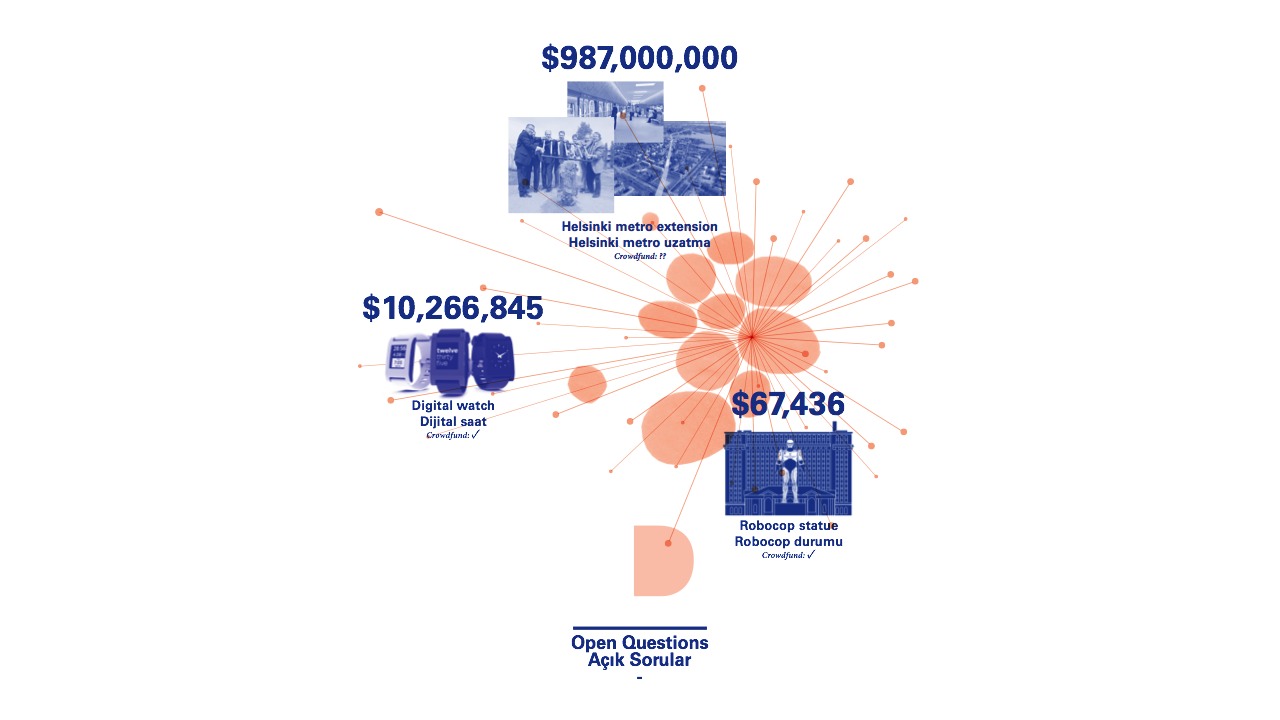
At the same moment we see experiments on the fringe. Crowdfunding websites are providing an alternative for citizens to financially say YES IN MY BACK YARD. This potentially solves a funding problem but it skips questions of democratic process, of debate. One of the first spatial projects on the US crowdfunding site Kickstater was a robocop statue for Detroit. While I happen to like the project, who am I, living in Helsinki, to say that this is what Detroit needs? The local and the global collide in this example with no clear answers just yet. We will have to design one together.
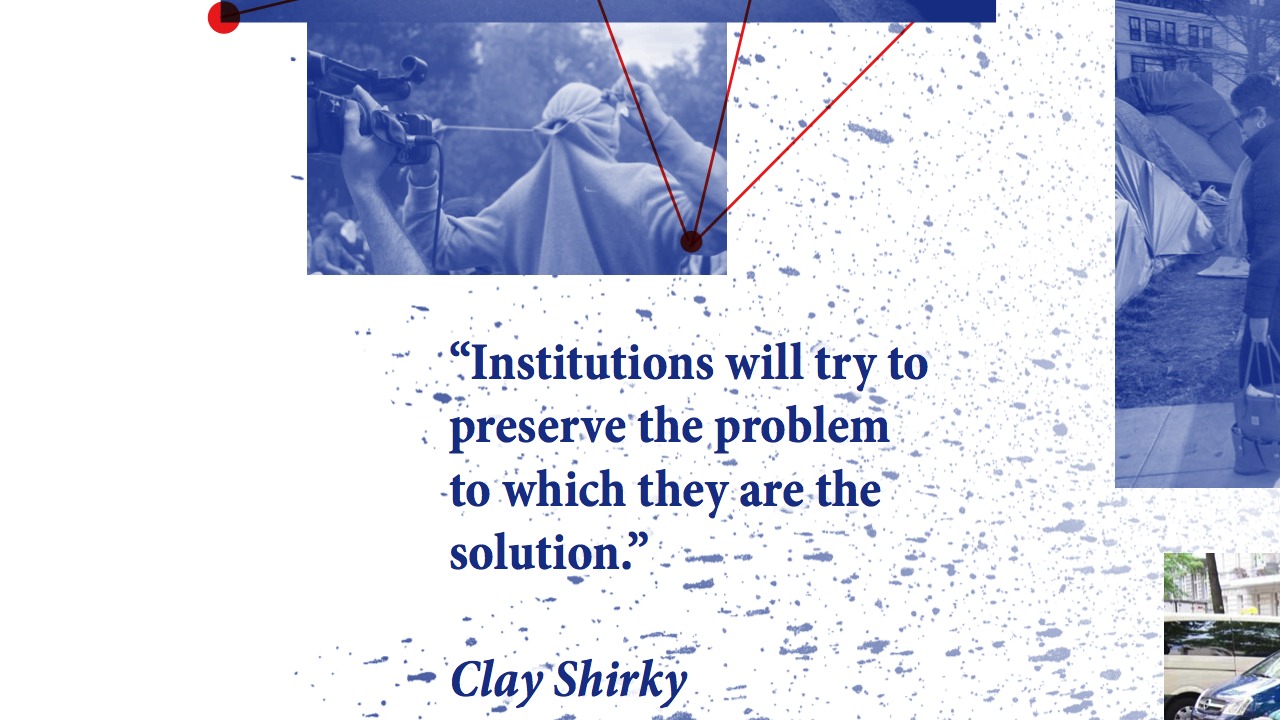
The cost of interacting with institutions is so high that citizens increasingly prefer to accept the risks of self-organization. As our culture changes, the public sector will continue to find itself subject to competition in ways that it's not used to. Restaurant day, which I showed earlier, was organized on Facebook … inspired by the difficulty of the city's own formal permit procedures. This is an unexpected, asymmetric competition to be sure!
If we expect our municipalities and our ministries to behave differently, they will need new capacities as well.
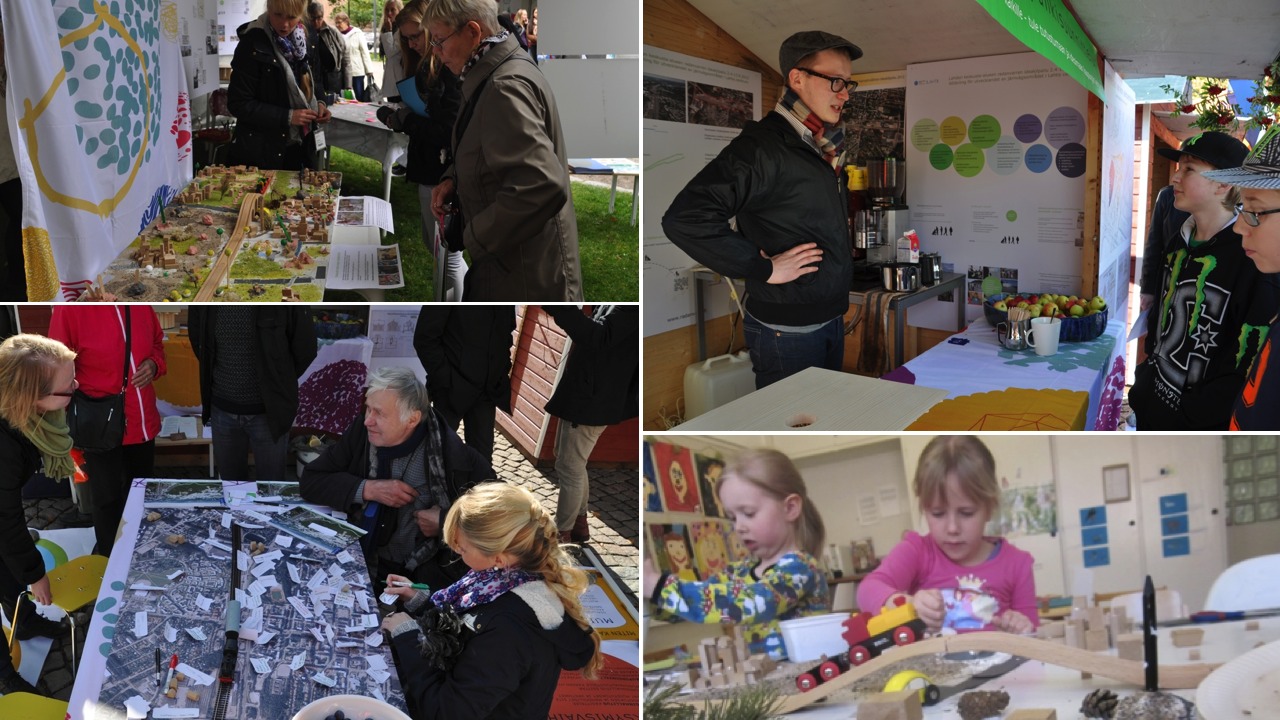
In the Design Exchange we help governments recruit and host designers as part of existing project teams. In other words, we help government change its people, and therefore its tools. These individuals are employees, not contractors. They're part of the fabric of the organization.
By being on the inside, they are better positioned to help frame questions in a holistic way from the beginning. This happens both by bringing a human-centered perspective; by enabling new forms of more fluid communications between institutions and citizens; and by making co-creation with citizens a basic tool, rather than an exceptional one.
Rosanne Haggerty, who runs an NGO in the US aimed at ending homelessness, once told me that "people have a hard time accepting failure unless they also see a solution." With these projects we're attempting to manifest solutions promising enough that they help us engage the failures of the status quo.
Thinking about it today, our hypothesis with the Design Exchange and the other projects is that by jumping straight to possible solutions, and by doing that close to government, we can begin to have a more articulate conversation about how we will redesign our institutions from the inside out.
Thank you.
Ten thousand meters over Trondheim and everything is a luminous black. The only light visible is an icy blue dot, steadily blinking on the wingtip of this Airbus A330. So yes, another flight. I'm on my way back from Helsinki after almost three weeks on the road in Canada, the US, and Brazil.
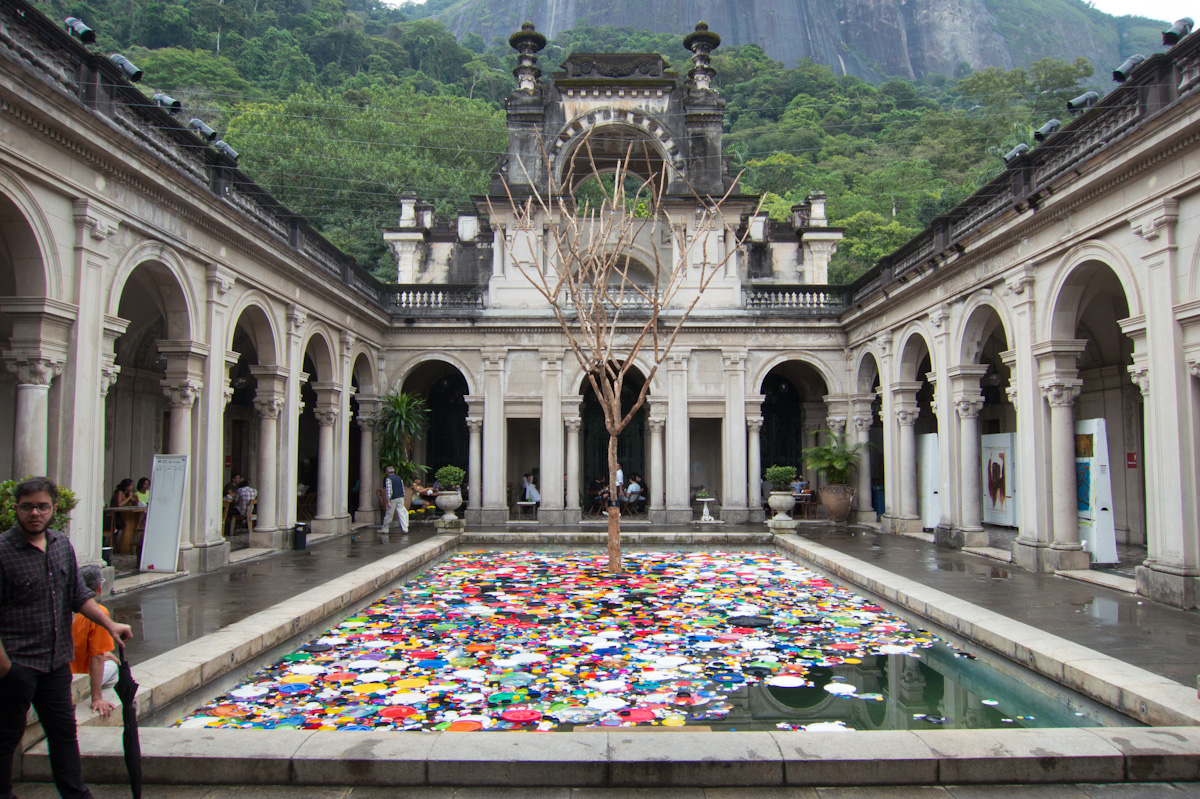
The photos in this post are snapshots from Rio, where I was giving a talk at the Creativity World Biennale...
While I've been giving talks in what seems like just about everywhere, Justin, Marco, Kalle, Maija, and Anna have been more than earning their living by keeping the projects on track.
On the top of our minds right now is Open Kitchen. We've been finalizing the roster of speakers, writing assignments, and briefing speakers. The first item has proven to be a little tricker than we anticipated and so we are finishing things at the last minute. All of the contributors to the programme are people who have a wealth of practical experience and are active entrepreneurs, regulators, restauranteurs, designers, right now. While this is great in terms of the experience they bring to the sessions, it also means that peoples' schedules are harder to contend with. Our neat and clean thematics for each day of the programme have become slightly less crisp in the transition from top-down planning to emergent reality. We made the explicit choice to favor quality of content over ease of scheduling, though, so this is what we get!
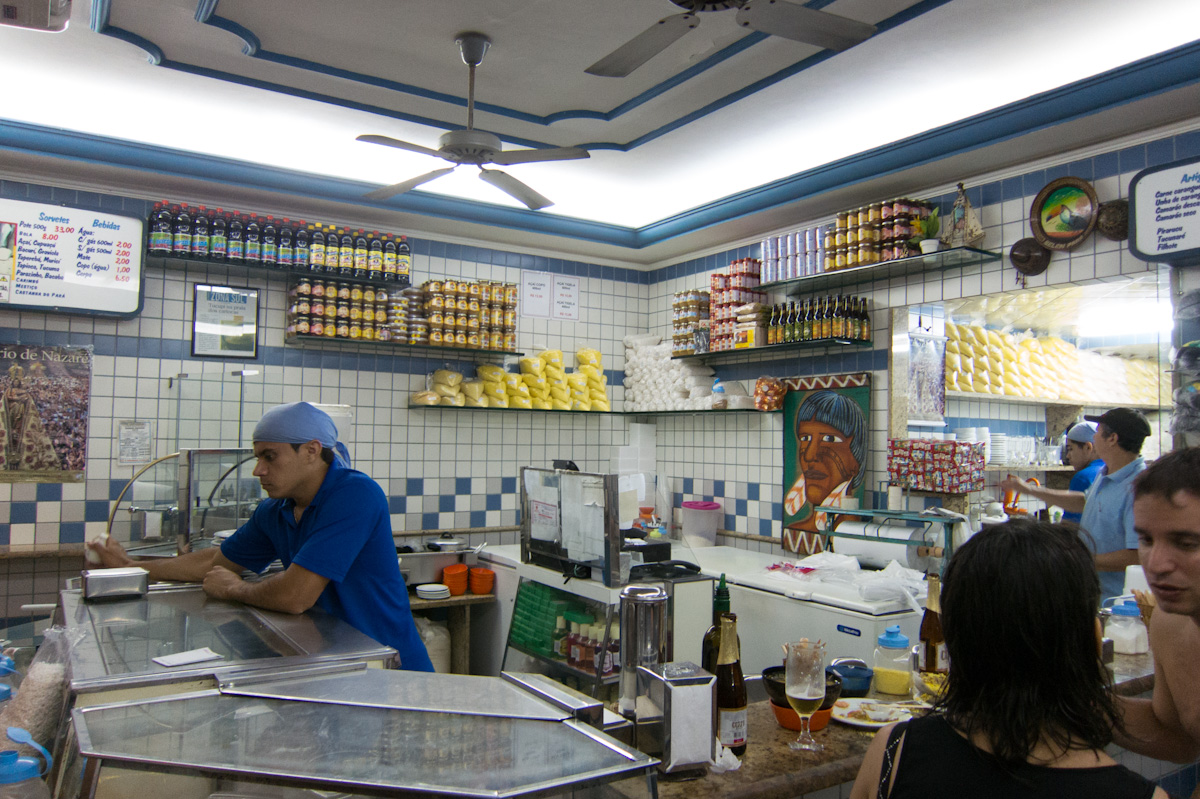
Of course I took the opportunity to check out local street food and other eats. Açai remains my favorite snack in Brazil.
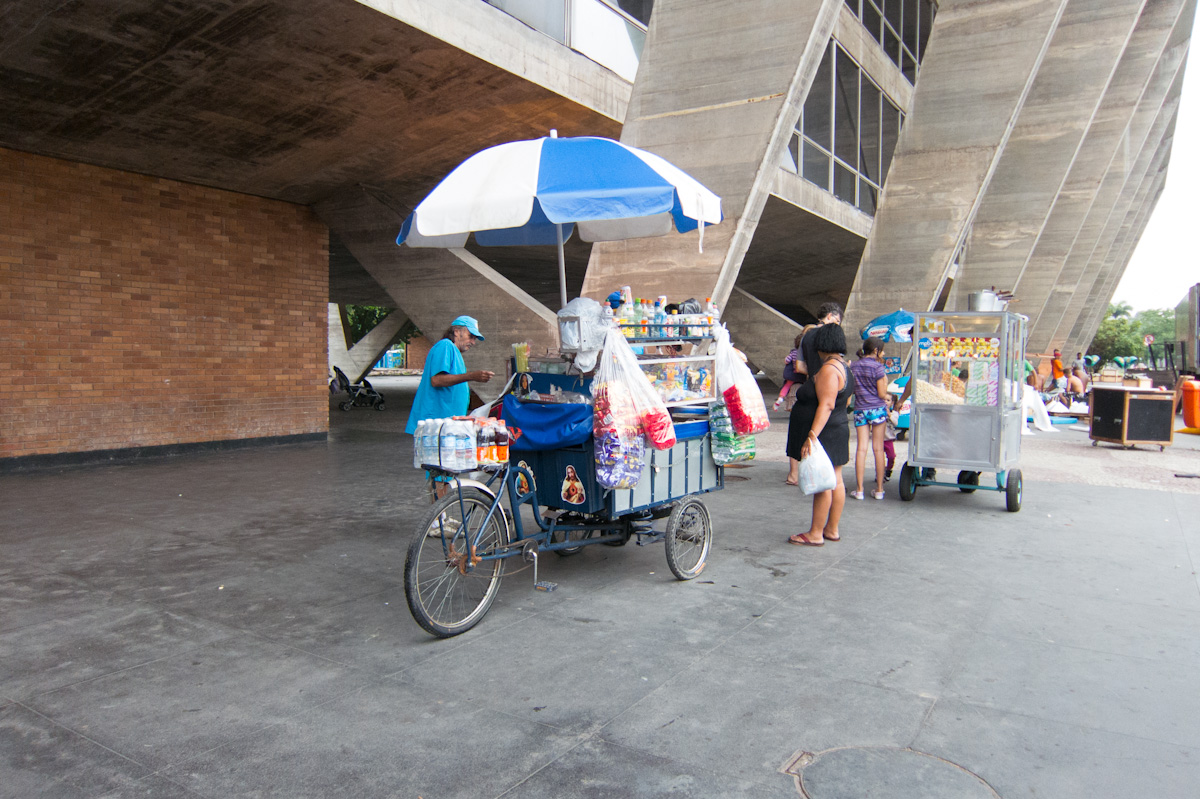
We're also excited to have selected two Aalto University students who will work with the Open Kitchen participants to design their collaborative restaurant. It's going to be a barnstorm—they will have two days to do everything from menus to interiors—but the pair are talented so I think we'll see good things from them.
Marco had a busy day yesterday. He started the morning with an appearance on MTV3'sHuomenta Suomi (Good Morning, Finland) show to discuss the World Design Capital and then spent the day in Finlandia House MC'ing the closing event of the WDC. Lots of familiar faces were in town for that, so I'm especially disappointed to have missed it.
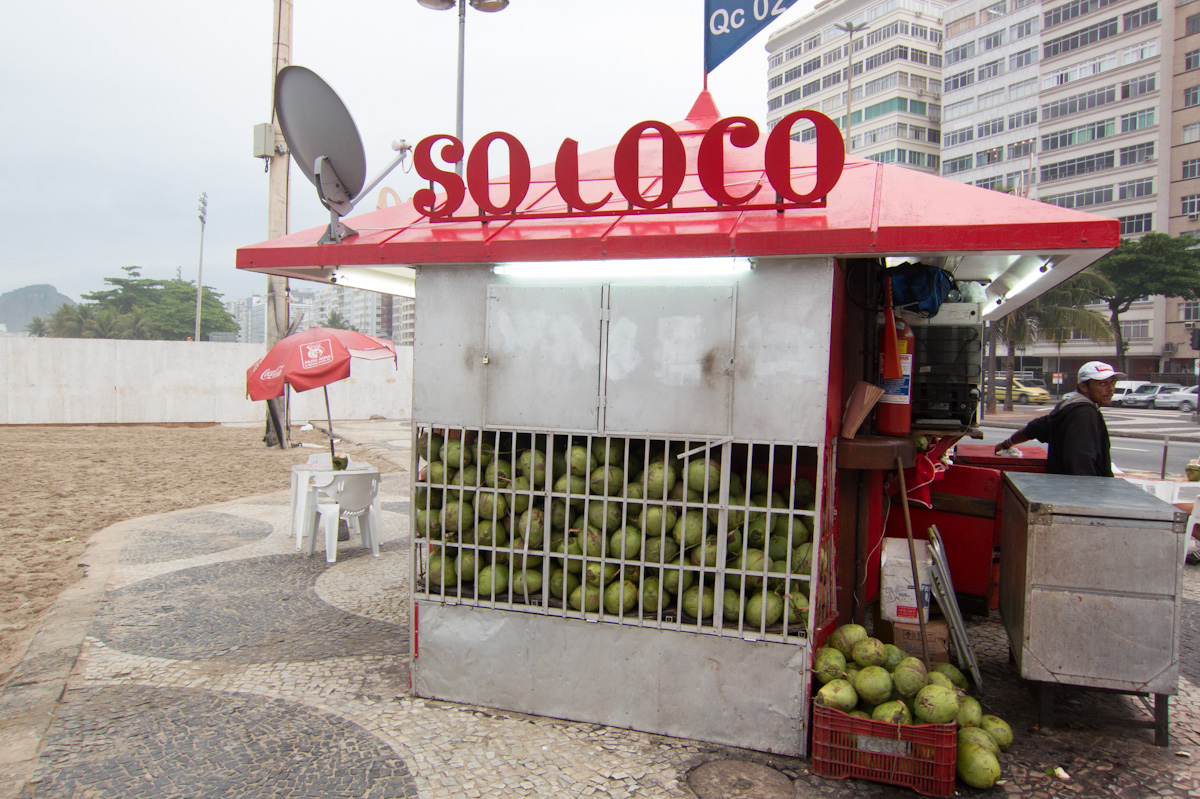
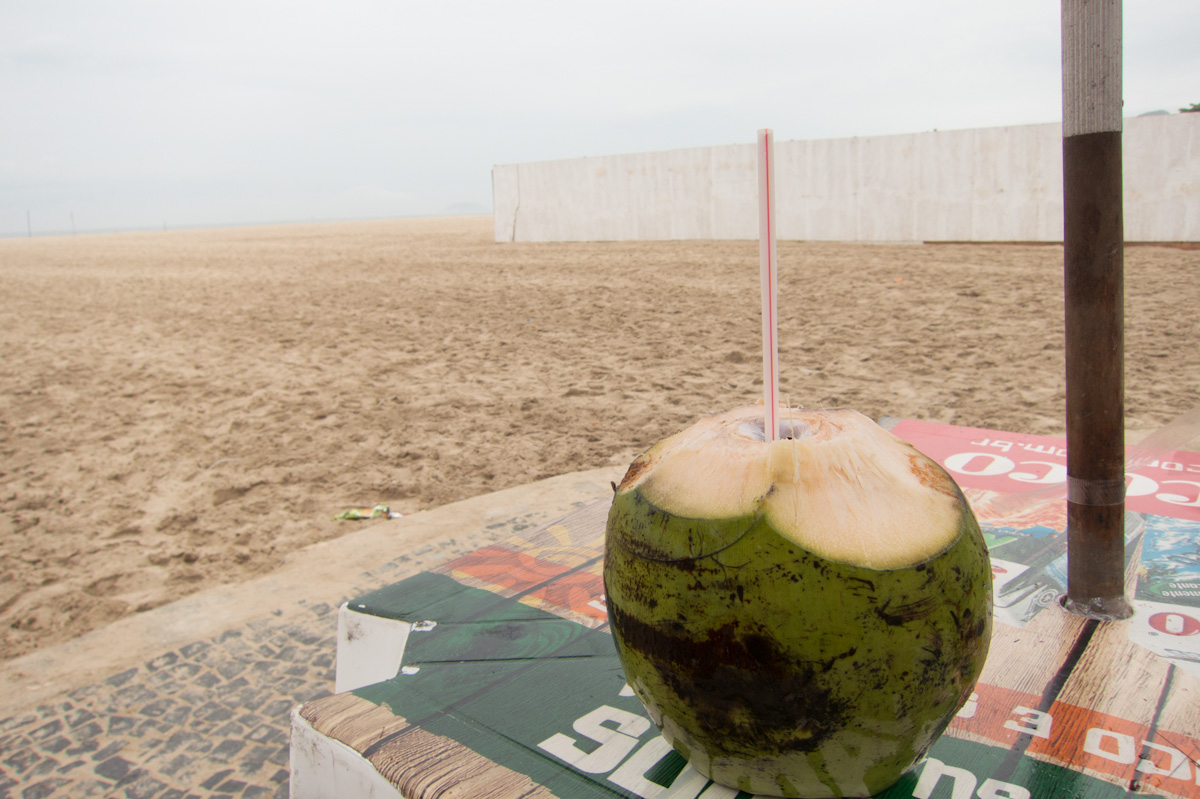
The coconuts were not too bad either.
Maija and Erkki have been in eastern Finland meeting with a town there about the possibility of doing a sort of micro-Brickstarter prototype. I happened to run into Candy Chang, a friend and former neighbor, while I was in Rio de Janeiro, and we were able to share notes. She is part of the team behind Neighborland. Meanwhile, we are pushing ahead with a reflective summary and wrap-up of our research in this area. I'm rather behind on some writing for the site. That's likely to be part of my weekend.
Jaana, our embedded designer in the City of Helsinki Social Services dept, is off to the races with the redesign of the website and access channels for their in-home family care services. We should have something to show there by the end of the year, but no promises just yet. It's about to be pikku juolu (lit. "little christmas") season in Finland and that always seems to stretch timelines.
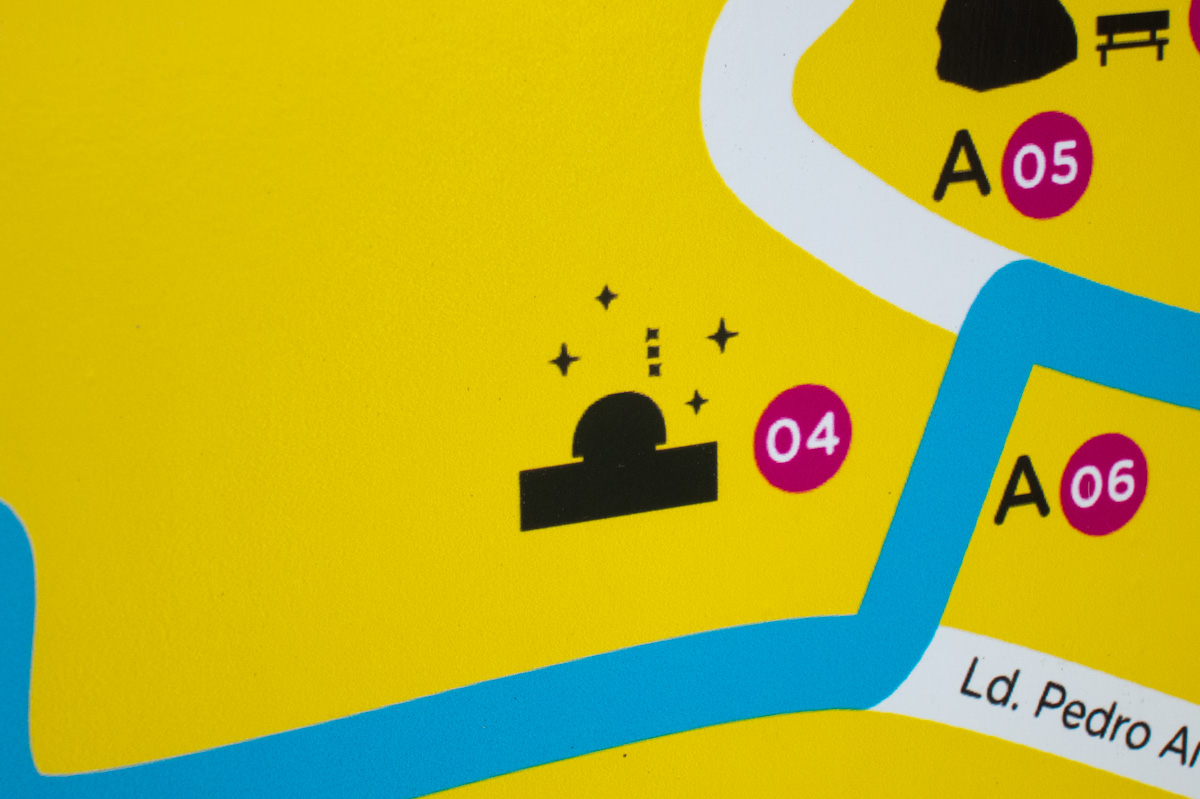
An excellent icon for one of the local observatories.
As a last thought before dutifully stowing my laptop and preparing for landing, I'm grateful to the many people I had the pleasure of meeting across Canada recently thanks to my trip there hosted by Social Innovation Generation. Nate Archer, Cameron Norman, Geraldine Cahill of MaRS, and ISIS at the Sauder School of Business in Vancouver took the time to blog about my various talks there.
And there's the red light and the reliable bing-bong of the landing preparation ritual.
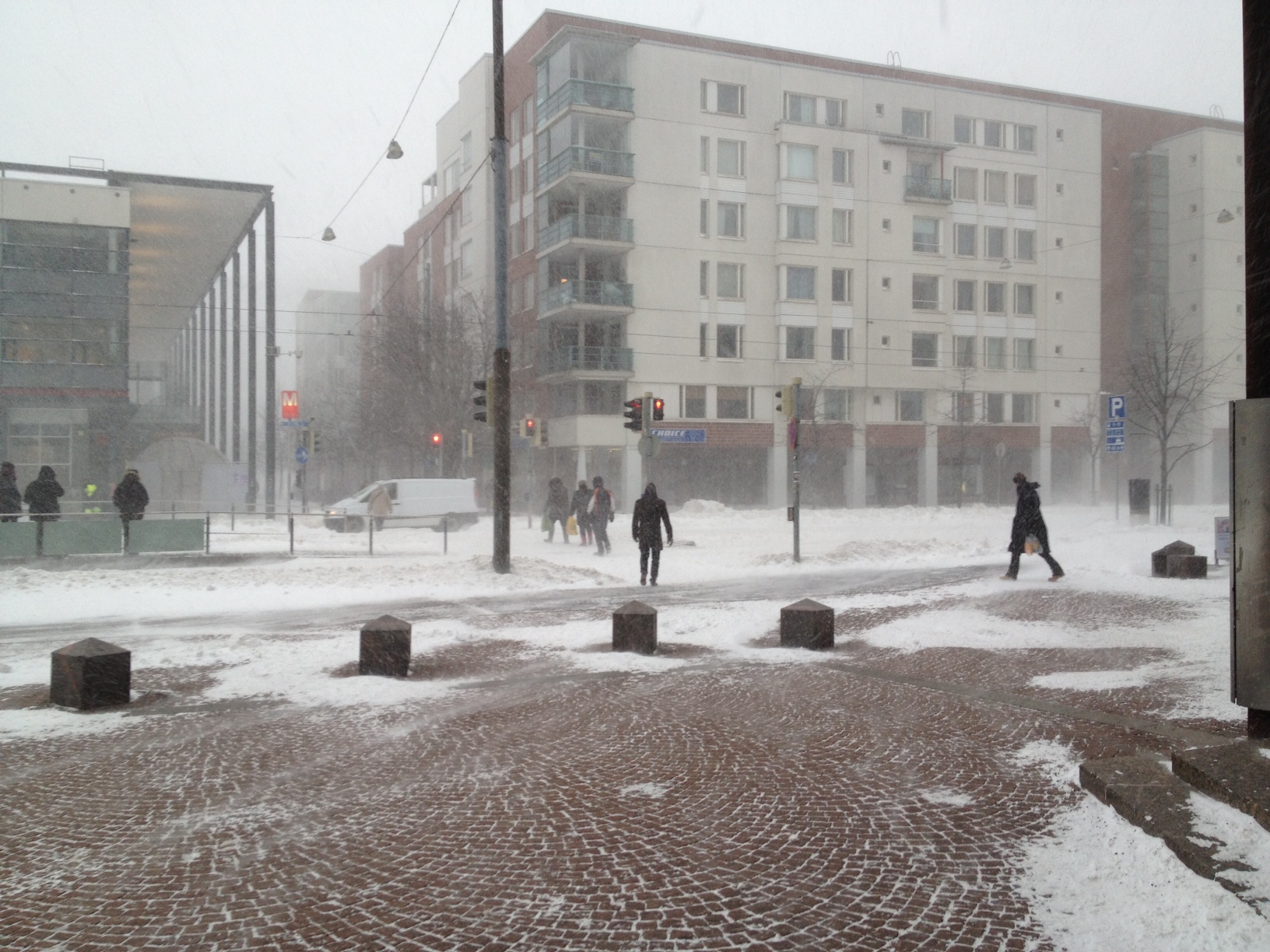
This is the scene from the office, after landing. Quite the contrast.
Gray. Dark. From the Sitra tower one sees a vista of offices, homes, and shops glowing warmly beneath a thick cloud cover. The idle booms of a coal ship docked not too far away shine orange under sodium-vapour lights. At ground level metal surfaces reflects the red of brake lights, meaning people are on the way home. Marking the horizon, a strip of faint and fuzzy peach just visible beneath layers of dirty, gauzy, clouds.
More travel these past two weeks (not unlike one year ago). In week 188 Marco was at Dutch Design Week and then at a session at the Danish Parliament (which we all enjoyed hearing about because we are hopeless Borgen fans). He's just back from Moscow, where he was part of a session on the development of Skolkovo. Last week I was in Portugal to give a talk at Cidadania 2.0 (Citizenship 2.0) and then took a day off in Barcelona before coming back north. While there it was nice to catch up with Martin Lorenz and Lupi Asensio of TwoPoints, who did the visual identity for HDL as well as the design of In Studio.
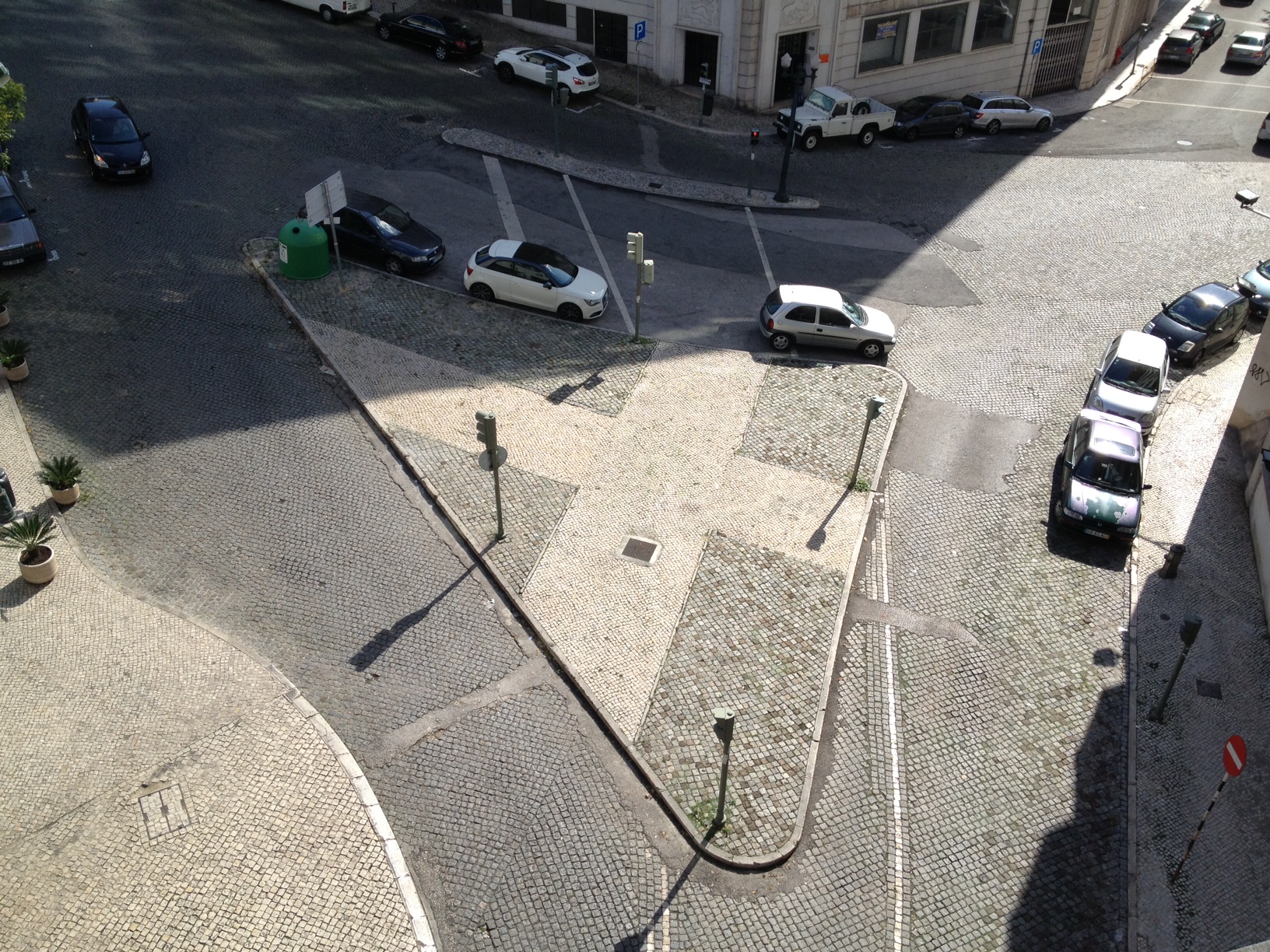
An almost-Finnish-flag literally on the streets of Lisbon
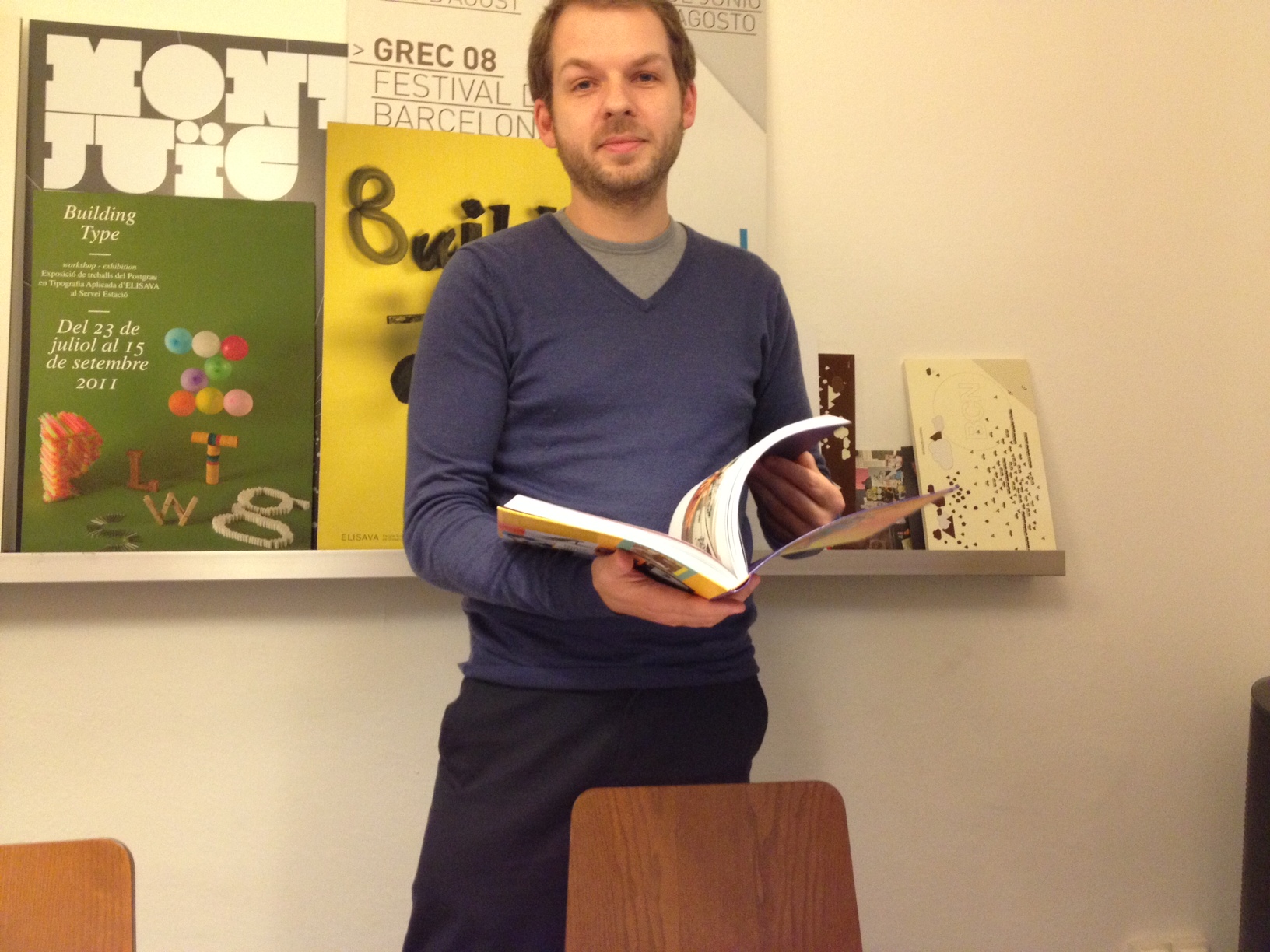
Martin explaining that "there's no ugly anymore, just boring."
In Lisbon Frederico Duarte gave me a tour of the city (and its food). A couple months ago Frederico wrote about Helsinki Street Eats in a profile of the city that he did for Fugas Publico, so it was nice to be able to meet in person. His own recent publication on the cakes of Portugal is an enticing read. I'm quite glad that I got a copy of it at the end of my trip or I might have come back a few kilos heavier.
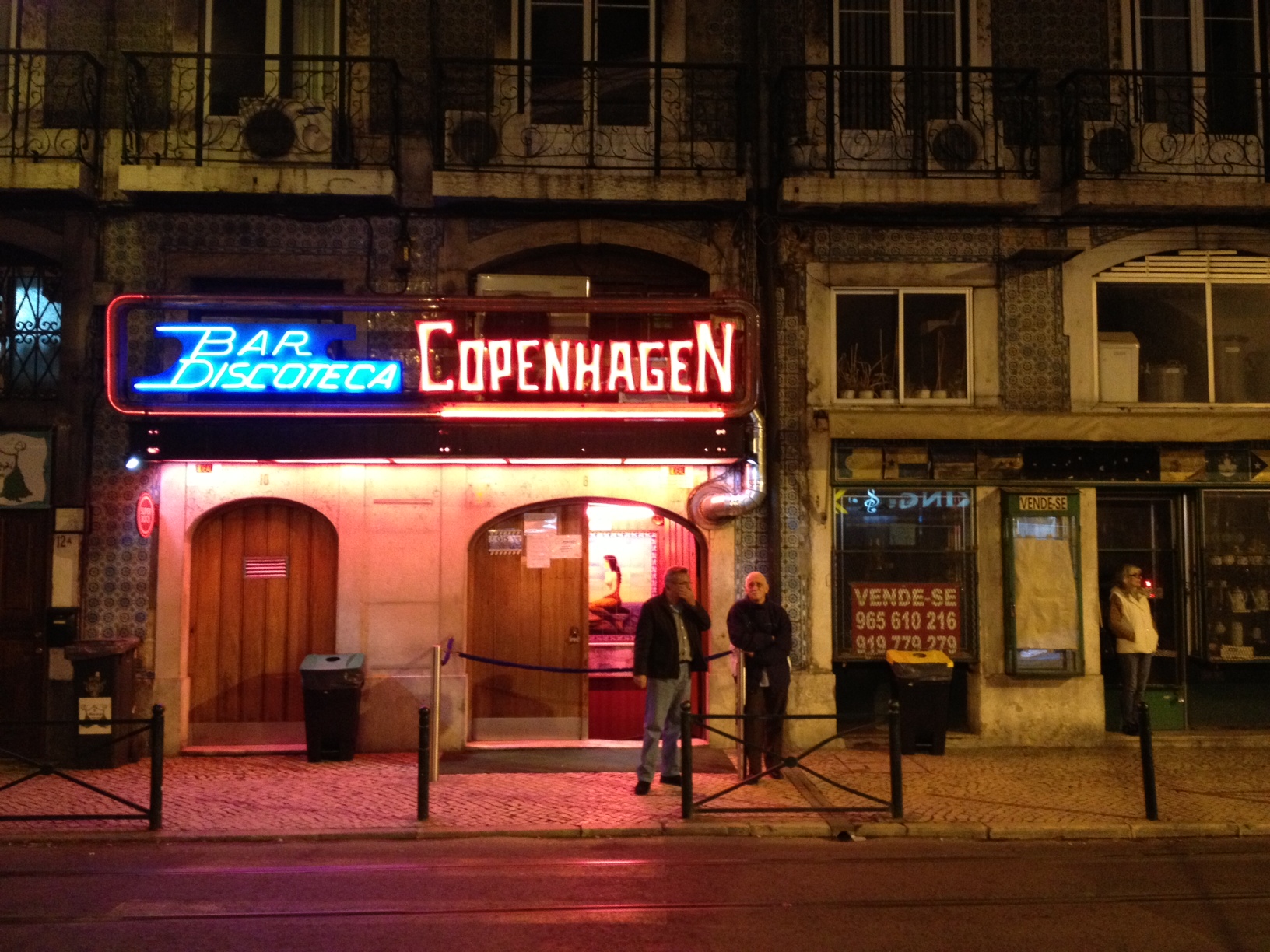
Lisbon has a nordic nightlife corner with clubs named Oslo, Copenhagen, and Viking. Who's going to start Helsinki?
On Monday we announced the participants for Open Kitchen. Out of 53 applicants we were able to make room for 13. The response was overwhelming and most of the people who applied did so by video (as we requested). The enthusiasm and eloquence in the videos is something that we want to share with you too, so Kalle is hard at work editing them into a single clip. Once we do that and get permission from everyone we'll post it here and on the Open Kitchen Facebook page.
The diversity of the applicants is what excited me most. From 19 to 40+, Finland to Brazil, burgers to ancient preservation techniques, we had a bit of everything it seems. We tried our best to capture that in the final group:
- Archibong wants to fuse African and western food
- Saila wants to give shape to a new kind of ice cream
- Mark dreams of smoked meats (and some bacon sandwiches, we hope)
- Anni believes in stylish an uncomplicated lunches
- Fatim's social kitchen will be an anchor point for newcomers to Finland
- Alba will bring the warmth of Mediterranean dining to Helsinki
- David is investigating ancient preservation techniques
- Elaine is going to show us how Brazilians do effortless nose-to-tail dining
- Jérôme tells us that bread is about friendship
- Jonatan & Nicklas are pure energy and enthusiasm
- Nguyen thinks Vietnamese food in Finland can be better
- Veronica believes in food, flowers, and friendship
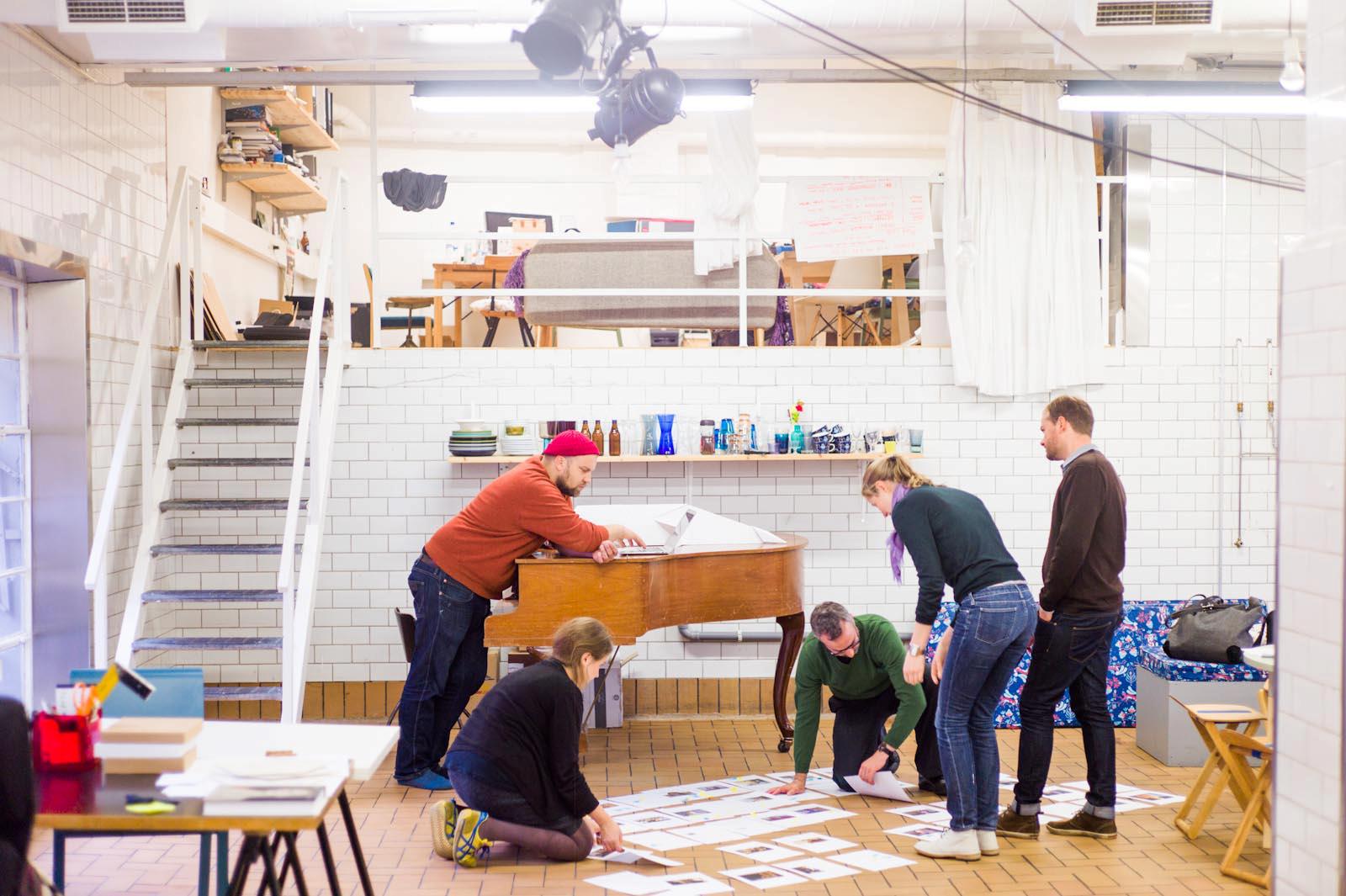
Jurying the Open Kitchen applications was quite a task.
Next steps with Open Kitchen are to launch a similar call for two design students to help the team design and build their prototype restaurant. If this sounds interesting to you (and you're based in Helsinki) please follow the Facebook page for an update next week.
Brickstarter needs more attention than we're giving it at the moment. Maija, Dan, and I have a lot of writing to finish up. We sketched that out on the whiteboard last week, but unfortunately there's is not yet a device to turn marker scribbles into coherent, articulate prose. We are currently exploring the possibility of doing a MVP (minimum viable product) version of Brickstarter with a municipality that's east of Helsinki. More details when they're stable.
A trickle of HDL 2012 feedback has been coming in, including corrections and amendments to the cases we wrote. Next week we will be making some decisions about whether or not we put the cases together into a publication, and if so how. That's part of a larger discussion about what the future holds for HDL.
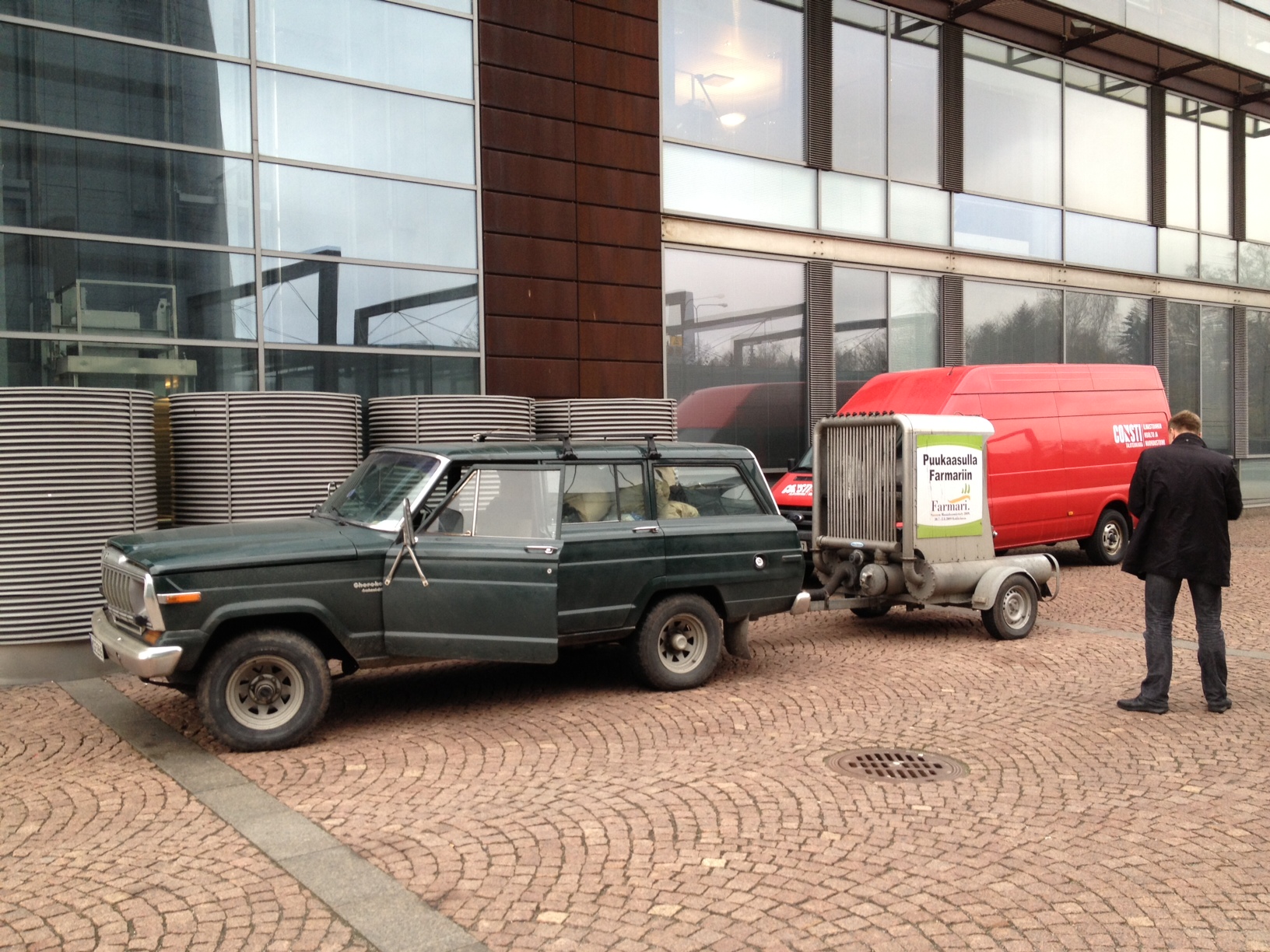
A wood-fired car visited Sitra. It's gasifies wood chips!
Which leaves us with a long overdue project, a booklet that we comissioned the OpenEndedGroup to write. I spent the week checking all the final boxes so that this can go to press and get pushed live on the website for downloads. That'll happen early next week, so all I can do for now is tease you with these images. It's a plain spoken booklet about how to collaborate on creative projects. It's the kind of thing we might encourage people to read before joining us for a studio, for instance.
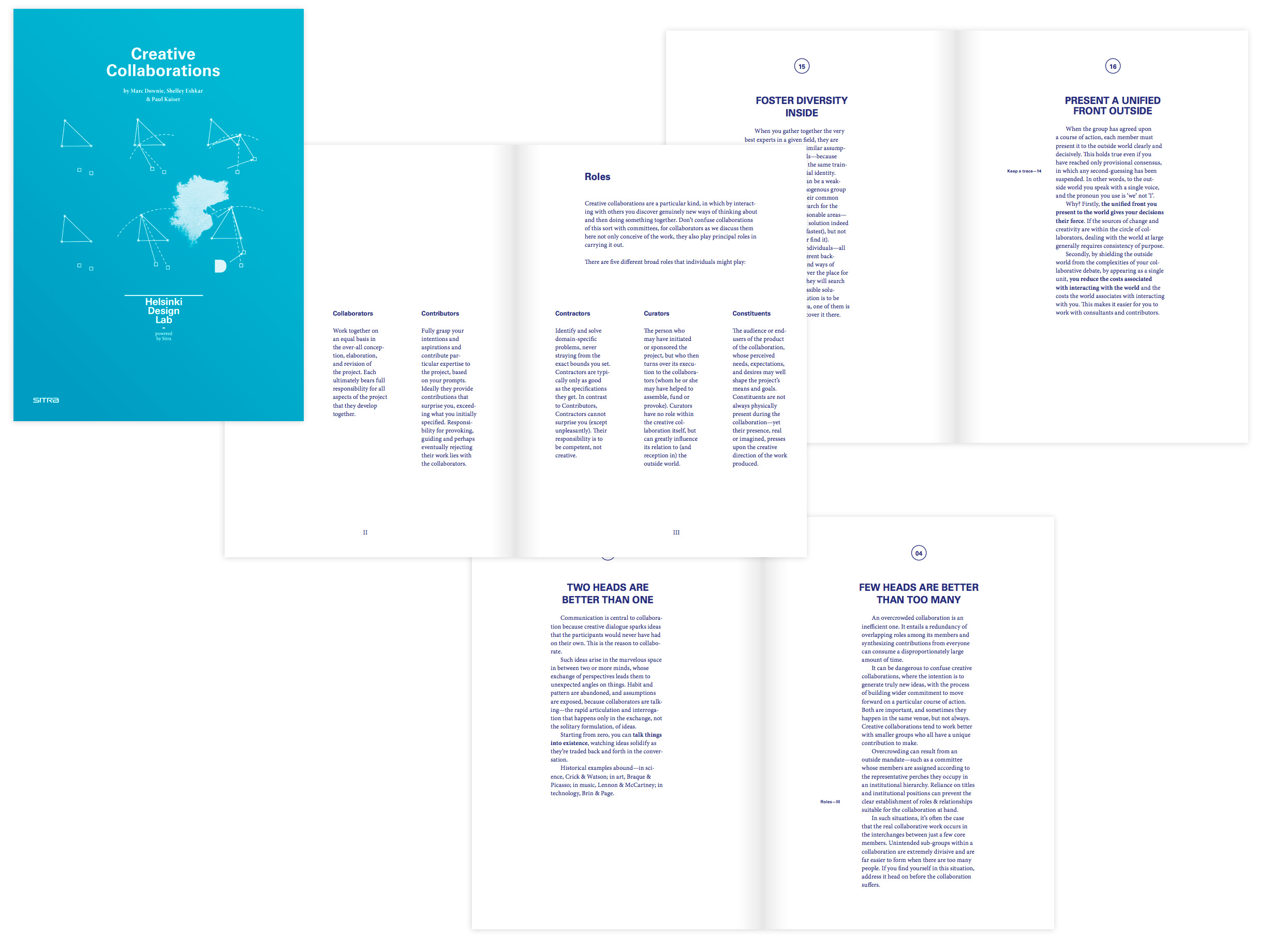
Creative Collaborations by Marc Downie, Shelley Eshkar & Paul Kaiser. Publication forthcoming!
Before I end this weeknote and begin my weekend, two announcements for November. Social Innovation Generation (SIG) is hosting me for a tour of, well, most of Canada. In Toronto I'll be giving a public talk that you can sign up for here at 18:00 on the 12th. We've had an ongoing discussion with SIG and a few other groups in Canada, as well as receiving more than a couple visitors here at HQ, so I'm looking forward to seeing things on the other end of this cross-atlantic friendship.
After Canada I will be heading to Rio de Janeiro to give a talk at the Creativity World Biennale. And then I will sleep for a week straight.
It would be excellent to meet readers of this blog at these events. If you're attending please say hello.
It's only tuesday and already the supply of stroopwafels in the office is dangerously low. As is customary on our team, on a trip to the Netherlands one is obligated to return with wafels. I was in Eindhoven at the end of last week and I did my duty, but apparently I miscalculated the quantities. More about the trip in a moment, but first we need to get to something rather incredible.

Open Kitchen also has a new logo courtesy of Sanna Mander!
Applications for Open Kitchen closed last monday and we got roughly 50 applications and the lot of them are impressive! We asked people to make short videos that describe themselves, their experience, and how their food concept will make make Helsinki a better place. The applications included people who excited about cakes, tapas, pho, flat whites & avocado toast, flower ice cream sculptures, traditional food preservation techniques, burgers, sourdough breads, and someone offereing a conceptual menu that begins with a starter of "loneliness" and continues with an entrée of "empathy". So in other words, this is all fantastic.
What we heard from the application videos is that Open Kitchen is exactly the sort of thing people have been waiting for. Now begins the difficult task of winnowing it down to a batch of ~12 people who we have room for in the programme. Tomorrow is the day for that and we'll be balancing multiple criteria:
- Sustainability: is there a concern for local and sustainable aspects of preparation, logistics, consumption, recycling?
- Diversity: is there a new kind of cuisine, a new experience, or a new perspective?
- Everyday: is the applicant interested in basic food experiences (not fine dining) that improve everyday life?
- Social: does the applicant see food as a social object that creates a bridge between diverse publics?
- Drive: does the individual show drive, determination, spark, verve, commitment?
The final selection will be posted next week. We are also hoping to post some examples of the applications, but first we need to get permission from the applicants.
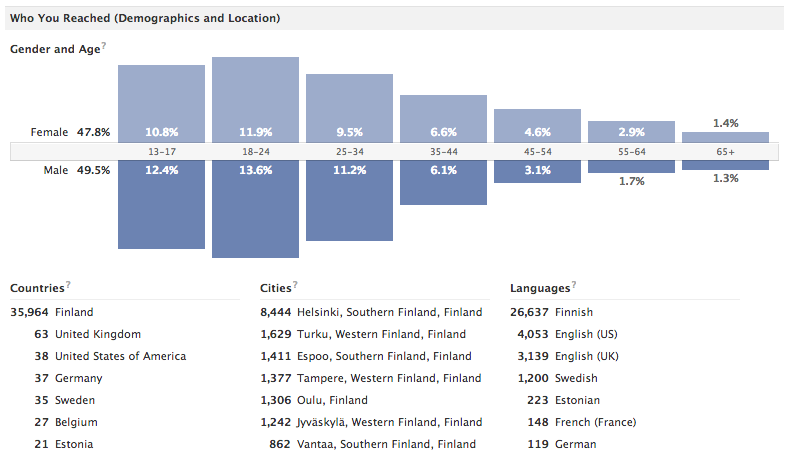
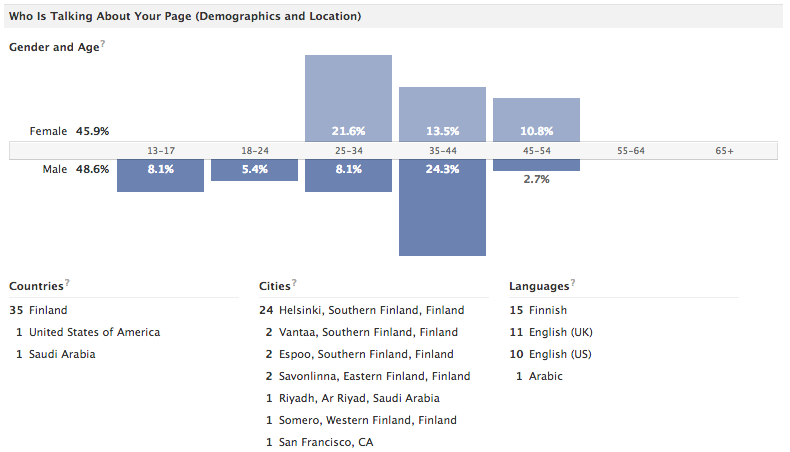
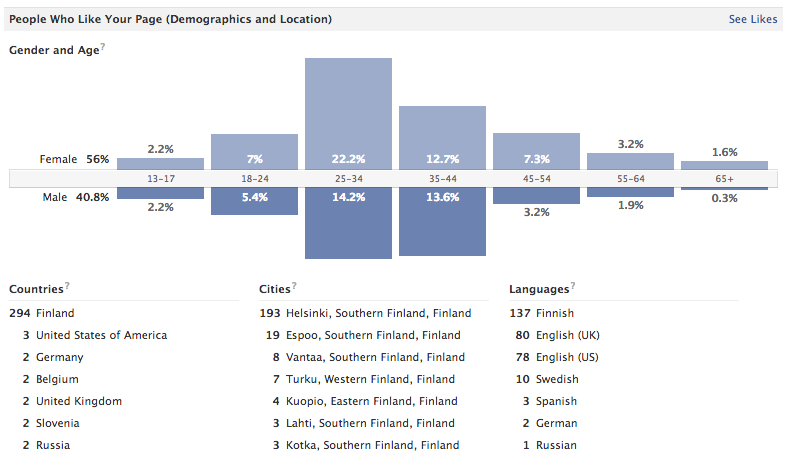
To get the word about Open Kitchen we did an experiment with Facebook ads. We spent a total of €350.62 running two parallel ad campaigns for about 3 weeks. These were targetted to all people living in Finland age 17 or older (about 1,969,280 total Facebook users). To put this into perspective, it would cost €430 to have a banner ad on the popular Nyt.fi website or about €3,000 to have a small ad in the print version.
The response was rather rapid and we saw significant growth of the likes on the Open Kitchen Facebook page, an increased number of questions, and people sharing our posts. What we don't know yet is how many of the applicants found out about OK on Facebook versus other channels. Kalle will be following up with everyone to inquire about that so we have a better picture of how useful this method of advertising was. Here's a view of the stats for the lifetime of the campaign:
Dan had a good meeting with Jaana, who is our Design Exchange person working at the Helsinki Department of Social Services. He, Marco, and myself will swarm with Jaana on a quick project that she's starting now. The gist of it is that there will be an experiment in making preventative help more accessible, ranging from basic parenting advice up to complicated social difficulties. We think this means a combination of new online and offline possibilities to get access to help before there's a problem, but we're not exactly sure yet what shape this will take. It's Jaana's project, but we're here to help.
Down in Istanbul our installation of Brickstarter is now open to the public as part of the Istanbul Design Biennial. If you're not able to see it in the flesh, you can check out the boards we presented here and a bit of backstory here. This opportunity came up at the last minute and it was quite a lift to get the exhibition squared away while also finishing up everything for HDL 2012, but in the end I'm quite happy with how things came out. As an added bonus, the boards for the exhibition are useful as slides to be used in Keynote (thanks to the magical Magic Move transition).
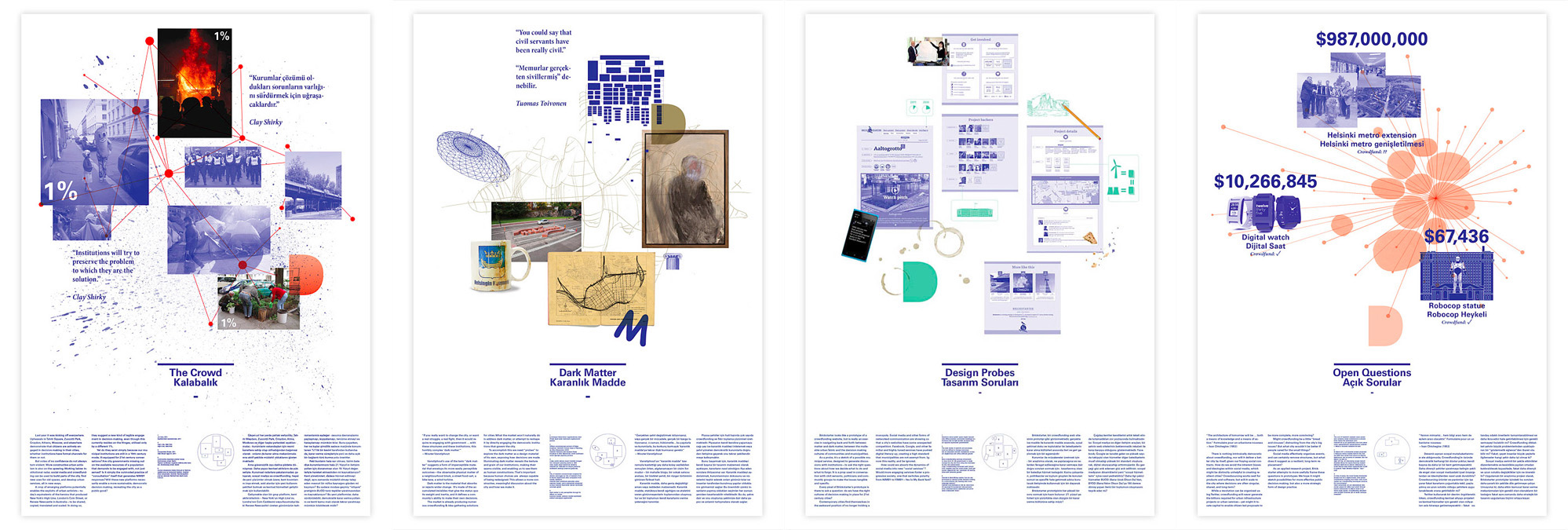
The Crowd, Dark Matter, Design Probes, Open Questions
After HDL Global 2012 concluded Marco and I both got on planes for Italy. He took a well-earned week off with his family. I was headed to European Center Living Technology to share our perspective on strategic design as part of a meeting about Envisioning a Socially Sustainable Future.
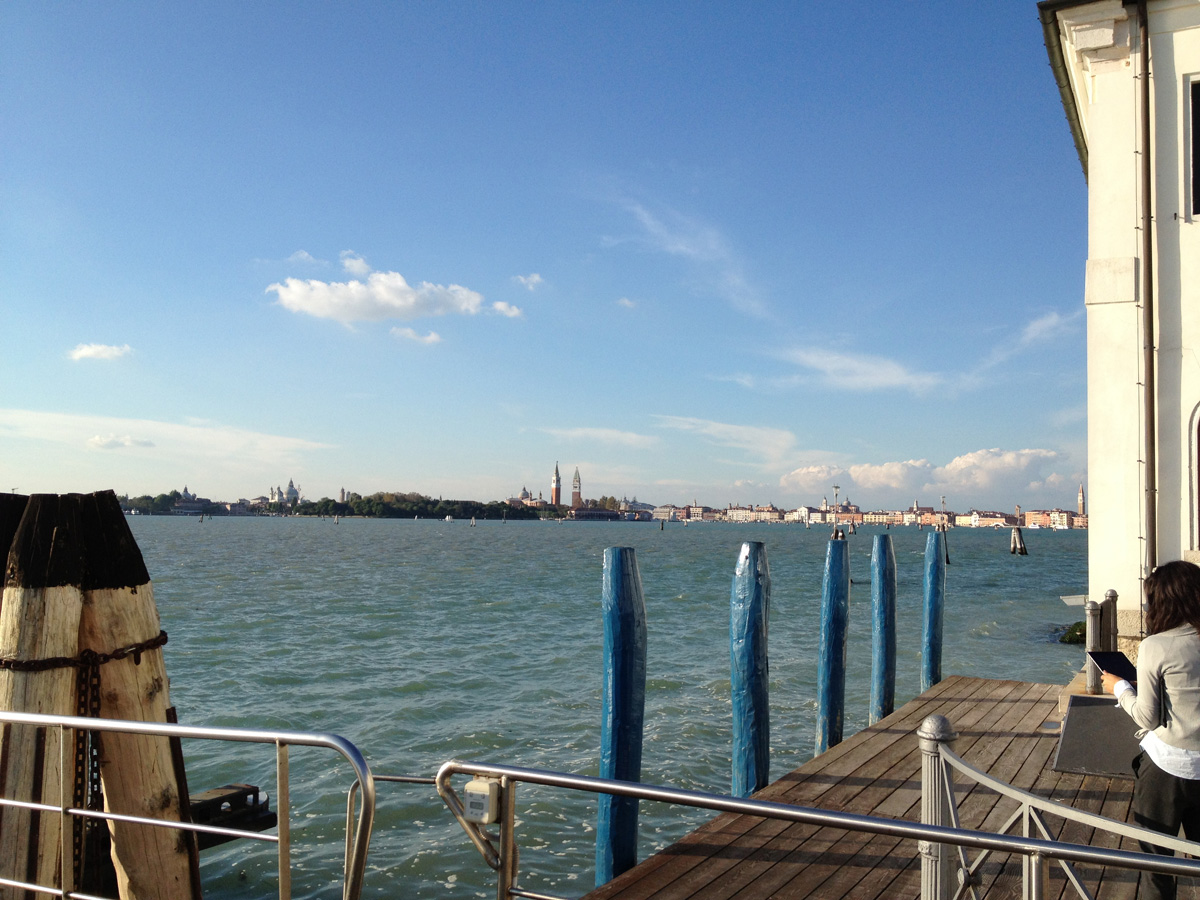
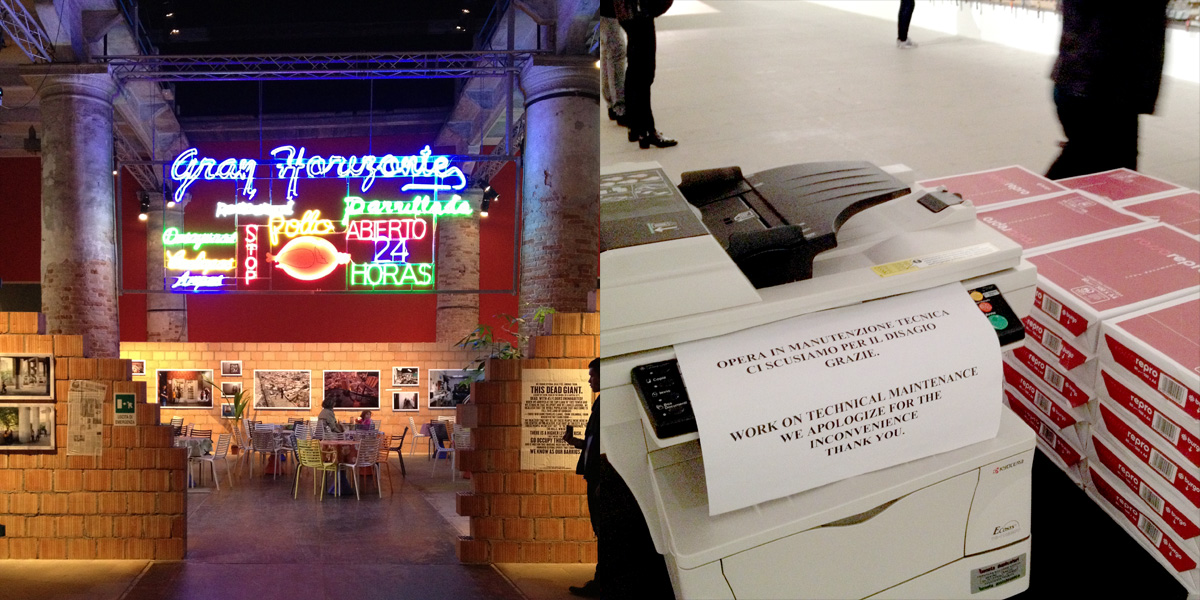
While in Venice I had a morning to visit the Architecture Biennale, which was useful to see in comparison to our own work in Istanbul. We've installed a "grumpy printer" and it appears that FAT are of a similar mind with their contribution in the Biennale (one of the highlights).
From there it was on to Ljubljana to be part of their Month of Design with a delegation of other colleagues from Finland.

Out and about in Ljubljana. A local friend took me on a street food tour, of which the Burek was the highlight.
And the week ended in Eindhoven where I gave a talk at the World Design Forum and then loaded my suitcase with stroopwafels. Doug Belshaw's thoughts on that event are worth a quick read. Hearing about Doug's work on the Mozilla Open Badges project was one of the highlights for me, as was getting a chance to catch up with John Thackara who moderated the day with aplomb. The organizers have also posted a summary, which is impressively quick considering our HDL 2012 event happened more than a week ago and we're still ruminating.
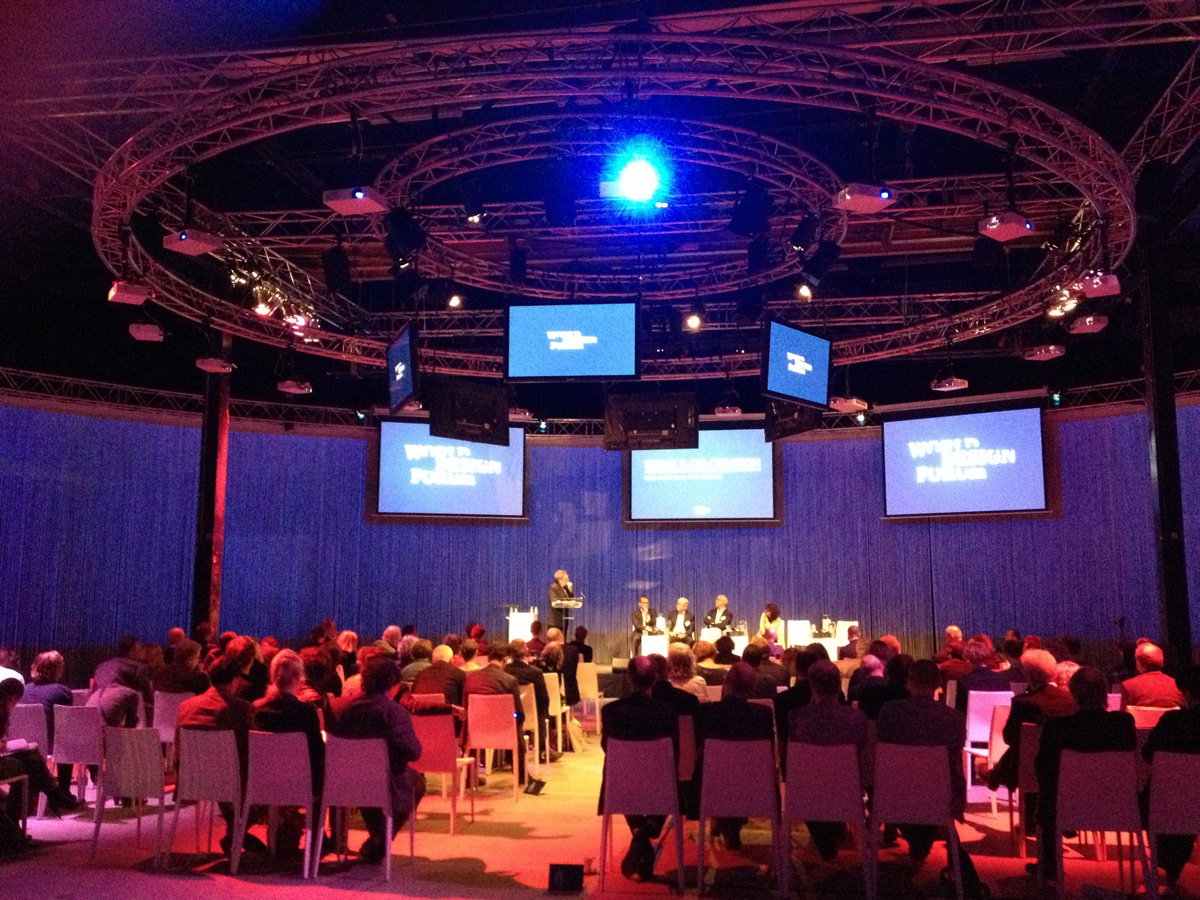
The World Design Forum featured an impressive number of projectors. So many that it kept distracting me from the discussion.
Marco is in Eindhoven now and Copenhagen later this week for Creative Summit (PDF link), Justin's in Boston, Dan's holding down the fort, and I'll be in Portugal for Cidadania 2.0 (Citizenship 2.0). Between travels we're continuing to process HDL 2012 so that we can post more reflections here, picking up where Dan left off last week.
Goodbye, Week 187, you were good to us, but now we must move on.
On the 14th floor of the Sitra tower the view is gray through and through. A fog has set in, obscuring the horizon and veiling not-so-distant Espoo. Autumn has come to rest in Helsinki and we're welcoming the season for its crispness.
This end of the year is a time for being shipshape, and last week that meant launching Open Kitchen. Here's what that's about:
We won't teach you to cook. We teach you the business of food.
Open Kitchen is a programme that demystifies the business of food by creating a forum for you to learn from the city's experienced culinary business people who've been there and done that, and then working with your peers to build and run a prototype restaurant for a week.
Or you can watch Antto, one of Helsinki's most accomplished chefs and restauranteurs, explain it. We're very happy to be working with him, and a slate of other fine people to be announced in the near future. Needless to say, if the idea of learning from Antto and others is appealing to you, and you're located in Helsinki, please apply! You have till October 3rd.
For more on the development of Open Kitchen you can read about how we pivoted from our original idea of establishing a sustianable Grilli towards the current implementation as a sort of dark matter academy.
Maija is busy with Brickstarter, still posting a seemingly endless quantity of fact cards, whilst also working on a set of service journey mappings for self-initiated urbanism. At the macro level, Dan and I are working on the longer term future of the project by refining the scenarios I mentioned last time. That makes it sound more coherent that it is, really. There's a lot of scribbling on paper, sometimes on a whiteboard. More lines than words often.

We spent the first half of last week at MindLab in Copenhagen with Runa, Niels, and Christian, as well as Tom Loosemore and Russell Davies from Government Digital Services, part of the UK Cabinet Office. This was the third and final HDL 2012 case study pairing and it was—like the previous two—a brain-smacking experience. Lots to take in, lots to process. Our challenge is going to be choosing what to focus on with such a wealth of craft knowledge generously shared by MindLab, GDS, and the other case partners.
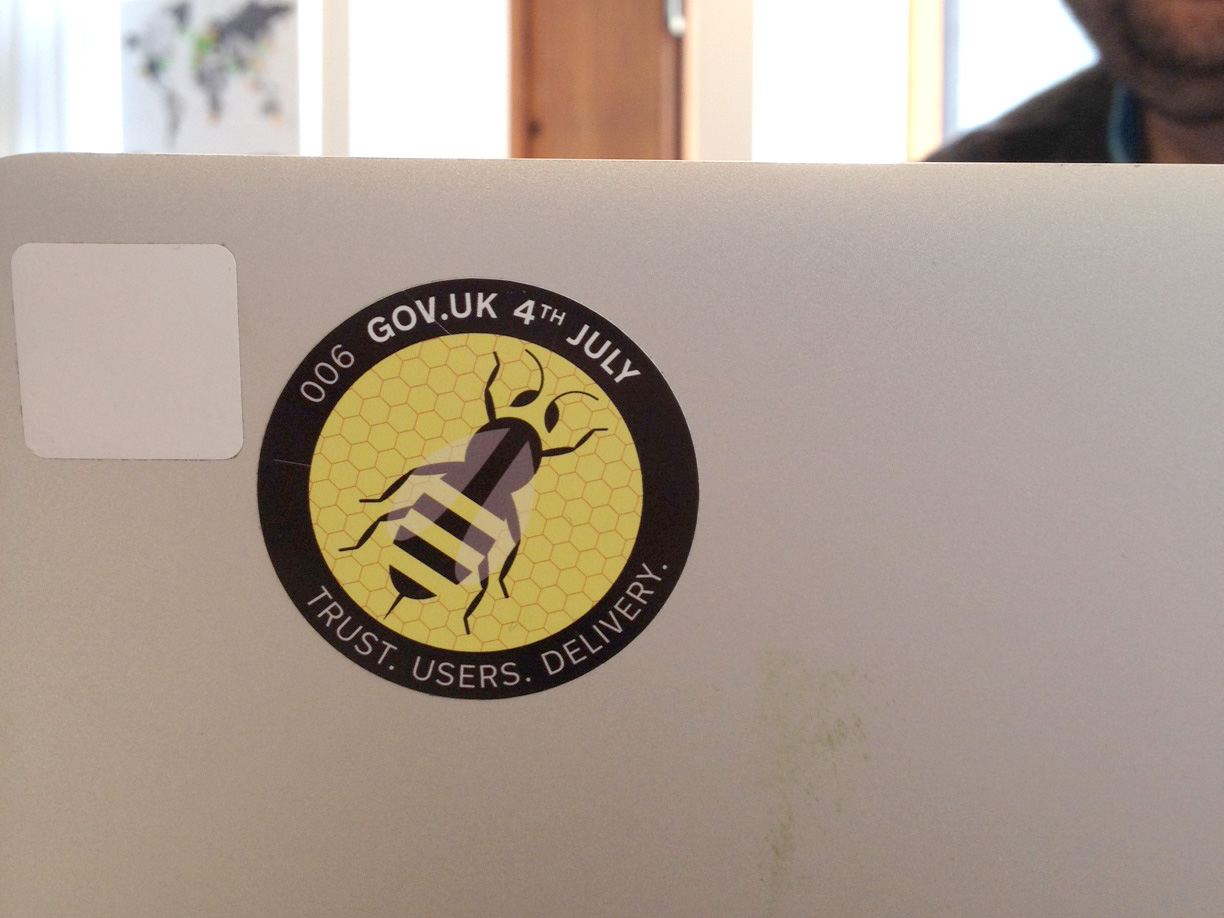
"Mission badges" from GDS. A nice touch of material culture inside their org.
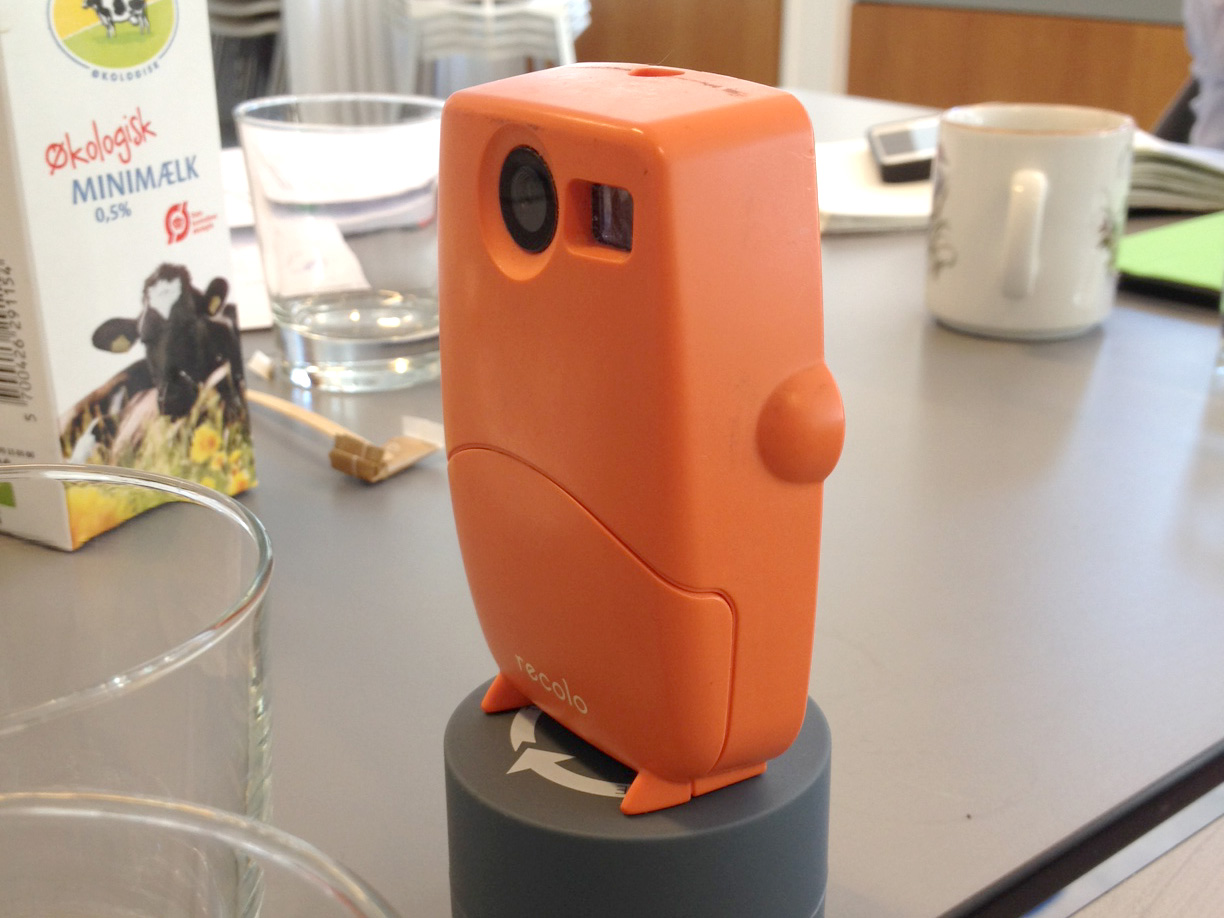
Russell brought a time lapse camera to the meeting.
As with the previous sessions, we looked at one project from each team and left ourselves with a rather wide open agenda so that there would be plenty of room to follow the conversation as it goes. Dan has started collecting his notes from that session. I'll do the same shortly and then we'll have a brainmelt with Marco and Justin to collate the brightest spots from all six projects we've learned about.

Our first pass is via language. What are the words that people use to describe their work? What are the terms that they use, and the meaning they imbue those terms with? This is less of an arbitrary choice than it may seem: one of the threads of consistency that bind the six projects we looked at is that they're all driven by hyper-communicators. People who just really know how to explain things, to share them, and to make them real for others.
HDL 2012 is beginning to consume my calendar, and increasingly eating into others' as well. Maija, Marco, and I spent an afternoon checking logistical details. All is well there, though some items remain outstanding.
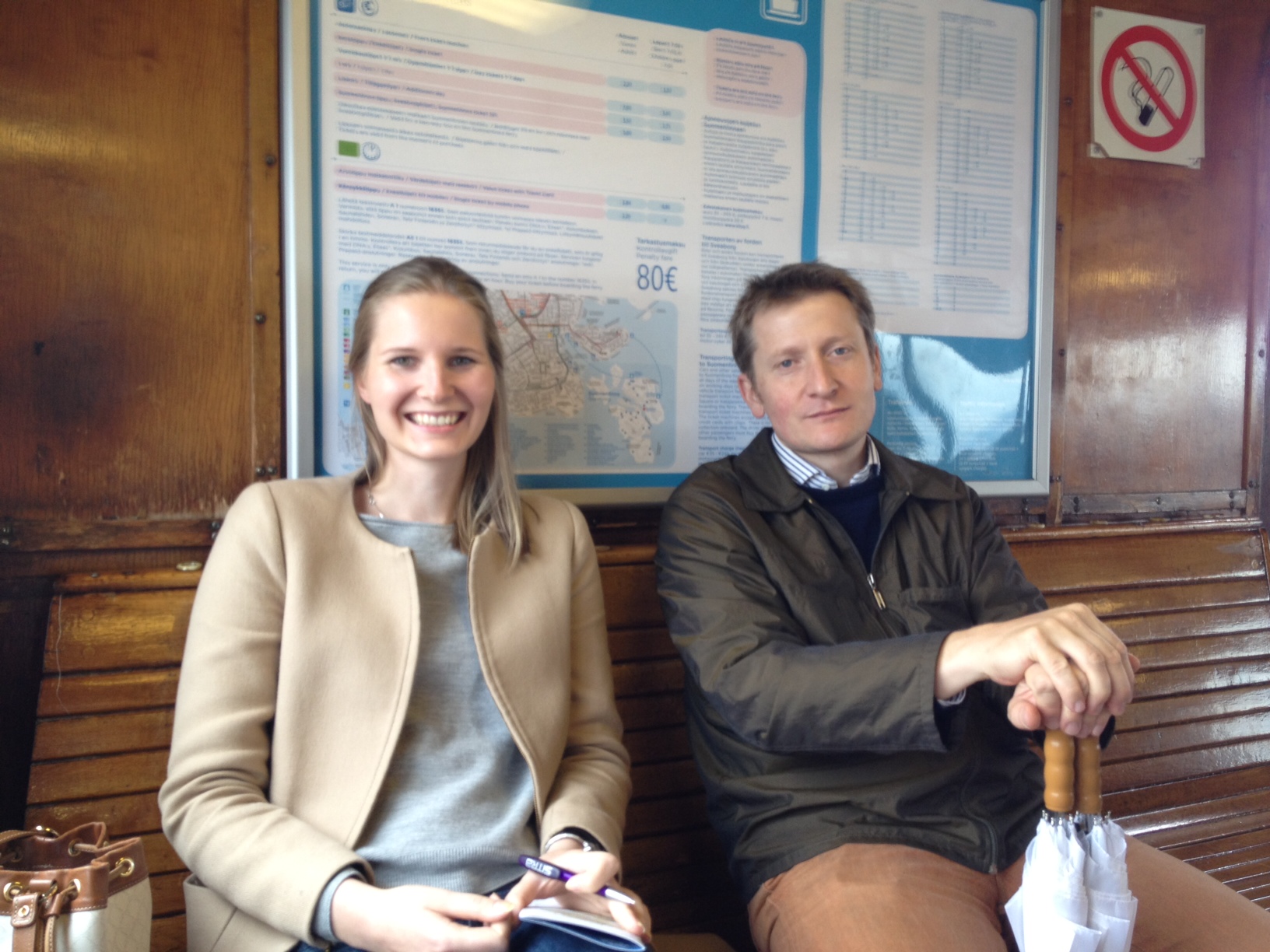
On the boat to scout out locations

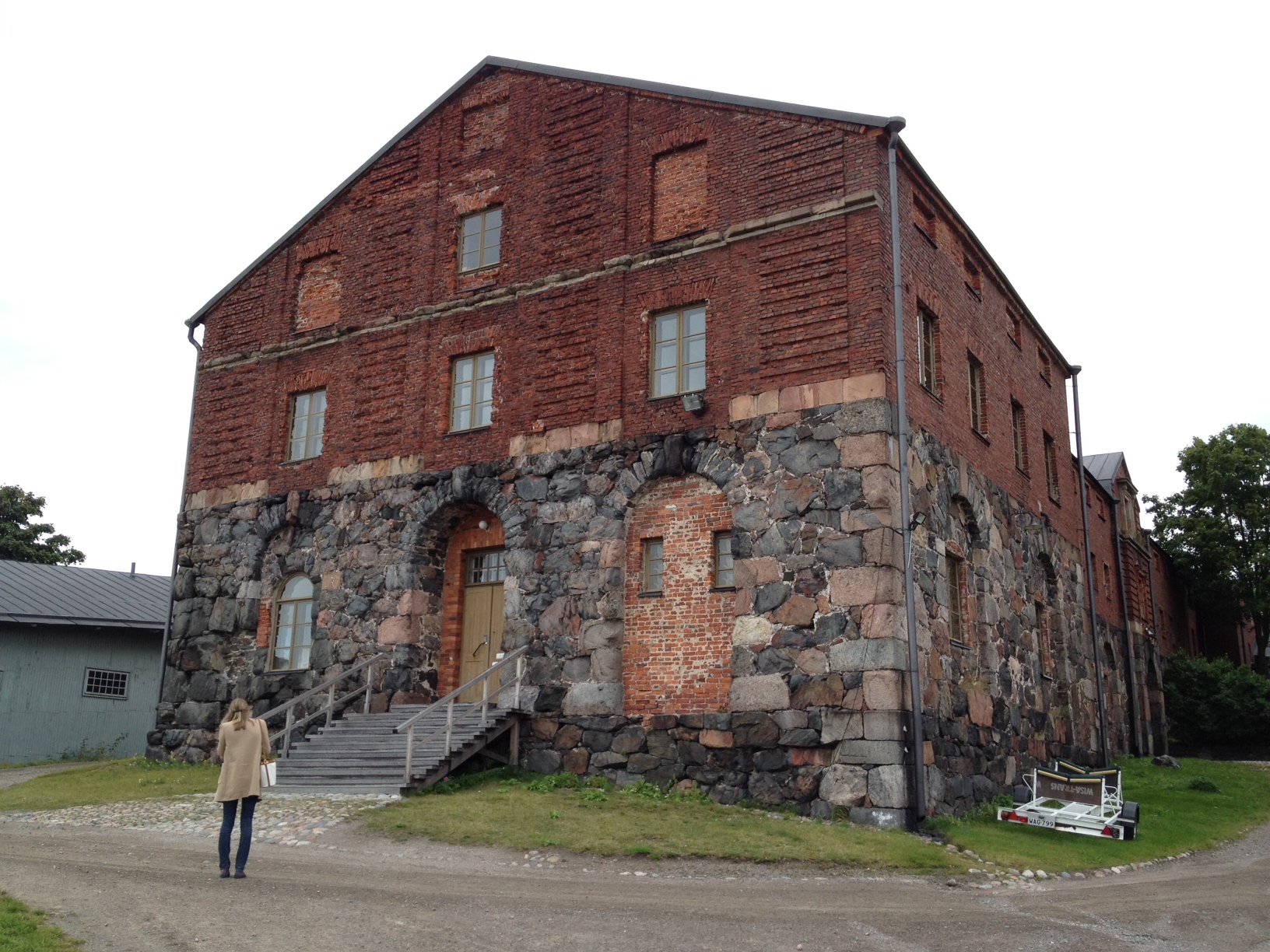
Are you the right place for us to have HDL 2012?
The Design Exchange Programme is growing a bit. Jaana Hyvärinen has joined the City of Helsinki Social Services department, where she will be helping build a culture of service design. Sara has a new blog post describing her busy autumn. We should have two more posts open shortly. As ever, we'll post here and on Inside Job when they're live.
Marco has written a blog post on the Low2No site explaining how that project has changed tack a bit. Worth a read if you've been following our work on that one.
And just now the infinite gray outside has broken, giving the Baltic back to us in shades of dirty cobalt. Welcome to Monday.
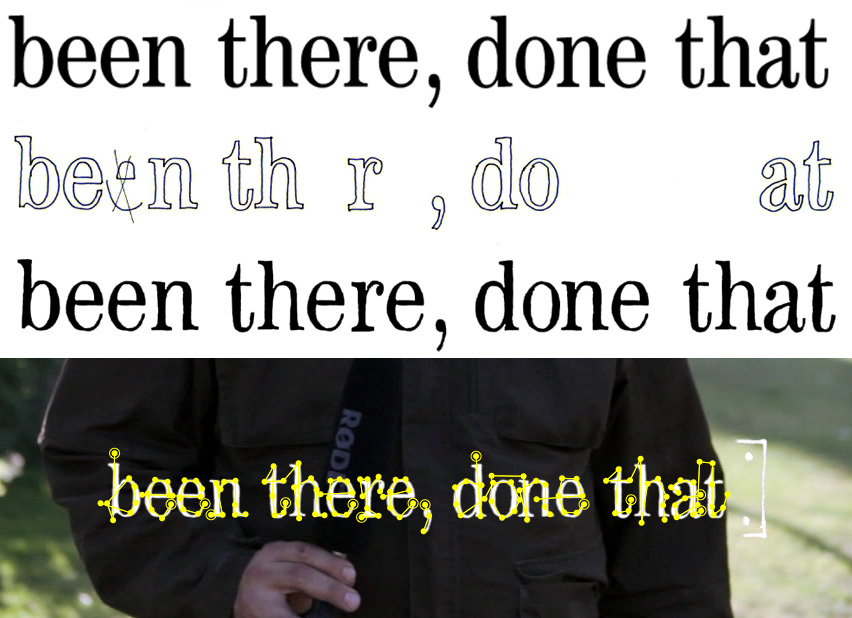
Some scraps from the production process for the Open Kitchen video, included for no other reason than they look nice. Starting from the top: digital text, hand traced text, cloned to fill out the words, and then being animated to write itself onto the screen.
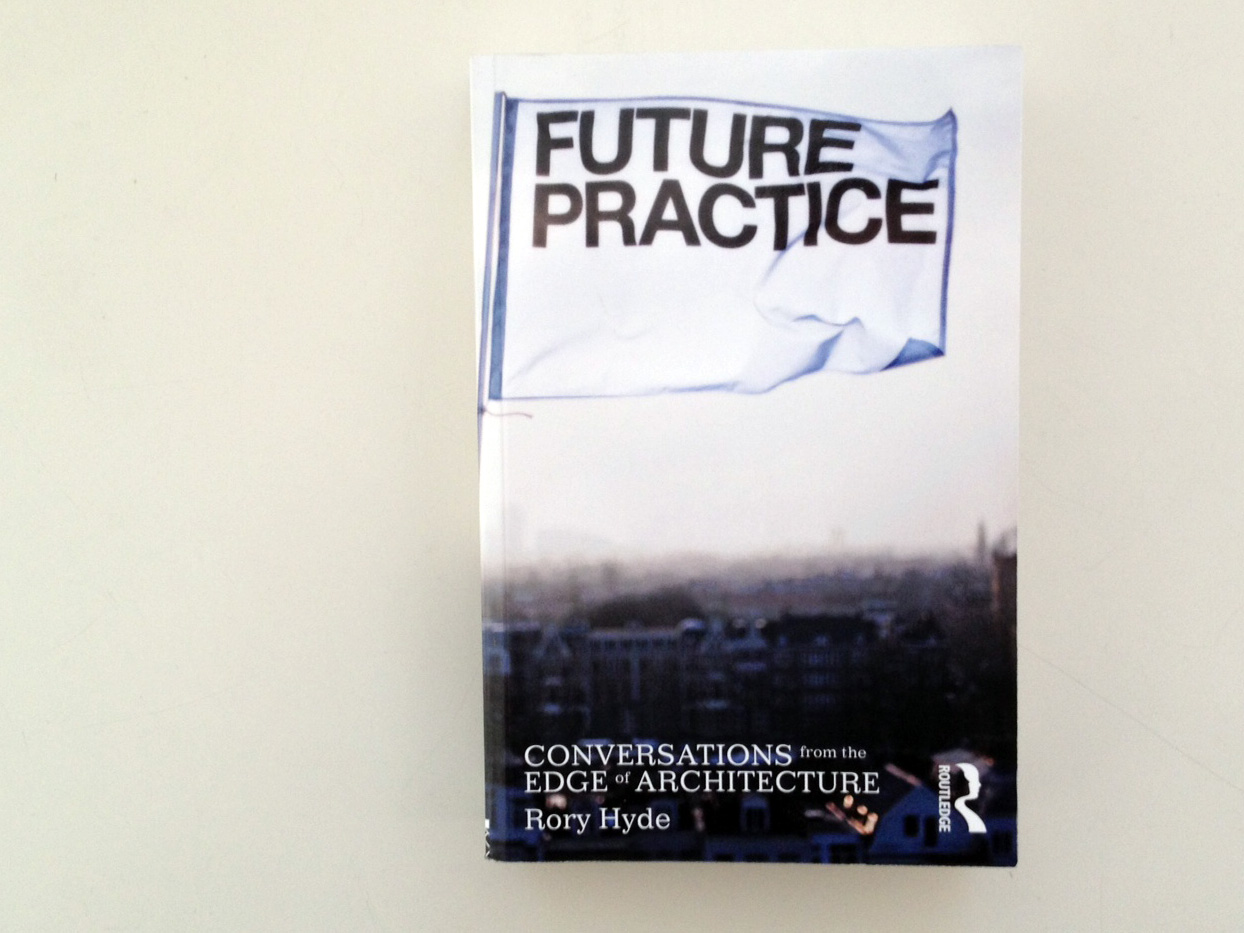
Rory Hyde has written a book about future trajectories for architecture and design practice. Dan wrote the forward and I'm one of the subjects, so we're happy to have Rory in town for a book launch/talk at the Paviljonki tomorrow, Tuesday the 11th at noon.
Last week we finally went live with Open Kitchen. I'll let Antto explain it briefly and if you want more detail you should check the site; this post will focus more on how we ended up with Open Kitchen as a project.
Readers of this blog will know that we like our food, but the motivations for this project go well beyond the desire to get a decent falafel, banh mi, or reindeer sausage in Helsinki. We engage food because we're interested in broadening sustainable consumer choices and fostering social diversity within Finland. Food is a good way to address these topics because it's the original social object. It's a familiar, tangible, and inescapable thing that's deeply tangled in individual preference, shared culture, and dark matter. This is a familiar story, so I wont belabor it. Instead, I'd like to share some of the backstory to the project and use it as an example of the pivot—a play that we've been adapting from the world of startups into our public sector practice.
To plan is to change your business, to pivot is to let your business change you. Despite best efforts to analyze and plan, the world does not always play out according to the script we write for it. In these situations, where you find yourself standing before unexpected opportunity or pitfalls, to pivot is to change the means that you're using to achieve the ends you desire. After a pivot you're headed in a new direction, but still rooted in the same first principles.
One year ago, when we began working on what has now become Open Kitchen, the concept looked like this:
Belly First Sustainability (Food, Public Debate, Business) — Concept Note
We want to accelerate the development of the sustainable food industry and culture in Finland by incubating the Low2No service partnership in anticipation of 2013. The aim is to sell sustainability, one bite at a time.
This is accomplished by building a Sustainable Grilli in Helsinki during the WDC2012 to create an accessible and first-hand entry point to public debate about sustainable lifestyles in Finland. The project is executed in three components: a competition, a temporary food cart business, and an events programme (in Helsinki and other cities) concurrent with the business.
In this draft (from September 15, 2011) you can see that the emphasis is split between providing a platform to prototype part of Low2No and larger systemic change goals around sustainable food. The means we had settled on to achieve this goal was to create and operate a sustainable grilli kioski for the summer.
Between the first conversations Justin and I had about 'belly first sustainability' and writing this concept note, two important things happened: the Camionette and Ravintolapäivä. Both of these unexpected events changed the context of food and food culture in Helsinki, and more importantly they provided tangible evidence of a new group of self-starters. Both involved demonstrations of what that new culture looks like, how it tastes, and how it changes the experience of the city in ways beyond just the foods on offer.
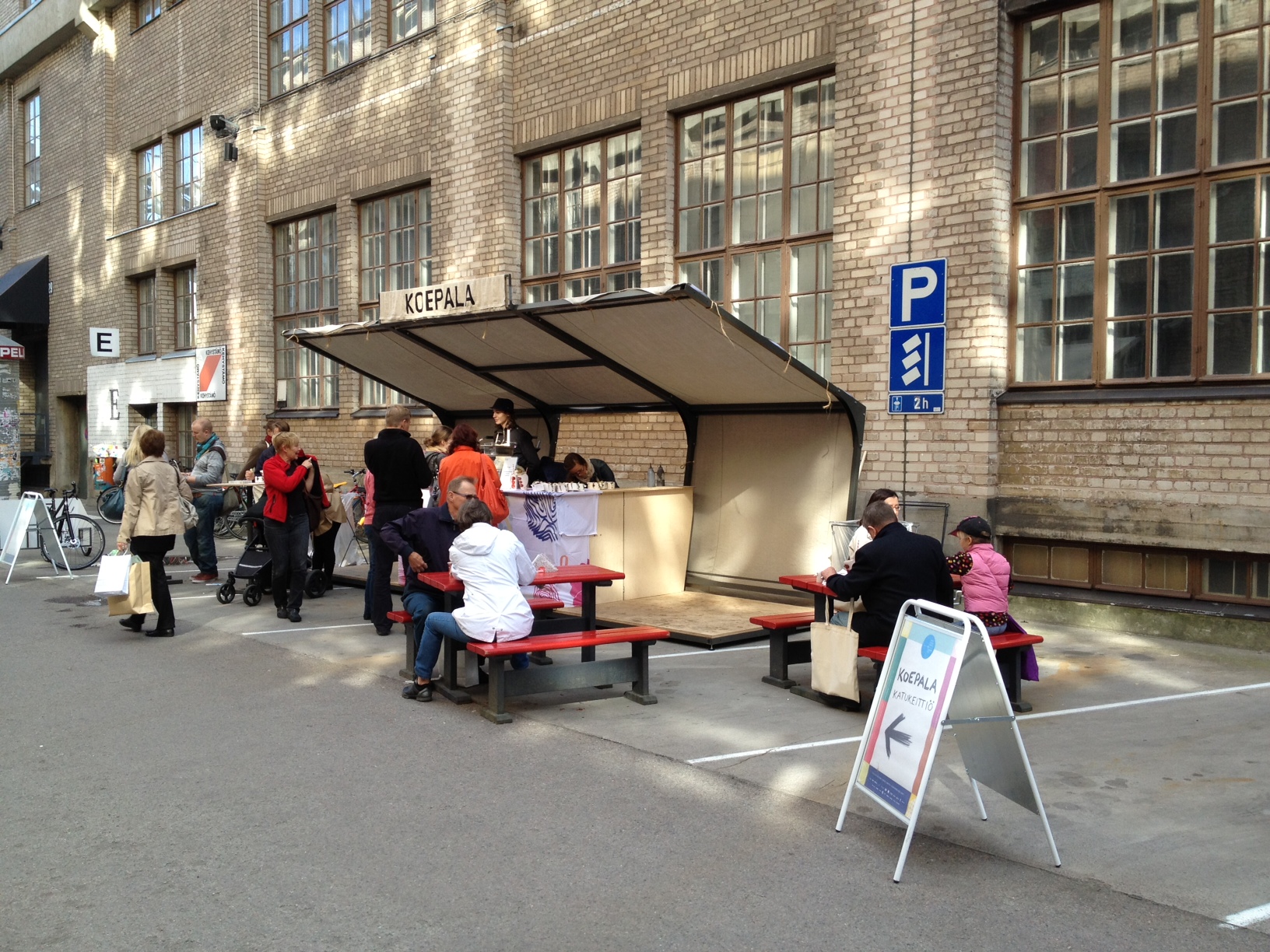
This is a snap of Koepala, a popup during Helsinki Design Week. New food-related concepts are popping up all the time now. Open Kitchen is designed to help them take root.
Both also highlighted problems in public sector decision making. The silos of our regulatory context were not set up to handle initiatives that came in the 'shape' of a food truck or a create-you-own-restaurant festival. The result was some rather public shaming of various public bodies through traditional and social media when those institutions did their normal, conservative thing. To their credit these same organizations responded quickly and positively, but not very coherently.
The "shape" of the city's organization doesn't match the interests and experiments of the citizens—here the Camionette. So when something like a food cart first comes along as a question, public bodies can be caught off guard.

It literally doesn't fit into the silos that the city is organized around.
As we were working the concept note through various parts of the internal machinery of Sitra we were gleefully watching these changes happening on the street. And then something funny happened: we realized that we were developing a project for a world that didn't exist anymore. By the autumn of 2011 Helsinki didn't need a demonstration that sustainable street food was viable. That had been done already by entrepreneurs like Tio Tikka and activists like Olli Sirén.
Yet despite the positive blips that we observed, it remained difficult to get started in sustainable food in Helsinki. There was (and still is) a gap between the effervescent vitality of Restaurant Day and the day after restaurant day, when all of that surplus energy, excitement, and talent subsides back into previous routines. The ladder of innovation is missing some rungs, you might say. Restaurant day is a great way to test out an idea, but for those few who want to go further, where next? What steps exist between a pop-up and taking out a lease on 200 square meters of restaurant real estate?
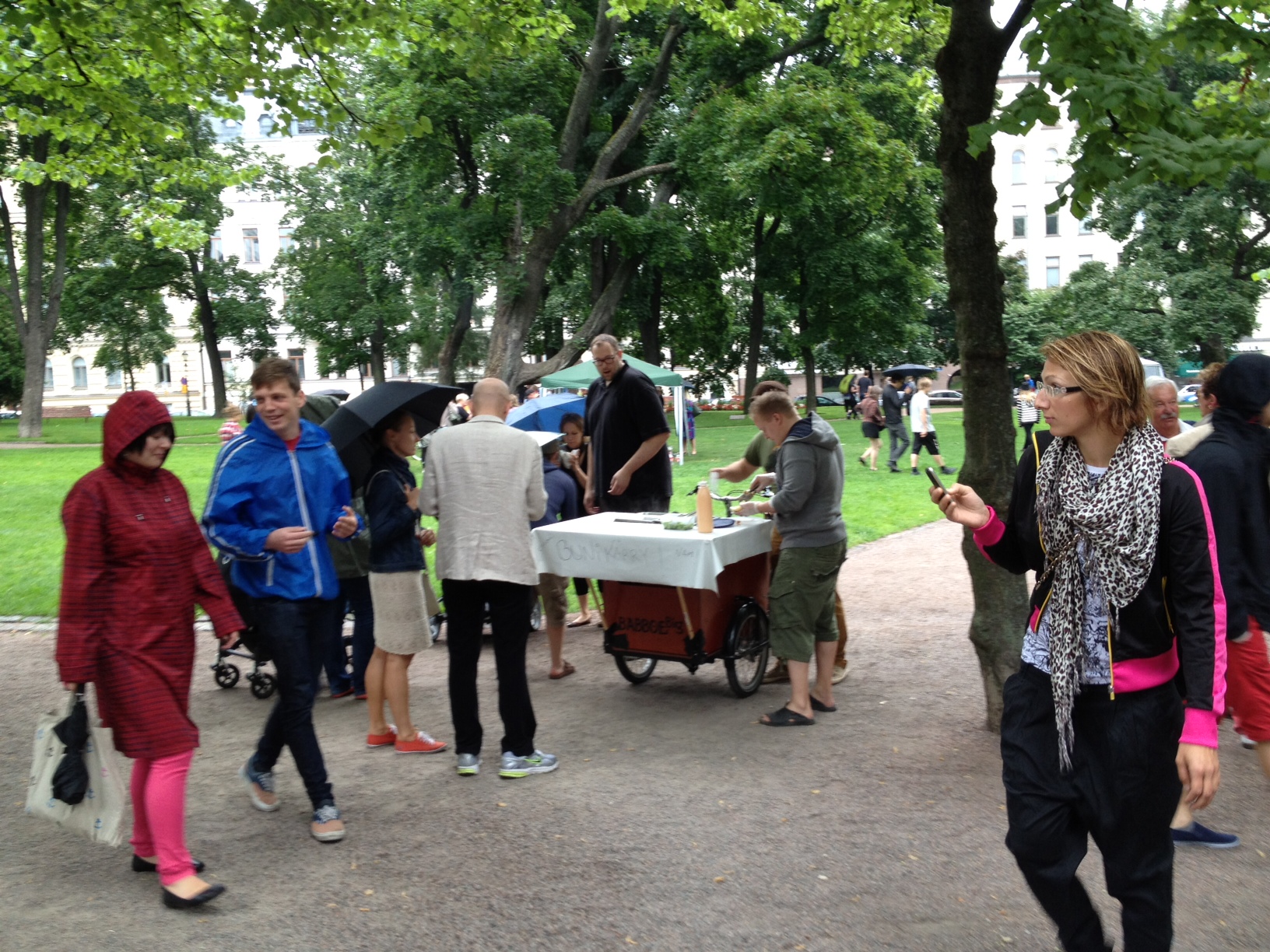
Ravintolapäivä August 2012
These missing rungs of the ladder became our focus. We pivoted from a sustainable grilli demonstrating a new food culture, to a dark matter academy that could illuminate the tacit knowledge of sustainable food pioneers in Finland. We want to make it easier to create lasting, thriving sustainable food businesses in Finland. Open Kitchen relies on people who've "been there, done that" to share their knowledge and experience with others.
While this was unfolding we were writing the story, quite literally, in the form of a print-on-demand book. The research that went into the book and early development of the concept led us to meeting people all over the city, from restauranteurs to regulators to politicians, and everyone in between. We wrote it because that was an easy way to send us careening into the thick of things. Rather than sit in Sitra HQ and try to abstractly reason a view of the world, we got out there and started asking people how their corner of it works—or doesn't. Consistent across these meetings was a feeling that there's a good bit of knowledge and experience in the city, but it remains caught in pools—dark pools—within isolated communities.
Amidst our first proper blizzard of the 2011-2012 winter, Dan and I paid a visit to Ville Relander, who heads up Food Strategy for the City of Helsinki, and Elina Forss of Marrot Oy at the newly opened offices of Tukkutori. As we explained our interest in food the conversation fell quickly into a productive rhythm. Marrot, with the support of Ville and others, had been developing Kellohalli as a food culture hub for the city. It was to feature a strong programme of events, a library, and other activities. As strong as the plan was, it still pointed to the missing rungs of the ladder: once people get excited about food, what next? How do you go from enthusiast to entrepreneur?
The idea of the dark matter academy that we had been simmering (sorry!) was suddenly congruent with an opportunity right in front of us, with real names and availability and interest. That was that. In Marrot we had found partners who were already well positioned to help us develop and execute the concept of the dark matter academy for sustainable food. The pivot happened immediately, almost without a thought, because in fact the thinking had already been done and we merely catching up to the full implications of our intentions.
Pivoting can be difficult to accept, especially inside an organization that is used to a linear sequence from scoping to planning to execution to measurement. One of the ways that we try to deal with this is to focus on establishing the first principles of a project early on, revisit them often, and always explain our projects by building upwards from those principles. It leads to a bit of a broken record syndrome, but the best way to make sure the principles of a project are carried with the work itself is to repeat them over and over again—to yourself, and to everyone you're working with. This prepares us to make on-the-spot project decisions based on those principles, to align what we do with what we think, even in the smallest details.
Here, once again, we find that a useful play such as pivoting requires the right culture. Had any of the people in the team been rigidly locked into the grilli as The Thing To Do, or had the internal Sitra procedures rejected the Open Kitchen proposal, the attempt to pivot would have broken the project instead.
In all honesty, writing this weeknote is taking some effort on my behalf. My brain feels sintered to the details of our various projects and stepping back to take stock—let alone reflect upon—the lot of them requires more effort than it should.
But we do this weeknote thing so that we have a sense of history. It's useful to be able to look back and remind ourselves what last week was like, or what was going on one year ago, even how we felt today-minus-104-weeks. We value this sense of perspective, so we push ourselves to write even when there are other things to be done.
First the facts. Dan spoke as part of Nokia's Designed in Finland talk series. Marco was in Copenhagen midweek to give a talk at MindLab. He managed to work diapers into his talk.
I found something new in Helsinki:

Helsinki's smallest park. A moment of pure joy. No explanation needed and none available.
Speaking of new parks in town, the week's haul of Brickstarter-shaped doings included Dan on the horn with the Guardian, resulting in this excellent article about crowdfunded urbanism including Brickstarter. Maija continues her diligent and careful documentation of other projects that overlap with the Brickstarter conversation. Having worked through all of the examples we could find in Finland, she is now turning her attention to international precedents and analogues. Meanwhile, we've had a few sessions with the larger project team including Erkki and Kali to balance out the portfolio of mini-projects under the Brickstarter umbrella.
Dan tweaked the Brickstarter introduction to make it more clear that we are working towards a prototype or a sketch of the service, and not intending to develop and operate a service ourselves. Attentive readers will remember that last week we were assessing a variety of scenarios for next steps, and that discussion continued this week. We're hoping to have some decisions here sooner rather than later, and when we do it will be easier to be explicit here about where Brickstarter is headed.
Kalle's video editing spilled over into Week 179, but we won't give him a hard time about it since he had never used Final Cut before last week. How's that for a learning curve! We finished a draft of the Open Kitchen call for applicants video and have sent that to Antto and Elina for comments. We're planning to begin accepting applications the week after next and getting the video nailed down is one of the larger outstanding to-dos. Lots of other to-do items before then, including minor things like crossing the tees and dotting the eyes on the wording of the dual language Finnish/English application. Oh, but before that we have to finalize the application process… and write it all up.
On a related note, congratulations are due to friend-of-HDL Cynthia Shanmugalingam and her partners over at Kitchenette. They're just launched a street food incubator programme based in London and we will be following along with great interest.
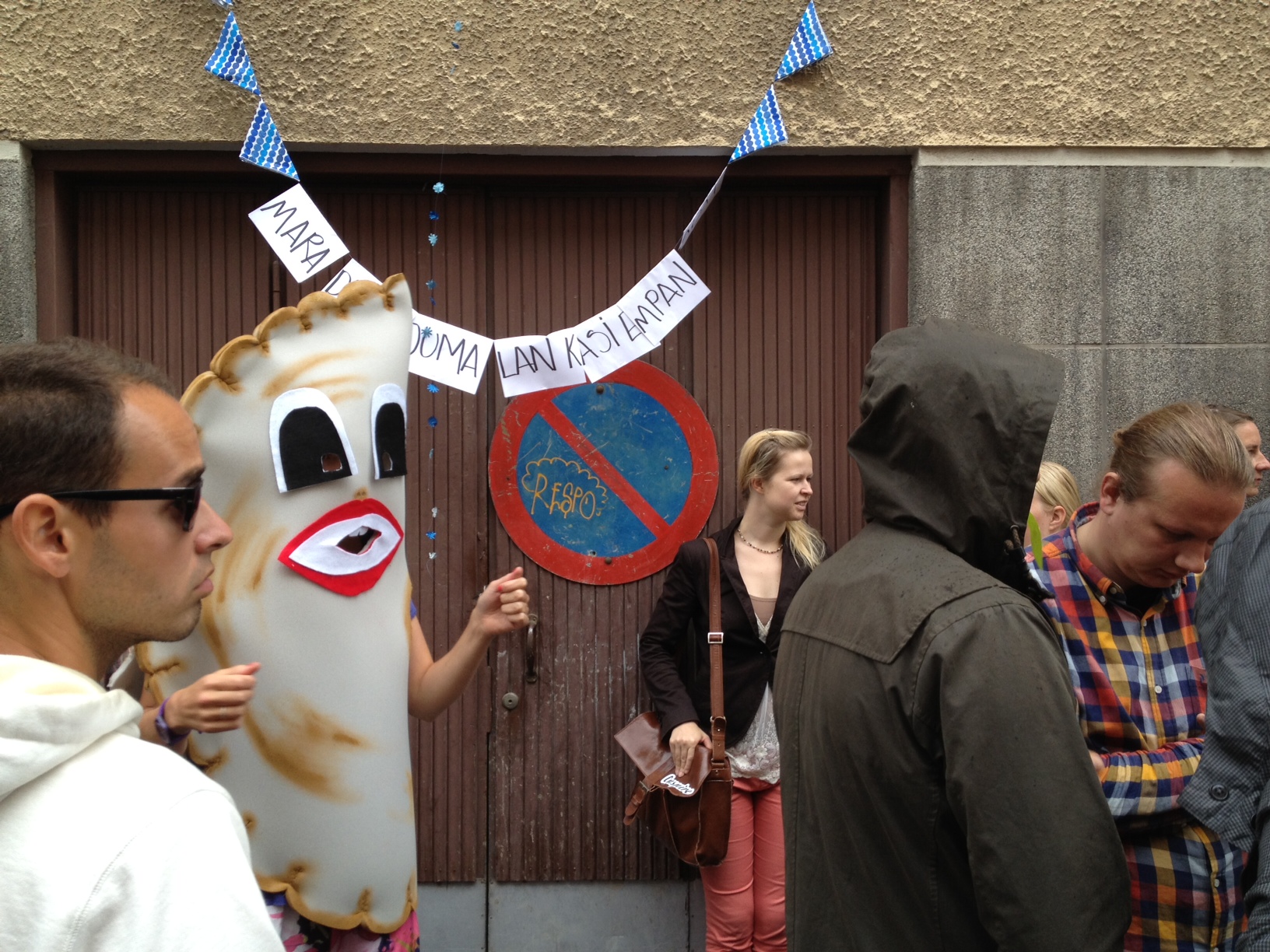
Restaurant Day happened again. Note to would-be amateur restauranteurs: dancing, human-scale versions of your foodstuffs are a surefire way to draw a crowd. Delicious empanadas also help.
Last on the project rundown is HDL 2012. We're operating on a couple different wavelengths at the moment: Dealing with near-term logistics for our third and final case session in Copenhagen next week, beginning to coalesce the content from the four cases we've already heard from, and ramping up the pace on logistical and content development for the culminating session in Helsinki. Venues, printing timelines, writing rotas, invitations, and moments of "why are we doing this?" are in the stew right now. We know why, of course, but we've been revisiting the framing of the discussion—in a healthy way.
My bedside reading list has been forming useful bridges to the daily work including, in particular, this assertion put forth by Richard Sennett in The Craftsmen [sic]:
"We are more likely to fail as craftsmen, I argue, due to our inability to organize obsession than because of our lack of ability."
The best way to rectify that is to organize our obsessions, no? With HDL 2012 we are looking at public sector innovation and trying to codify the crazy.*
*Only those crazy in a good way.
Signing out of my hotel in London today I made the mistake of putting the date down as September. Not yet, Bryan. Not yet. But this calendar mishap does reveal my state of mind. As our projects become more concrete new details emerge. New things to be taken care of, things to be considered, and somethings things to be deliberately ignored. But anyways, a lot to keep track of.
Team calendars are an indication of what our life is like right now
Maija and Kalle have been buzzing around making movies. Maija and another Kalle were shooting a pitch so that we have some plausible content in place when we release the Brickstarter mockups as clickable pages (soon!). Kalle spent an afternoon with Antto Melasniemi in Tukkutori filming the call for applicants video for Open Kitchen. They're both now heads-down editing.
(Aside: we've been watching lots of pitch videos on Kickstarter and elsewhere to learn what makes them effective. This is one of the gems we came across:Informative, unique, and hits exactly the right tone for their audience, one suspects)
Open Kitchen is seeing a smörgåsbord of activity, suitably. We're (still) wrapping up contracts, commissioning work on the brand and logo, booking ad space for the fall, and finalizing the application process so we can open that at the start of September. Elina and Antto have a good feel for most of these, and collaborating with them on the project continues to be a joy.
Although we like to do things in the open, and this project even has "open" in the name, it's kind of nice that there is not much of a public presence for the project just yet. Beyond the book we have not released many details which means we're not having to answer lots of questions. In September we will publish the call and this will change, but we'll be ready.

Antto presenting like a champ
Brickstarter, on the other hand, has been getting tons of attention. This is all immensely positive, of course, and we've been happy to see interest from across Europe, North America, and elsewhere. Marco, Justin, Dan, and I spent an afternoon out of the office sketching scenarios A through D for Brickstarter (more like A through X).
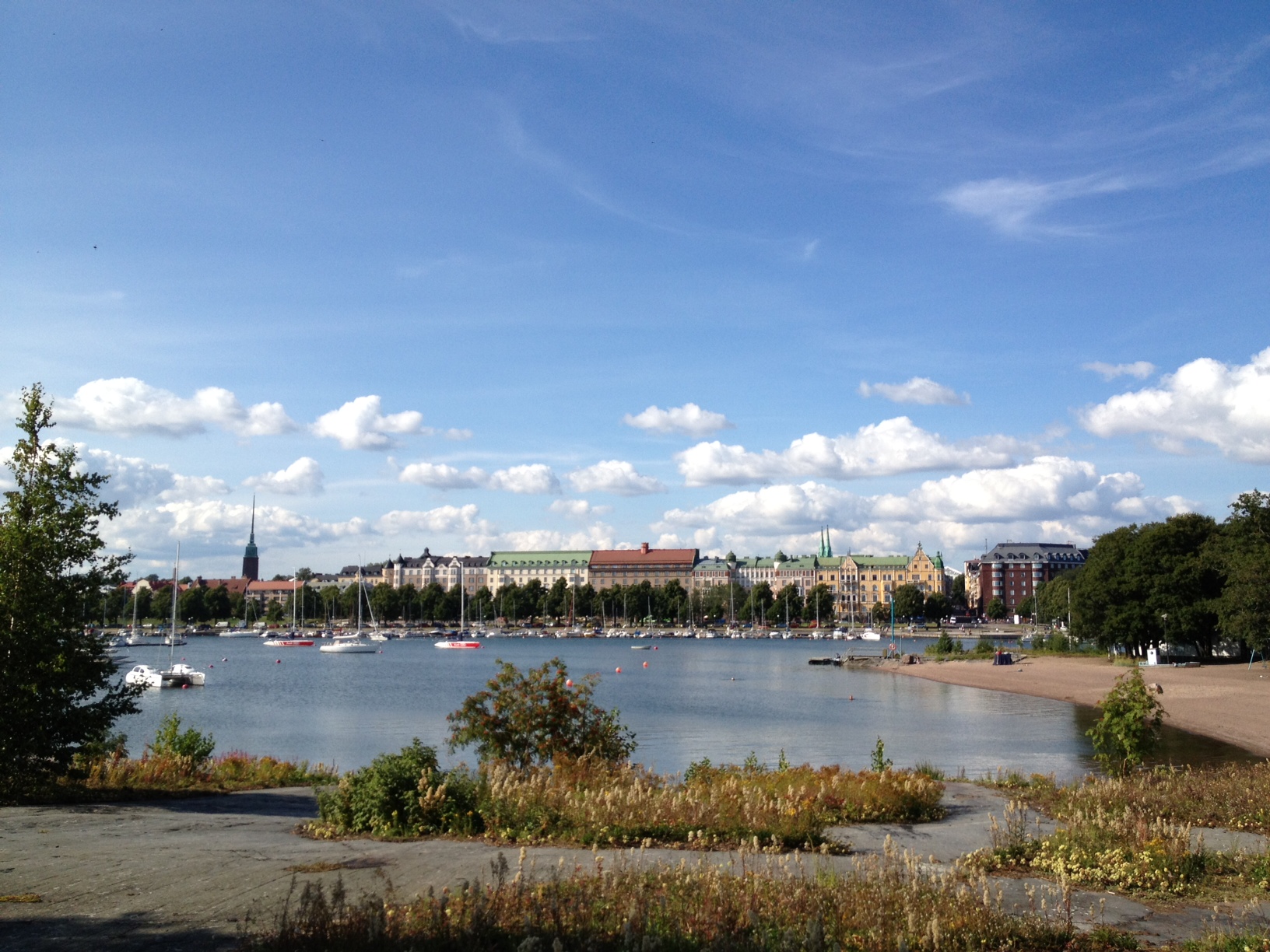
Helsinki doing what it does in summer
As we decide next steps we're balancing scenarios based on our understanding of the needs of citizens and municipal governments, Sitra's abilities, and what sort of interest we can attract from partners and collaborators. Do we build Brickstarter as a running service? If so, who will operate it long term? Do we build half of it and ensure a good handoff to another team? Maybe, but who will that team be? These questions have been part of our dialog since the start but we're approaching a decision point, thus scenarios A through D.
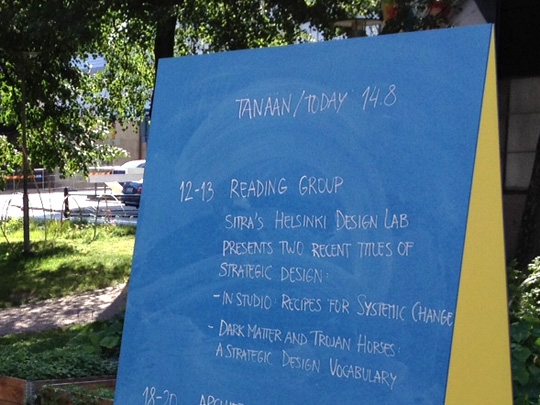
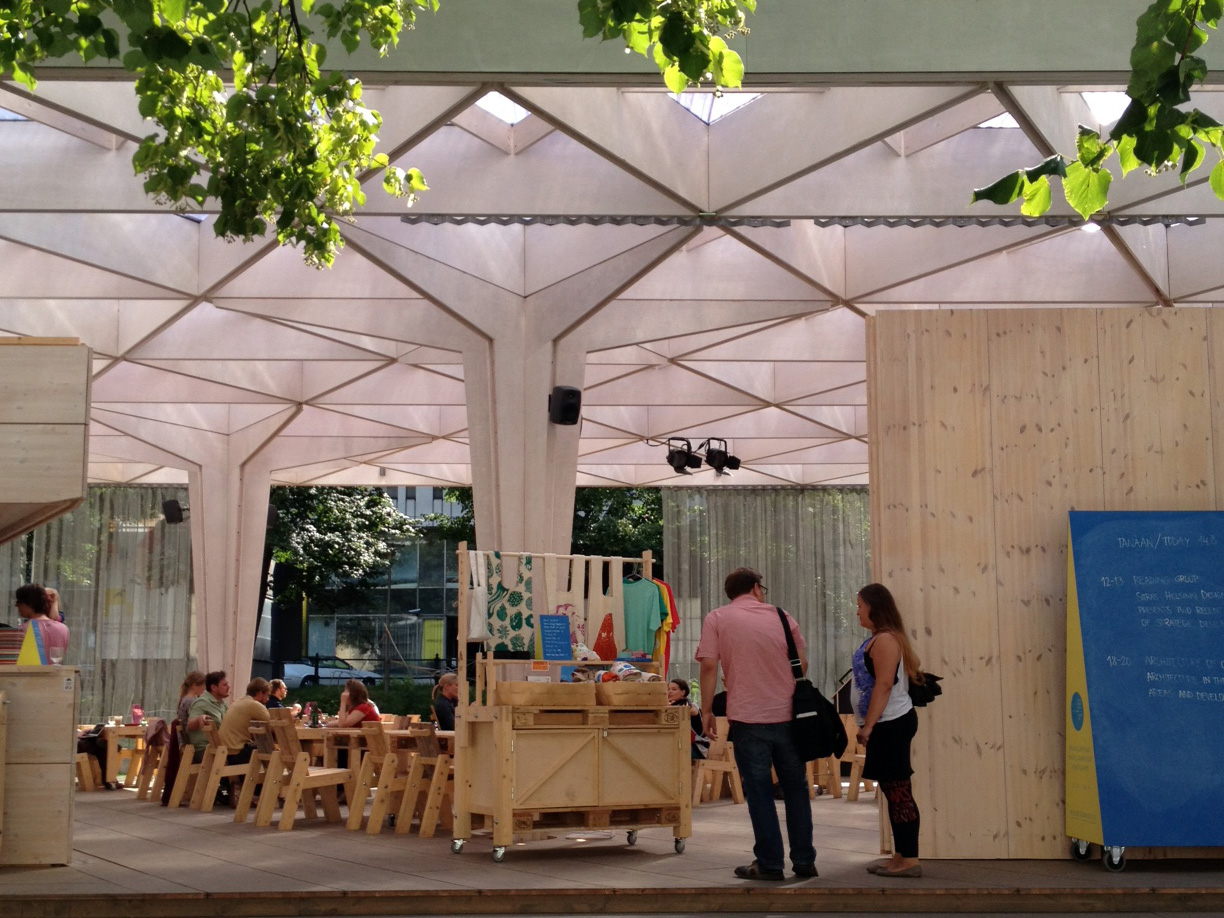
In the middle of the week Dan and I did a book reading at the Paviljonki. Sure is going to be sad to see it close up for good in September.
And then there was London. Marco and I came here under the auspices of HDL 2012 to learn from Nesta and IDEO about how they make innovation happen. Our focus this year is on stewardship, or the craft of innovation. During the session Philip Colligan pointed us to W. Brian Arthur who is very compelling on the subject of "Deep Craft" (conveniently, coincidentally, transcribed by Matt Jones):
Deep craft is more than knowledge. It is a set of knowings. Knowing what is likely to work and what not to work. Knowing what methods to use, what principles are likely to succeed, what parameter values to use in a given technique. Knowing whom to talk to down the corridor to get things working, how to fix things that go wrong, what to ignore, what theories to look to. This sort of craft-knowing takes science for granted and mere knowledge for granted. And it derives collectively from a shared culture of beliefs, an unspoken culture of common experience.
I like this a lot because it encapsulates in a more elegant way something that I've been calling cultures of decision making. As we study the craft of public sector innovation—this particular culture of decision making that's emerging—we're approaching it as anthropologists might. In conducting these sessions with high-performing innovators we're attempting to understand the rituals, trinkets, roles, and spaces that populate their work. And often, I should note, our own.

The 18 pages of dense notes in my sketchbook are testament to the caliber of conversation. Thanks to Philip Colligan, Katy Bentham, and Melani Oliver of Nesta; John Craig of Innovation Unit; and Hailey Brewer and Suzy Stone from IDEO. Many thanks also to Nesta for hosting the sessions, including a top notch picnic!

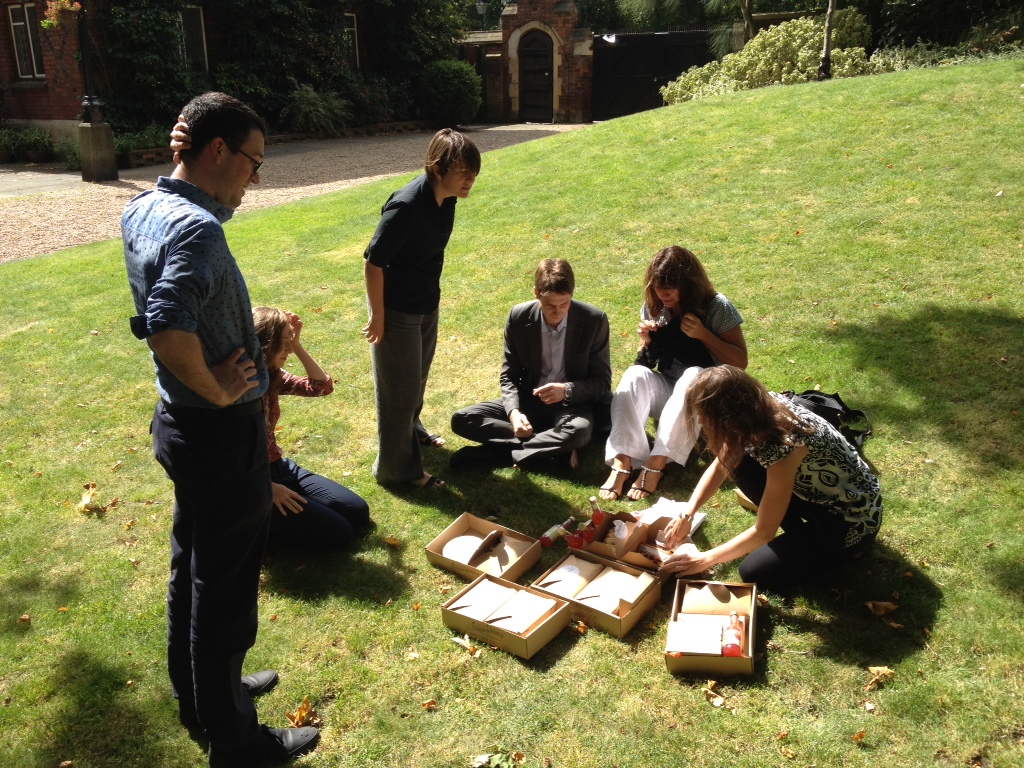
This took longer than it should have. We've been back from the summer holidays for a solid week now, but as you can see there is some lag getting back into the habit of writing.
Last time I was just heading to New York to meet up with Justin for our first of three HDL case study sessions. We had a very packed day with Rosanne Haggerty and her team from Community Solutions sharing their work in Brownsville and Rodrigo Araya and Alejandro Aravena reflecting on the reconstruction of Constitución. Justin and I are now processing those conversations and distilling it with the goal of writing two short case study papers.

Monitor kindly loaned us one of their stunning conference rooms
On a meta level the session was instructive as well. Despite careful planning and logistics (and excellent facilities thanks to the Monitor Group), the agenda for the day was too ambitious. We spent more time on introductions and basic context than expected and felt the crush of the clock at the end of the day. In the next two sessions we are going to attempt to spend a day and a half total. Try, learn, adjust, repeat.
Next week Marco and I will zip to London to conduct the second (day and a half!) session, this time with Nesta and IDEO. Nesta are bringing their Creative Councils project and IDEO are going to share some work they've done with the US government. In other words, there's not a direct overlap in terms of content. Huh?
In organizing these case study sessions we've paired teams with slightly different content focuses as a way of ensuring that the conversation is about how innovation gets done. Our hypothesis was that by pairing up mismatched content the overall conversation would naturally veer towards the intersections between the two groups, the methods and approaches that they use to move forward. The first tentative evidence we have from the session in New York is that our hypothesis was correct: the conversation swayed back and forth between 'what' and 'how' but the room was most engaged and excited when discussing the practices rather than the specific details of poverty alleviation or urban planning.
With each case we're trying to understand the work on two levels: the 1:1000 high level overview and the 1:1 on the ground reality. The high level view is about getting the narrative of the project in order before we zoom in to look at specific important and instructive moments where something critical happened such as when funding was secured, where a key stakeholder gave their buy in, where the scope of the project changed, and so on. How did the project prepare for this, how did they weather it, and how—ultimately—did they come out the other side successfully? The impetus for this as a focus comes from a number of threads, but we can sum it up quite simply with a quotation from none other than the American boxer Mike Tyson:
Everyone has a plan until they get punched in the face.
Back here in Helsinki, our Brickstarter and Open Kitchen projects are revving up. We were very pleased to see a nice piece on Brickstarter on Wired.com last week and that gave up the impetus to do a bit of a press roundup.
Dan and I were in Kalasatama to meet with Antto and Elina about Open Kitchen. That is trending in the right direction and is about to get very busy. Next week we'll film a quick video as a Call for Applicants that should go public in early September. We want to make sure the eyes are dotted yadda-yadda-yadda before it all goes out the door, so more on this soon.
This year's Flow Festival features an installation by Nene Tsuboi and Åbäke depicting a number of unbuilt designers for Helsinki's Grilli kioskis, the city's hot dog stands. They asked me to contribute a micro manifesto about food and the street, to which I submitted the following. See also: Helsinki Street Eats and Dan's earlier piece for Artek's Manifest I. Lots of manifest(o)s.
The most visible food in the streets of Helsinki today has already passed through the human body and been reborn into the world as site specific installations of urine and temporary constructions of vomit. While we're a city that's comfortable with pissing in the street, eating is puzzlingly hidden. It's mostly reserved for the drunken stumble to a grilli (which everyone hopes to forget the next morning) and slurping porridge in a tori (where one is hidden amongst the ubiquitous orange tarps).
Despite Helsinki's architectural commentary by bodily function we have all the right ingredients for an urban culinary renaissance. In 2012 Nordic food is the envy of the world and Helsinki's specific architectural heritage gifts it a variety of iconic lippakioskis and grilli structures waiting to be linked into a city-wide network of grub hubs. If only they served something worth remembering.
Oh but they will! Bring on the curry siika, poro bratwurst, and birch soda. This is anything but a trend. It's a sign of a culture that embraces diversity, in a meal and on the street. Street food is about relearning how to make the city our own not just for occasional festivals but a real—and really delicious—part of everyday life.
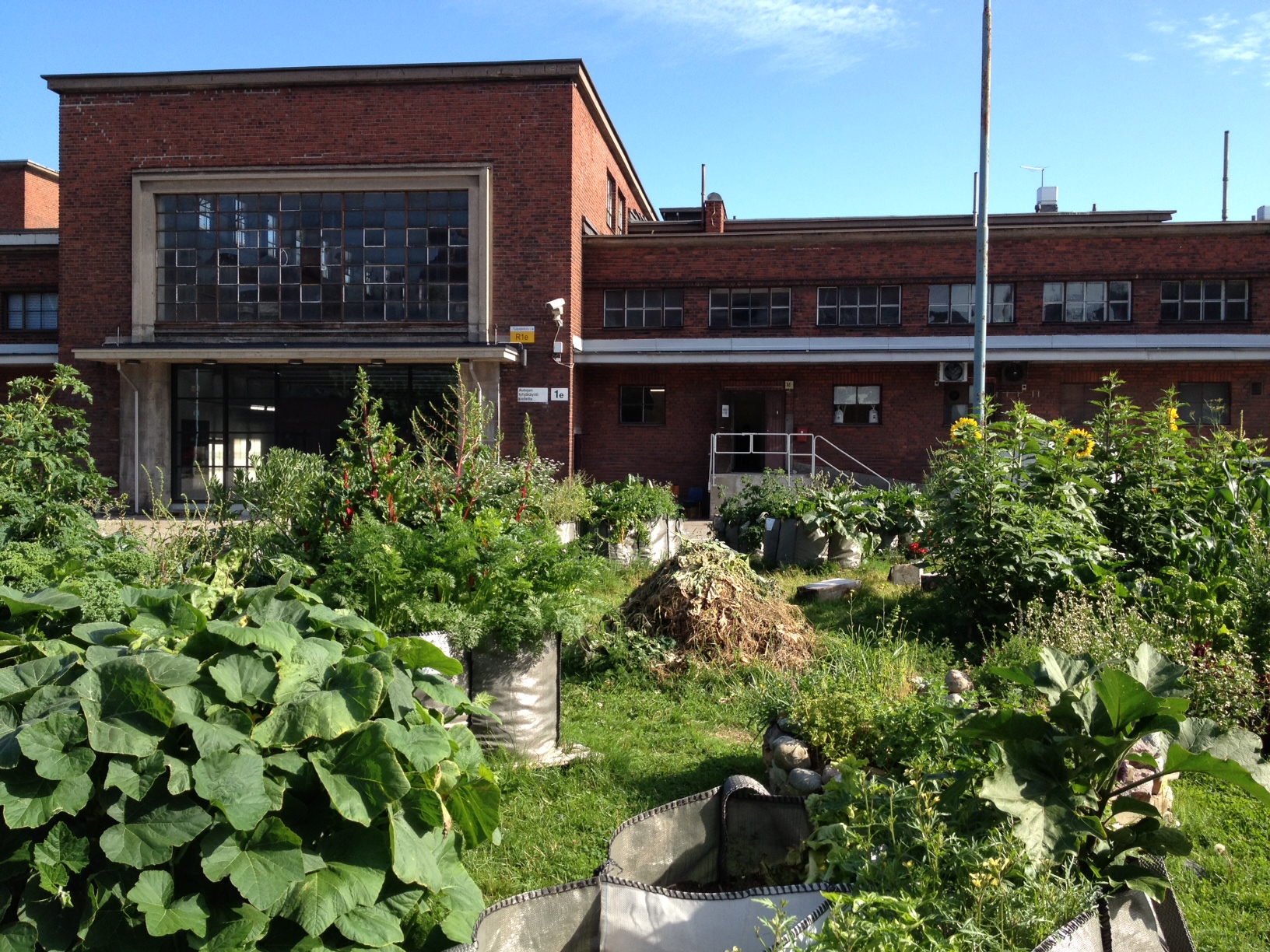
Tukkutori's edible garden is blooming very well in a series of grow bags. This will a great addition to Kalasatama when it's finished later this year.
In both Brickstarter and Open Kitchen we're increasingly turning our attention to how the projects will grow beyond Sitra. How far will we take the work? When do we look for partners to carry it forward? What does that handoff look like? This is a necessity of the work, on one hand, but we're also trying to use it as a point of innovation in and of itself. From the perspective of strategic design is there a different way to transition projects from in house to out of house, for instance? Early days on these thoughts.
Marco was quoted talking about Low2No and our Design Exchange Programme in the July issue of Wallpaper Magazine. They don't seem to have the article online, but the author has posted the full text on his blog. And speaking of Design Exchange, our second placement has started work at the Helsinki Department of Social Services. She will introduce herself soon on the DEP blog.
Juha Kronqvist is himself an embedded designer doing good work with a hospital in central Finland and Aalto University students. Recently he released this video that shows some of their paper ptototying of hospital spaces. You can also read more on their blog.
Lately we've been holding our project meetings in a construction site. The renovation of Sitra's 12th floor that we have been working on for a couple months now is finally complete. The space is light, bright, flexible. Personally I'm very happy with the way it has come together. It's definitely a step forward for our facilities and will take some getting used to, but the net effect is that we now have the kind of collaborative work environment that was hard to come by previously in the Sitra tower. Once people have settled in to the space we'll be posting some further thoughts on the relationship between workspaces and working cultures.
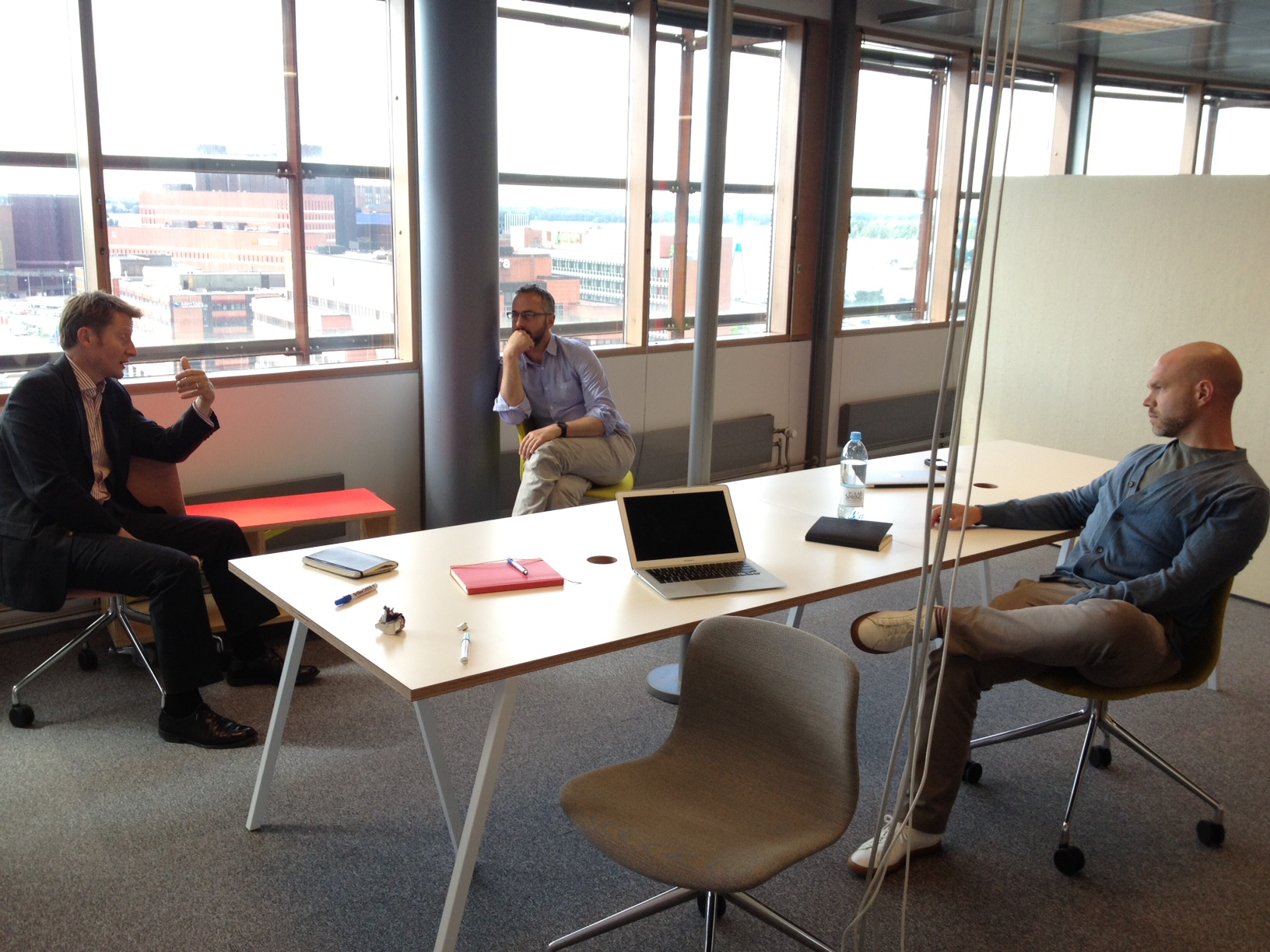
When this was taken there was still some electrical work to be done, as you can see
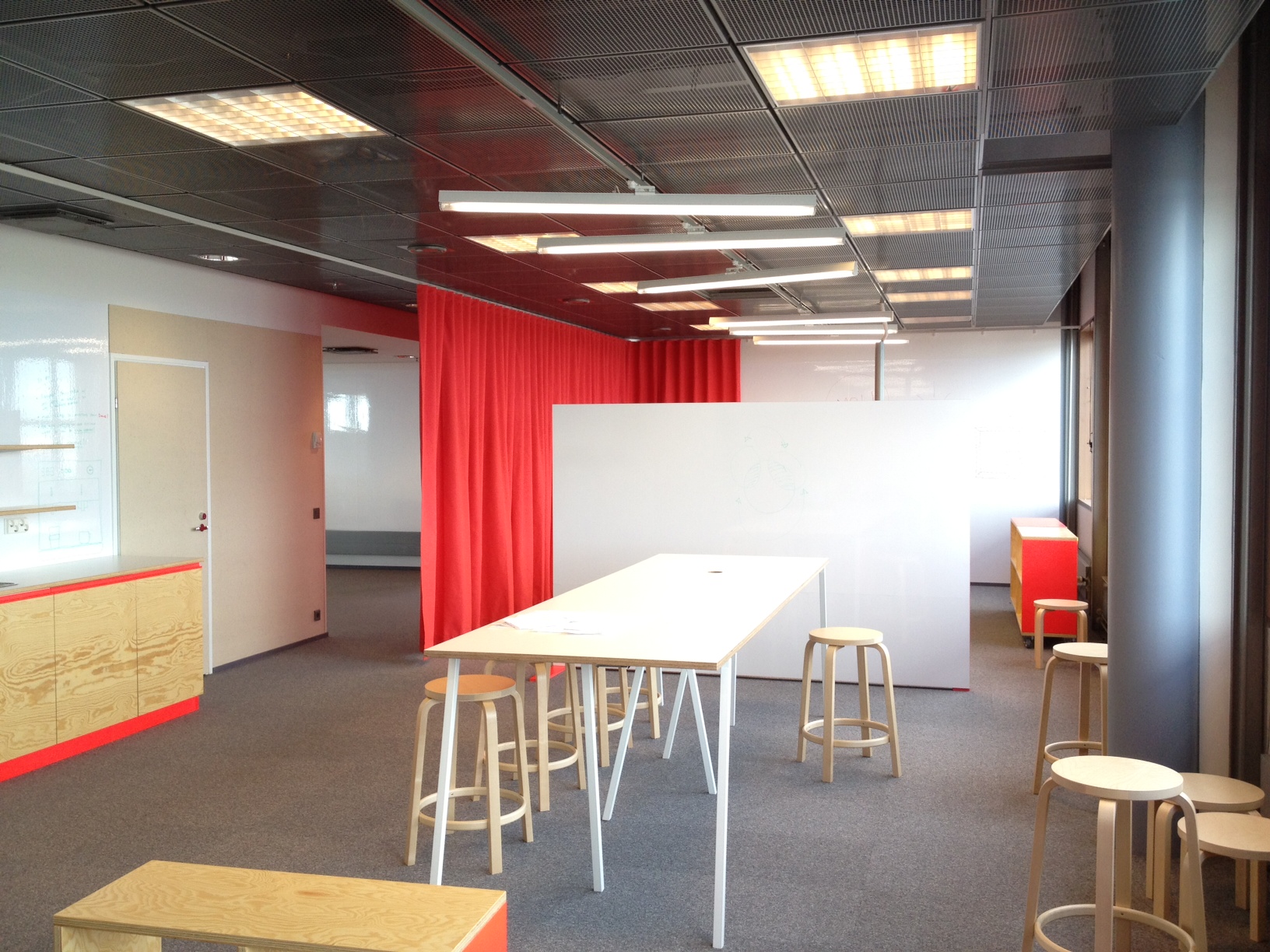
Our new kitchen, featuring an invisible coffee machine (until we get a new one)
Last but not least, if you are in Helsinki on Tuesday, August 14th you are very welcome to stop by the Paviljonki located between the Design and Architecture museums in Ullanlinna for a double whammy of strategic design.
Dan will be there to talk about his Strelka press book Dark Matter and Trojan Horses: A Strategic Design Vocabulary and I'll be sharing In Studio: Recipes for Systemic Change. Come have a coffee with us!
OK, latenote for last week. The highlight was perhaps a great conversation with various representatives of Canada's Social Innovation Generation partnership (SIG), who were in the neighbourhood (well, Stockholm) and were kind enough to swing by Helsinki for a chat.
They're doing really interesting work scoping out what they call the "change lab" model, preparing the ground in Canada. We were visited by Cheryl Rose (Associate Director of Waterloo Institute for Social Resilence and Director, Program Development for SIG), Tim Brodhead, (JW McConnel Family Foundation, SIG, MaRS Discovery District), and Sam Laban (Education Program Manager, SIG). We have lots of visitors to Sitra and HDL, and always enjoy and learn from the discussions and connections, but rarely has a group been so well-prepared and asked such perceptive and insightful questions.
I'm intrigued by Canada, having never been but idly marking it as a kind of mirror/inverse of Australia (vast, sparsely-populated, resource-rich, echoes of empire, Anglo in bits, fine cities, incredible landscape, great cities etc. etc.—and it is of course completely different, I'm sure). And we've been delighted to see the thinking emerging there—as noted previously, their summary of lab-like iniatives ("Labs: Designing the Future") is definitely worth a read—and so we're really pleased to open up this diaglogue. It looks like I'll be visiting Canada in return, this November, which I'll update you about nearer the time. Thanks to Cheryl, Tim and Sam for popping in.
Bryan had to rush off after lunch with the Canadians, heading over to Derry. After noting the preponderance of wind turbines in the Irish countryside ...
Turbines in the Irish countryside.
... he took part in the Academy of Urbanism's Annual Congress on The Resilient City, and he reports that It Was Good. The level of conversation was excellent, and the very particular context of Northern Ireland perhaps lent the affair a seriousness and motivation that is often lacking in similar events.
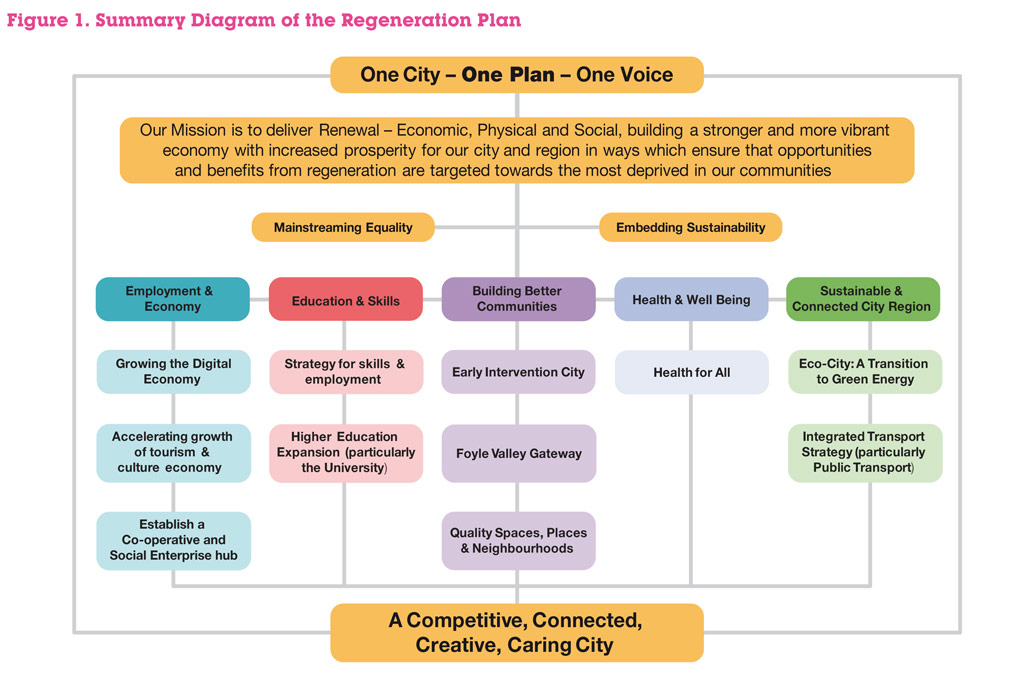
Bryan pointed me at one project—a comprehensive regeneration plan for Derry-Londonderry [read the full PDF or summary PDF]. It looks to have a good strategic edge, which foregrounds what I'd call the real drivers of cities (economy, culture, community) but views them holistically alongside some necessary strategic interventions (improving health, approaching sustainability) and then draws in secondary or tertiary matters like infrastruture, buildings and so on. Have a squint at the diagrams on page 7 and 8 of the shorter PDF:
Meanwhile, lots of work on Brickstarter. I've started designing the first 'alpha' version of the web service, which we'll share some details of shortly. As ever, we're using the website as a kind of token in order to open up wider, systemic issues—but you have to build the thing in order to flush them out. So it's been very interesting, and very rewarding, to finally be discussing the details of the various interactions we want to explore i.e. crowdfunding versus voting? What do we mean by voting? How do we balance a democratic model alongside crowdfunding? How explicit do we make the council? How to do a slow reveal on the dark matter so as to enable a low barrier to entry yet subtly unpack it over time such that the project proposals are robust enough to be taken seriously? All this and more emerging over at brickstarter.org shortly.
I love getting to this stage of a project, as everything starts to come together. With a project straddling governance and democratic models, crowdfunding and emergent community actions, sustainable development across use of shared space, shared resources, energy and so on, it actually helps crystallise the project considerably. Then our job is to draw out the shifts in this otherwise imperceptible dark matter implied by such a product or service, such that we might enable their productive reshaping. (I also happen to love spending hours in Photoshop and Illustrator, frankly. For the strategic designer, the challenge is always to balance the lure of exercising your craft skills with the requirements of the strategic, systemic view. But one enables a better view of the other, and vice versa.)
We finally got our first Finnish post up there (thanks to Kali!) and there's a good overview of crowdfunding platforms by Bryan, too.
Kalle's been doing some nice background research on 'food profiles' for other cities, for Helsinki Street Eats. We'll have a set of cards emerging for different cities shortly, to enable productive comparison with Sydney, looking at the regulations, governance culture, scene on the streets, and so on. We're also now in discussions about how and what we can fund in this area—more on that shortly.
I've also been helping out with the organisation's imminent reorganisation in our building. With Bryan, we've been leading a renovation of one of the floors, but again, really we're looking at the organisation's culture, the way we work, and interract, and so on. (Again, the balance of crafting a specific output with the wider strategic, cultural view.) We have a 'bootcamp' with the management team next week to draw up the first sketch of a new organisation.
And two good lunches. First, Bryan and I with Artek's Ville Kokkonen (design director) and Anna Vartiainen (marketing director). Artek are one of the genuinely great Finnish brands and operations, founded by Aino and Alvar Aalto (a bit of background). Their 2nd Cycle concept is a particular favourite in the Sitra office, indicating a form of "resilence" in which the firm buys back its own products and re-sells them, a simple concept that gracefully indicates the ongoing value of good design and production, as opposed to "throwawayism".
Secondly, I had a good catch-up with Tommi Laitio of the powerhouse that is Demos Helsinki, covering many topics: Baana, Brickstarter and beyond. In particular, we discussed the forthcoming event that Demos are curating at the World Design Capital pavilion (or "paviljonki" as it's known here), where we've invited Marcus Westbury of Renew Newcastle/Renew Australia fame to speak, on an afternoon/early evening session about urban development dubbed "City 2.0" (read a previous conversation with Marcus here.) More info on Facebook, and if you're in town, do come on down. (By the way, a tilt-shift time-lapse of the WDC Pavilion going up. It's designed at Aalto University's Wood Program.)
Oh, and it's the Helsinki-originated increasingly global sensation that is Ravntolapäivä (Restaurant Day) this weekend (May 19th) (for background, read our "Helsinki Street Eats" book-let). Make sure you visit Kalle's coffee stall—"Gaffebaari"—in particular!
Finally, some quick linkage: Brickstarter was mentioned in another scene-surveying post about crowdfunding urban development, this time at ArchDaily; John Thackara asks whether we need an Arne Jacobsen of urban food systems, and "Making Planning Popular: A Manifesto" (related to "Sub-Plan".)
And a little more controversially, an interesting take-down of the open data and transparency movements and a reaction to the perceived over-spending on buildings and infrastructure in Valencia, Spain, homing in on Santiaga Calatrava. Sadly, there's little public controvery here about the proposed (or is it?) road tunnel under central Helsinki, which is apparently still sitting on the city's plans somewhere, and has been for years—or is at least alive in the minds of the current generation of city planners. Not only is this a ridiculously outdated idea ("sell by" circa 1970) it is apparently preventing or otherwise hindering other projects from happening. The local media is asleep at the wheel on such matters, as far as we can tell. More here if/when we get it.
Oh, and I forgot to report: Vappu, a couple of weeks back, was a blast. Very special indeed, and no way near as bacchanalian as I had been led to believe (caveat: I went to bed early.)
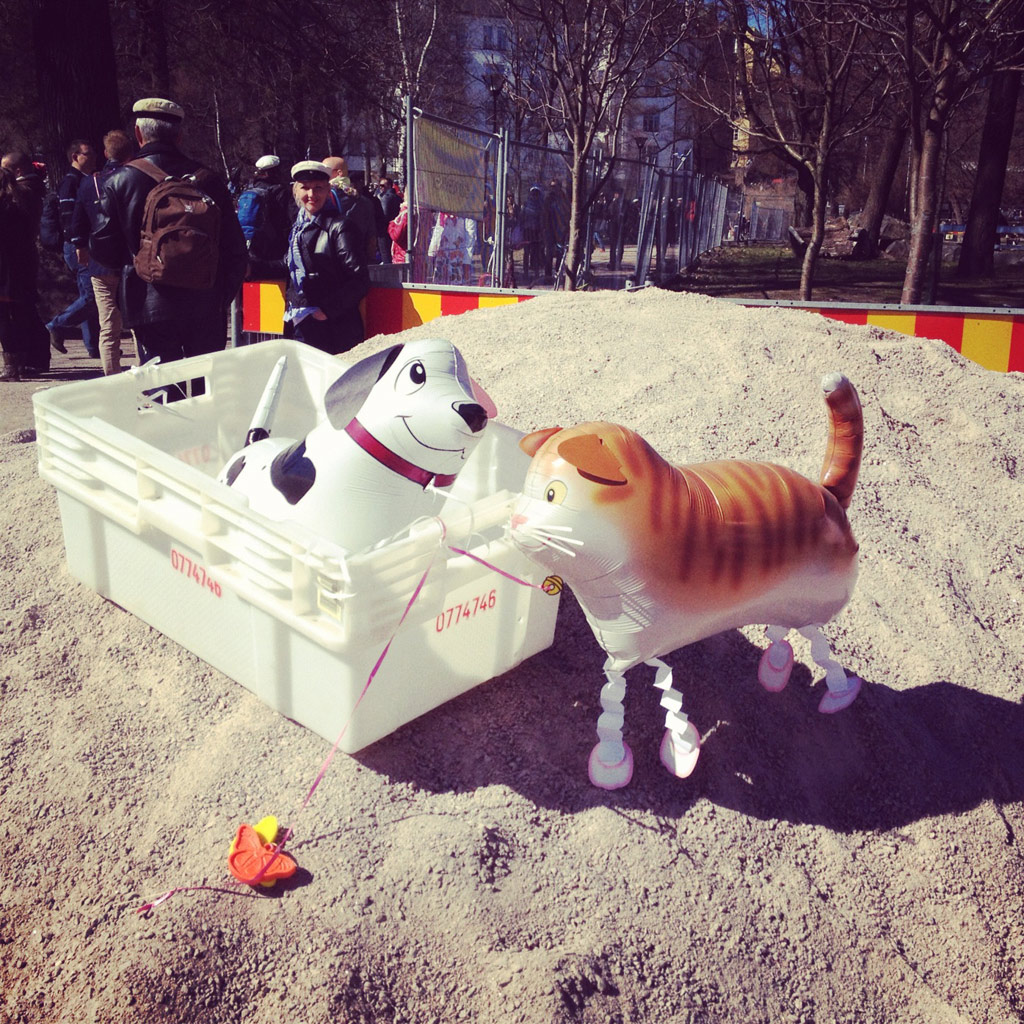
Vappu

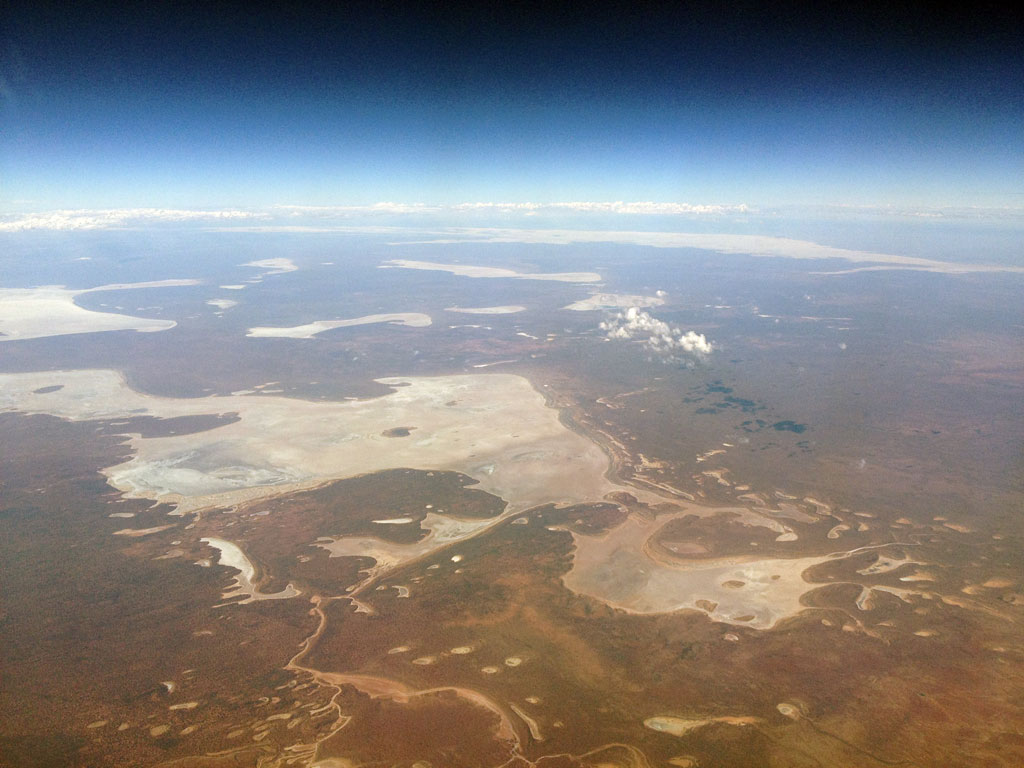
Flying over Lake Eyre, northerly out of Adelaide.
This week, the weeknote is really brought to you by Adelaide and Melbourne Design Lab, rather than Helsinki Design Lab. I've been in Australia all week, and have only the vaguest ideas as to what's been happening back home! Justin's in town, which is good, and he, Marco and Bryan have been knee-deep in our internal organisational strategy work, as well as keeping our Low2No food projects ticking over.
One thing; our Design Exchange operative #1 - Sara, embedded at City of Lahti - has got a new site live for the 'Radanvarsi' urban development around the train station in Lahti. The site is for the project competition, and citizen participation around the development in general. It's all slightly beta - of course - but will begin filling up from now on. (PS. Note, we're looking for another strategic designer in this progreamme, as part of Helsinki Department of Social Services - apply here.)
But as the team were slaving over a hot organisational strategy stove (?!) in a Helsinki which had momentarily turned its back on spring, I was in sunny - very sunny - Adelaide.
I was there for a quarterly meeting of the Integrated Design Commission Advisory Board (more info on the board here). The IDC, led by Commissioner Tim Horton, and part of the office of South Australian Government Architect Ben Hewett, is one of the most interesting design interventions in Australia. It's also one of the few other organisations worldwide also working as a strategic design capacity for core public institutions.
It grew directly from the work of one of Adelaide's Thinkers in Residence, architect Prof Laura Lee, and sits right at the heart of government - part of the Department of Premier and Cabinet. It's charged with aligning design disciplines, industries and efforts across the state. In practice, this means focusing initially on planning, architecture, urban design and other built environment issues - but given the state's manufacturing history, this also means some interesting incursions into industrial design, via prefabricated housing. In this respect, it's a little different to our mission - though we're often covering similar ground. But their work essentially concerns gluing back together core disciplines and perspectives that our societies have allowed to wander too far apart; which is certainly developing a similarly holistic view to that pursued by our Studio process.
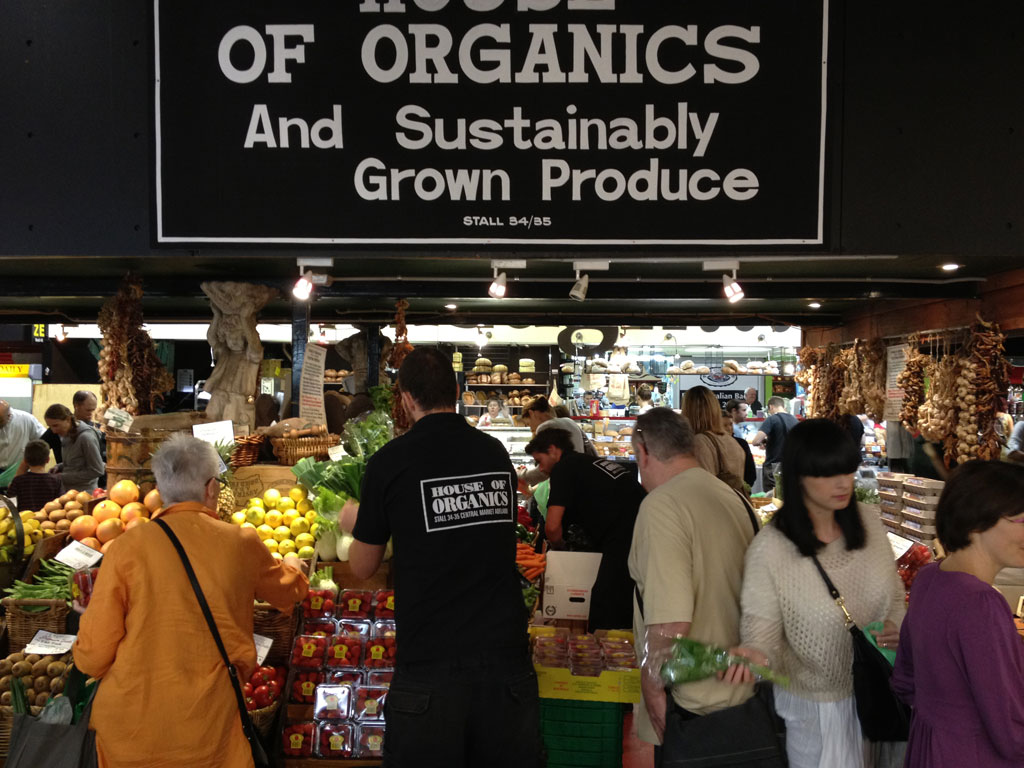
Adelaide's excellent Central Market indicates the value of local, organic everyday food.
(Tim and I often reflect on the ideal proxmity from seat of power, for a strategic design function. You need to be close to effect genuine change, clearly, but not too close as to be a political football. The IDC team seem to have it about right; see also Ben's work as Government Architect, and the major announcement of a City Design Review Panel, which was happening last week; a huge step forward to get qualitative assessment at all stages of the urban development process. As Planning Minister John Rau said of the announcement "If we are going to encourage more South Australians to live in the city, then excellent design is critical.")
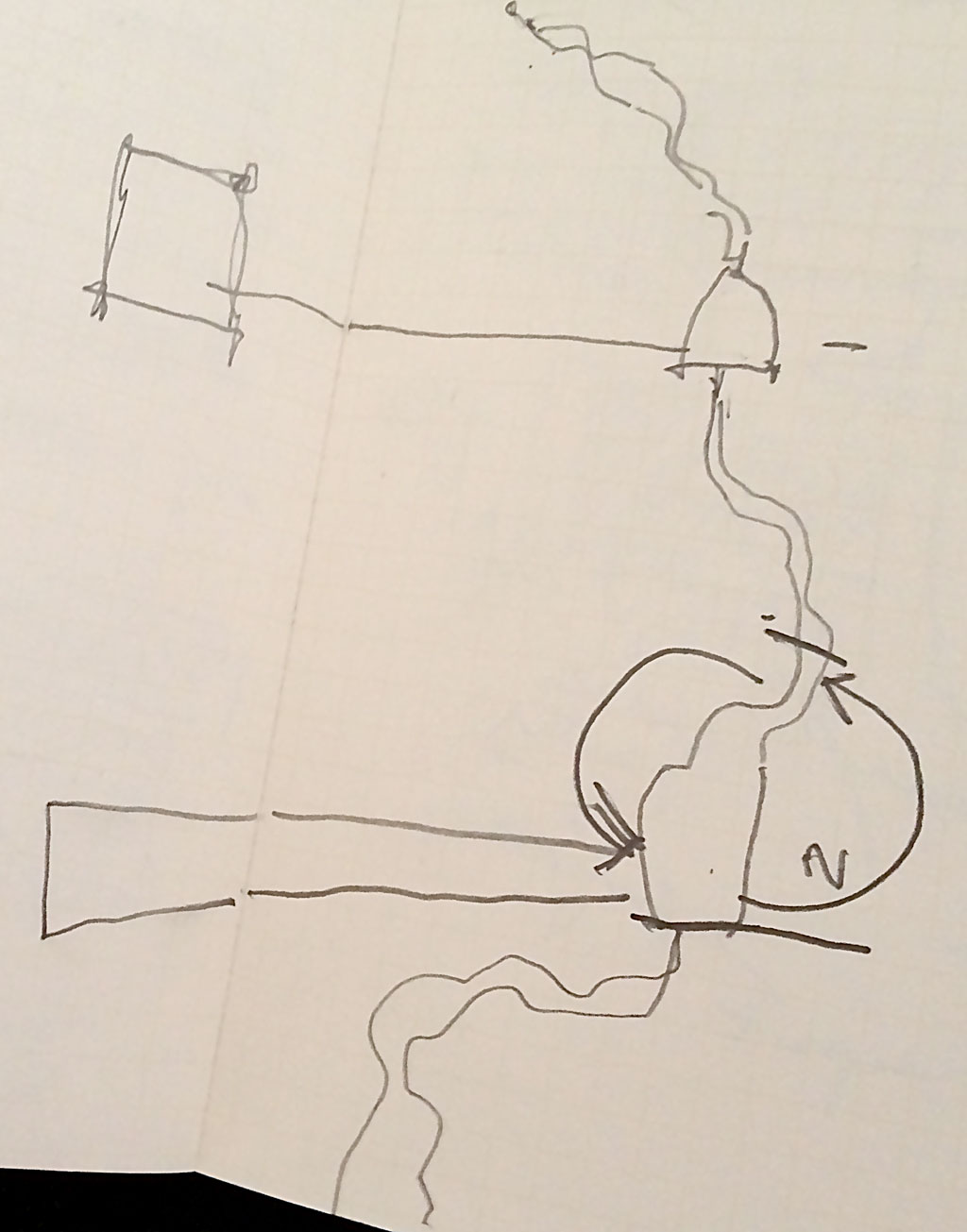
Tim Horton's sketch of River Torrens system, scribbled in my notebook over lunch
Amongst other projects, the IDC team are at the heart of the 5000+ project, which is intended to be a replicable model for citizen participation in urban planning, or more broadly, discussions as to what Adelaide is for. This is particularly interesting as regards Brickstarter and Low2No, but worth checking out in general. IDC have even successfully taken the HDL Studio format into their work - which is exactly what we hope happens by publishing blueprints in such detail - which builds on several conversations we had when I was originally in Australia, pre-Sitra.
Advisory Board: Prof, Graeme Hugo, Associate Prof. Joanne Cys, Tim Horton, Jane Crosby
Advisory Board: Ben Hewett, John Denton, Dr Elizabeth Farrelly
I think Adelaide is a great little city, as it happens ("little" in comparison to Sydney and Melbourne, both of whom tend to look down their noses at it, as is the way of such things. Adelaide, like Helsinki, is a good population size for a city; it's the distribution that needs a little work.)

Cursor, Adelaide
Like most Australian cities, it's slowly beginning to develop a sense of its own urbanity, despite a good half-century of suburb-dominated misteps, and that is good to see. The work of the IDC, and the several other initiatives in the city, will be key to ensuring a vibrant and productive urbanism emerges. It was great to see evidence of 'emergent' innovation filling the numerous gaps left over by 20th century urban policies, such as this fabulous pop-up lobster taco stall and winery, occupying a vacant parking lot. From totally dead gravelled non-space to fine lobster tacos and some of the world's best wine, and 'one-in-one-out' by 7pm on a warm Friday night. (Please excuse the dark mobile phone video, but it captures something of the mood.)
One paper the IDC delivered to the board was SGS Economics' review of the economic impact of the Renew Newcastle intiative, revealing an extraordinary 10:1 multiplier effect of Renew Newcastle, as well as other 'shared value returns' on investment. (Though when assessing these 'economic impact of cultural initiative' papers, I'm always reminded of my friend Justin O'Connor's note that no-one ever asks for a 'cultural impact of economics' study, which would surely reveal the opposite of a multipler; a divider, even?).
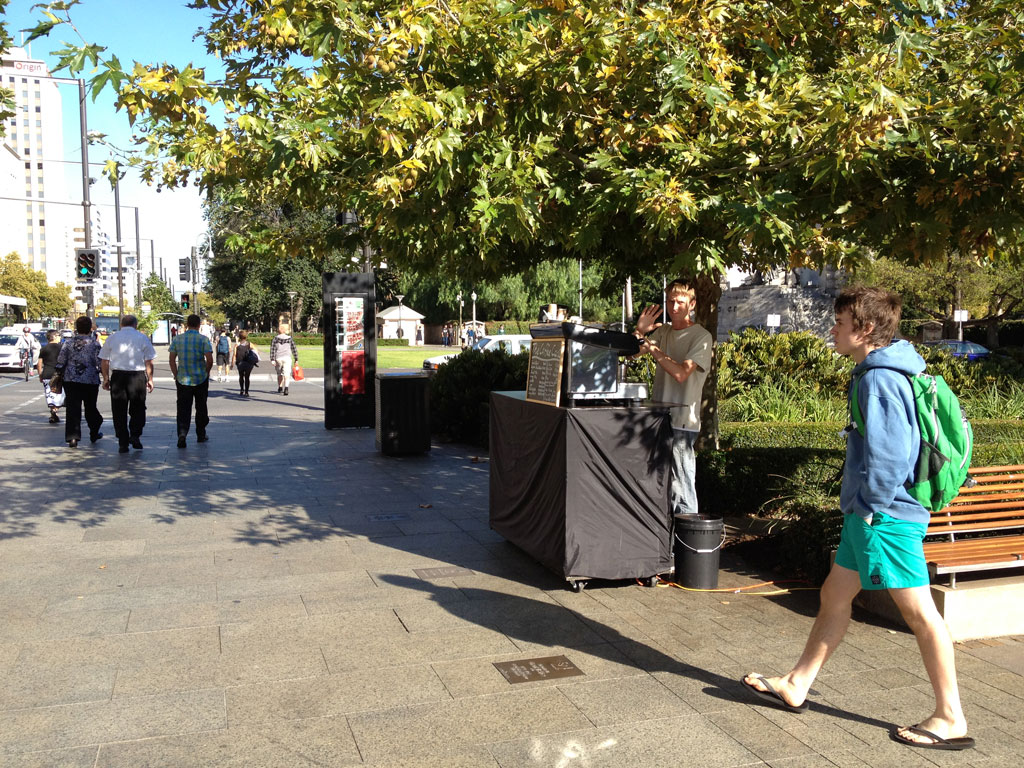
Pop-up coffee stall, part of a trial testing looser regulatory approaches to licensing in the city.
And before our meeting in Adelaide, I caught up with Marcus Westbury in Melbourne. Marcus created the Renew initiative - first in Newcastle, NSW - and Renew Australia is now based in a good retrofit of an industrial unit in Brunswick, Melbourne. It was great to catch up with Marcus; he and I worked together on The Edge in Brisbane, and he's such an original thinker (and doer) in terms of genuinely shaping cities. Notes to follow on that chat over on our Brickstarter project site. (There's a Renew Adelaide, as it happens.)
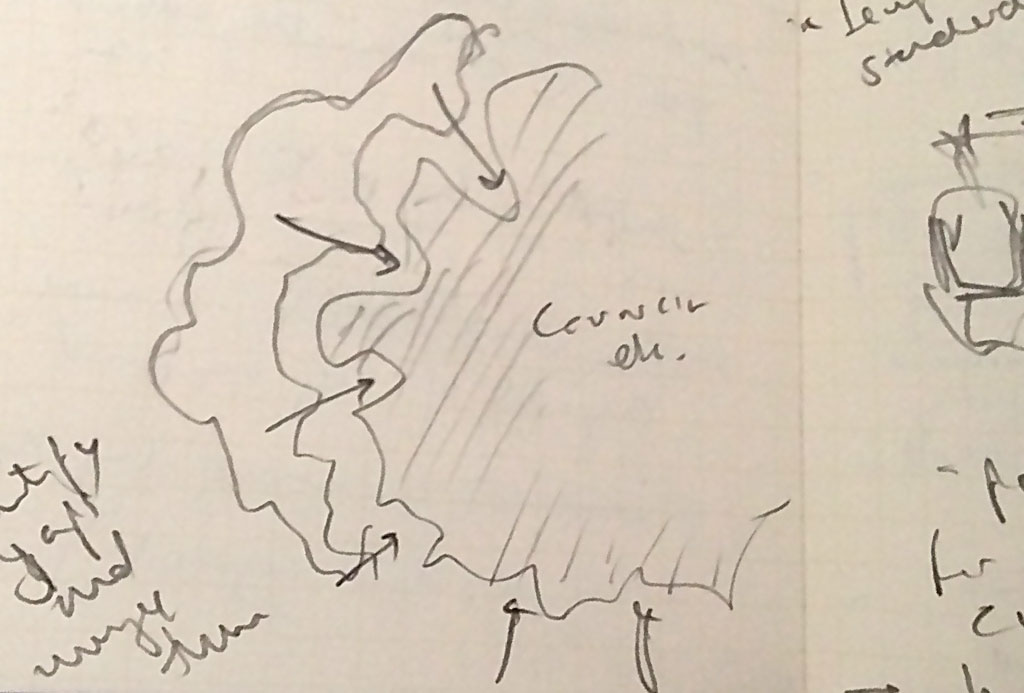
My diagram of Renew Newcastle looking for gaps in 'dark matter', during chat with Marcus Westbury
I was in Melbourne for a crazy 36 hours courtesy of the University of Melbourne School of Design, and particularly the architecture department. I met some very bright urban design masters students for lunch, gave a public lecture (thanks to all who turned up; Twitter was pretty effective at getting a few hundred in a room with not much notice.) Ditto a lecture at Arup Melbourne the following lunchtime, part of the Innovation Forum series now curated by Stuart Candy.

Brickstarter-friendly site, 500m south of University of Melbourne architecture department.
Back to Adelaide, and meetings with TACSI's Brenton Caffin, around where might 5000+ go next, and IDC again, advising on how to handle discussion around smart city strategies, before an incredibly useful phone conversation with City of Sydney about their exemplary recent tender for food trucks.
It was great to hear about their approach, which Helsinki - and many other cities, for that matter - can learn much from. We're trying to broaden the conversation around street food here in Helsinki - including with the City, as previously noted - and these kind of case studies from other cities are often very important in terms of shaping opinions. Again, more details soon, as this one warrants a post of its own over at Low2No.
Week 157, and a touch of 158 if we're being honest, was mostly about getting things out the door. Almost by coincidence, we finally launched new websites for the Design Exchange Programme and Brickstarter, made some cosmetic tweaks to this very website, and published a 98 page book on street food in Helsinki. It was a lot, but a long time coming!
The Design Exchange (DEP) website is where you can track the progress of our embedded designers. The goal of the DEP is to move one step closer to policy by design. This entails enhancing the capabilities of the public sector: new abilities to frame problems, iterate solutions, seek feedback, and communicate clearly.
There's a quick intro to the programme and I've also shared a bit of the background of how the DEP came to be. When I look through our files on that topic, they stretch back to late July 2010. Although we had discussed it internally as a 'what-if', the concept first appeared in the Clues cards (especially the one about Tailor Made Municipal Services) and came up again during the Ageing Studio discussions.
Perhaps it's no surprise that Petri Lehto, a member of the Ageing Studio, has been one of the driving forces behind bringing the DEP to life and we're grateful for his collaboration, as well as that of the many other people involved at our partner organizations.
At the moment we have only one placement up and running, with Sara Ikävalko working at the city of Lahti to develop a new participatory process for a competition they are hosting there.
We're getting closer to having more placement opportunities open. When that happens we'll advertise them here on the HDL site as well as the Design Exchange site, so be sure to check back if you're a Finnish-speaking designer interested in working in the public sector.
In a nice twist of symmetrical history, the same week that we launch a project which took cues and clues from friends at MindLab, saw another group, the MaRS Discovery District in Toronto, looking to HDL for advice on their own explorations of a new lab. The report is quite informative, and we're happy to be a reference as they look for the best way to put "complexity, networked collaboration and design" to good use.
Next up was Brickstarter, a project we're developing that seeks ways to turn NIMBY into YIMBY (yes in my backyard). How might we reorient community action from no full-stop to "no, but how about..." or even "I'd really like...!"
As Dan explains in the introductory blog post, our thinking and work on Brickstarter is beginning to pick up, so we needed a place to bind these thoughts together into a big ball of ideas. The Brickstarter blog is a mix of notes from our field trips, quick dives into terms and concepts, and eventually some case study research. Some themes:
Community decision-making; new engagement tools; long-term investment in sustainable infrastructure; participation and representation; prototyping as research, iteration as planning; user-centred redesign of governance and legislation; different relationships between citizens, businesses and governance; potentially even prototypes of political systems...
To give you a concrete example, What's different about this shady courtyard on Tarkk'ampujankatu...
And this one on Tehtaankatu...?
It's hard to see with the trees full of life in the summer, but the biggest difference between these two courtyards is that features a garden and the other a parking lot. Otherwise they're about the same size, in the same neighborhood, and have the same solar orientation. They're essetially the same from a contextual point of view, yet one group of owners has decided to use the space for parking and another for a garden.
With Brickstarter we are trying to understand how these decisions get made, and eventually to developing a platform that enables them to be made with greater levels of participation. Why? Because we think that new tools will allow communities to make decisions like this with higher social equity, in a less devisive manner than typical NIMBY dynamics, and with heightened attention to opportunities that consider the long-term.
Recently there has been an uptick of interest in 'meanwhile' or temporary usage of sites. We see this as positive development, and in a certain way Brickstarter is our attempt to look at how the verve of these grassroots efforts can be grafted onto the institutions that shape everyday life. One of our hypotheses at the moment is that there is a missing interface to government. What would that look like? Figuring it out will require our usual dip into strategy, but it’s likely to also involve building product(s).
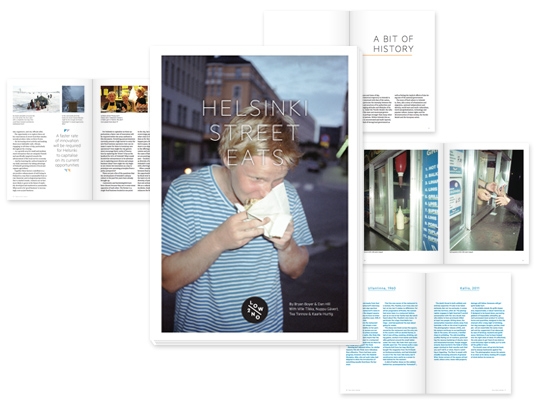
Helsinki Street Eats, the book which was our third release this week, has similar ambitions. We wrote the book to begin asking questions about the extremely positive developments of Ravintolapäivä and the Camionette. On it’s own a festival like Ravintolapäivä is a nice urban experience that happens a few days a year, but the next morning it's gone without a trace. With a bit of work on the dark matter, these experiments can be looked at anew as prototypes of a future regulatory, business, and social context.
The book was a way to crack open that question, and now we’re slowly but surely sketching out a way for those ideas to take root. If you’re the type who is into books and publications, I wrote a post about the ways we experimented with print-on-demand in the production of Helsinki Street Eats.
Otherwise there’s not much to say beyond get your copy here!
Beyond these launches, we're still working on internal projects. Parts of that effort is about to wind up soon, which is good because we have our hands full at the moment—as you can probably tell!
This post is part Low2No project update and part design how-to delving into simple customization of the Print On Demand books as a format. First, the update. Low2No is about creating pathways for our current, high carbon economy and culture to transition to a neutral carbon footprint. An important aspect of that is what and how we eat.
Especially for a place with the northern climate and high meat & dairy consumption habits of Finland, food production and consumption are key concerns when you're interested in carbon.
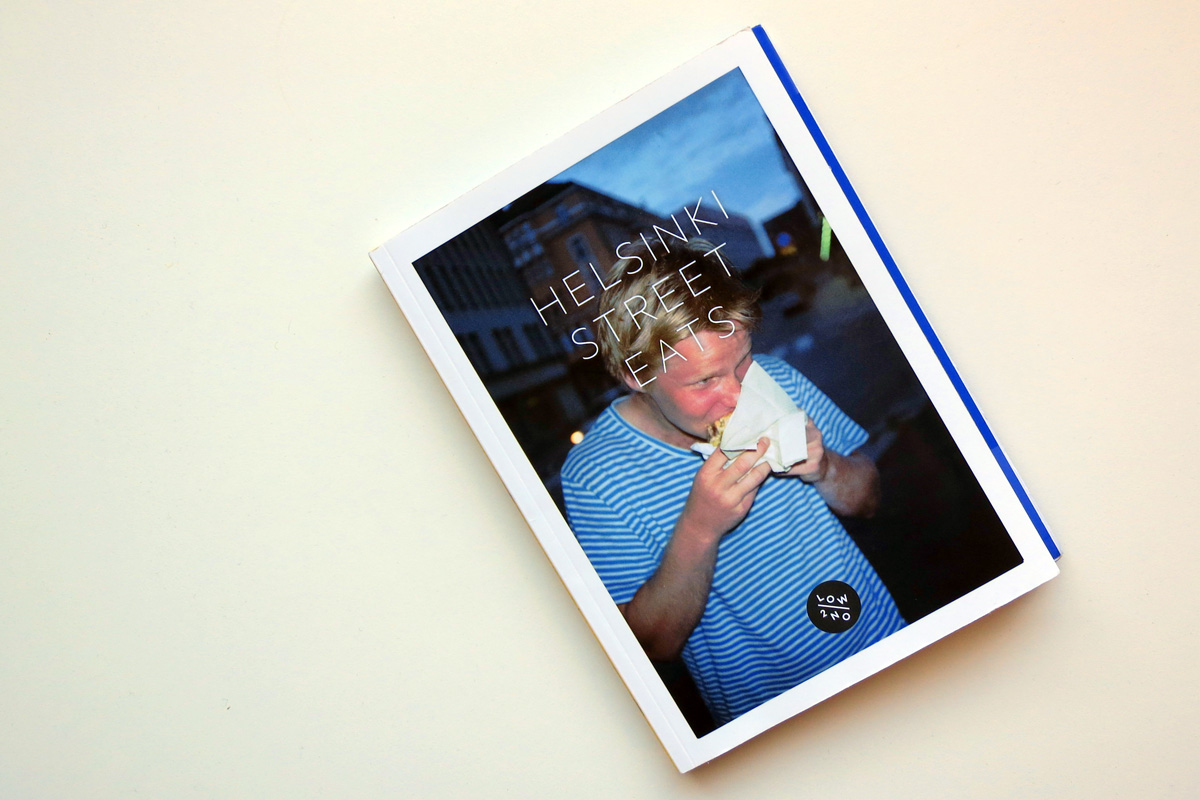
Helsinki Street Eats, a new book about street food as a vehicle for innovation
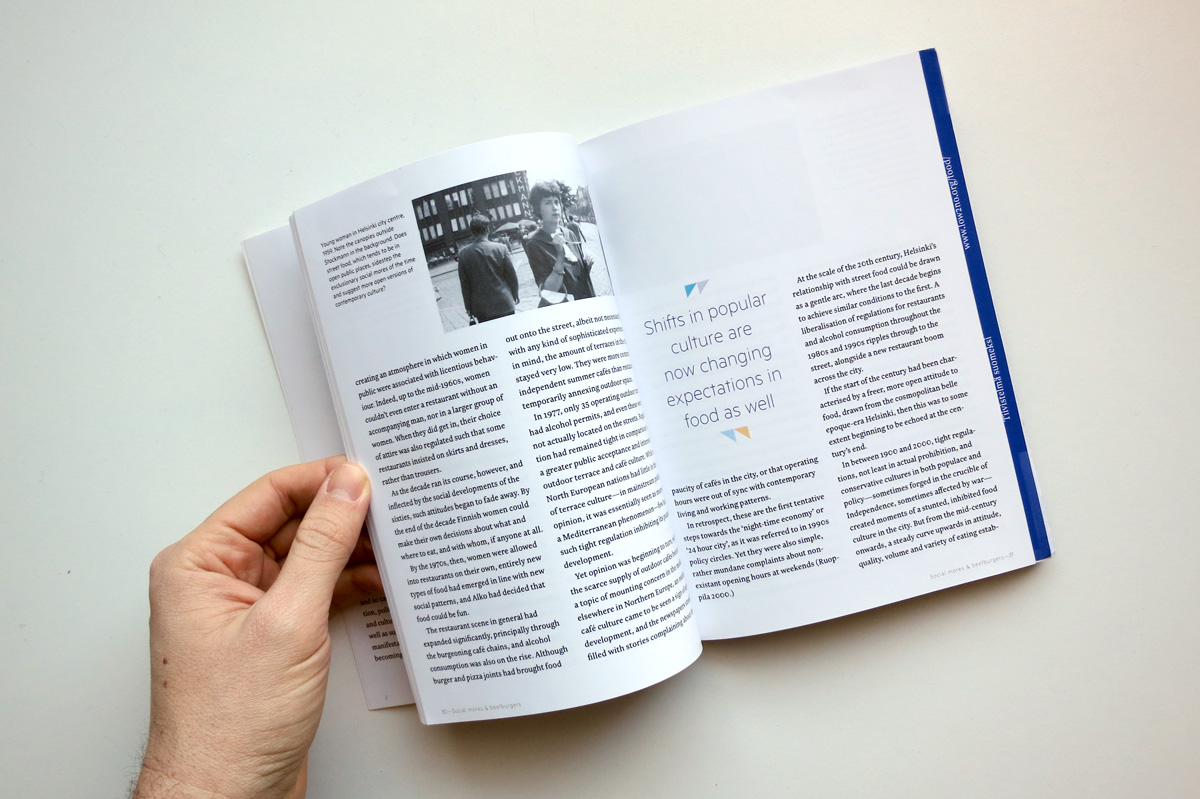
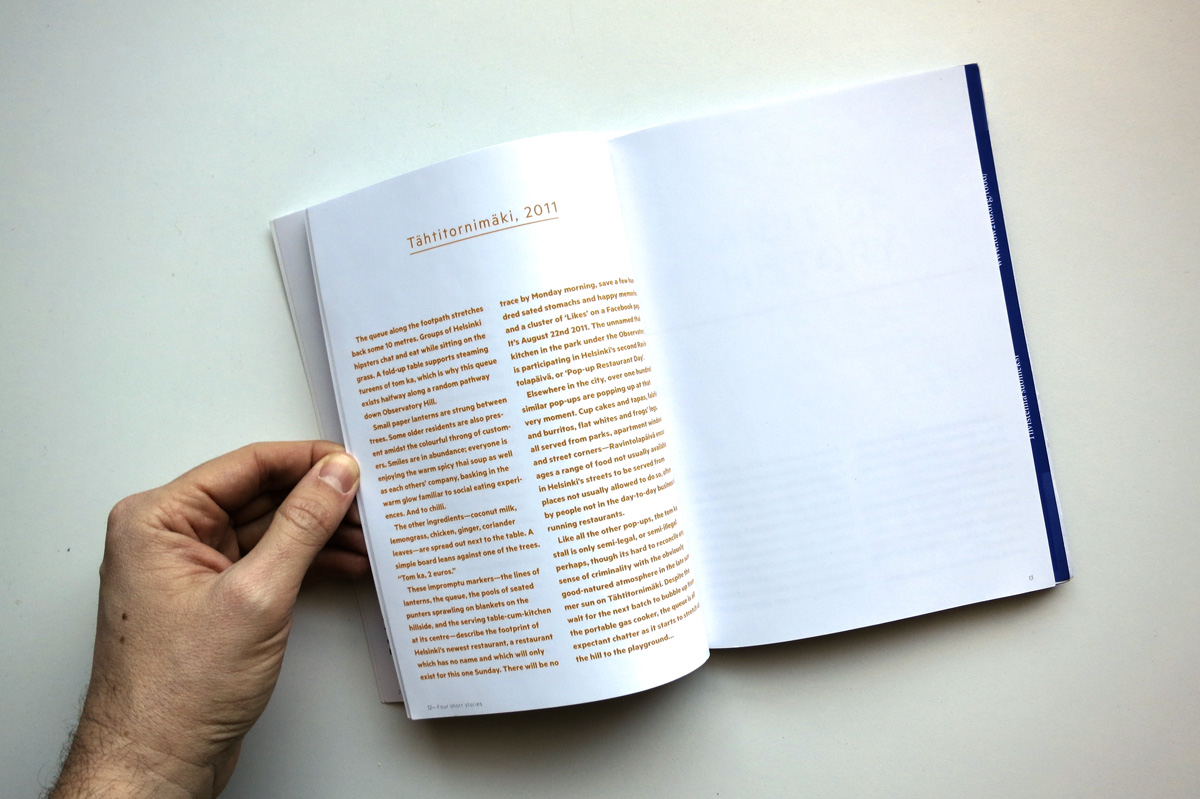

We've been looking at street eats as an example of "everyday food", the stuff that's close at hand such as late night snacks, kiosks, bakeries, food trucks, and the like. In fact, let's take a slightly modified excerpt from the Low2No site:
Street food describes systems of everyday life. In its sheer everydayness we discover attitudes to public space, cultural diversity, health, regulation and governance, our habits and rituals, logistics and waste, and more. What we find most interesting is the intersection of all of these aspects: how they come to a balance and tenor that enables and encourages specific kind of outcomes in a specific place and time.
Street food can be an integral part of our public life, our civic spaces, our streets, our neighbourhoods. Street food can help us articulate our own culture, as well as enriching it by absorbing diverse influences. And it can enable innovation at an accelerated pace by offering a lower-risk environment for experimentation.
Street food can do all of these things, but it doesn't necessarily.
This book is an attempt to unpack what's working and what isn't in Helsinki, and sketch out some trajectories as to where it could go next.
The full 98 page book is available for download, and you will also find links on that page to buy a printed copy from Lulu.com, a print-on-demand publishing service.
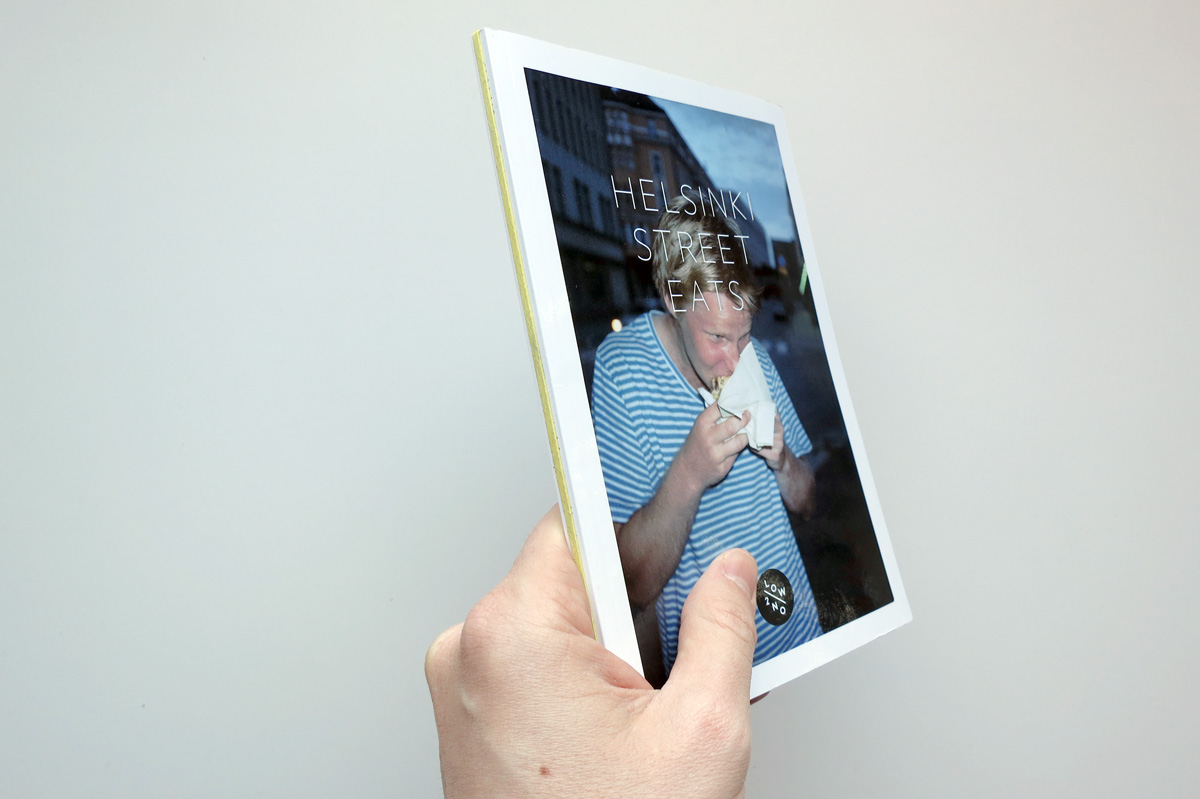
Readers of this blog may already know that we're a bit obsessed with formats. We are given to nerding out on the minutiae of publishing online and in print, which is probably no surprise since as a team we have direct experience in producing magazines, newspapers, books, radio, websites, buildings, and various other media. (Aside: this makes us an unusual public sector team, to say the least.)
It's nice to go all-in on a book and obsess over every tiny detail from writing to printing, as we did the In Studio: Recipes for Systemic Change. With this most recent publication on Street Food we were interested in exploring a format that would be more ephemeral. One that could change and evolve as our work on the topic does; a paper document that could have different version numbers; and one that felt easier and more casual. We also wanted to self-service distribution model.
Print-on-demand seemed to fit the bill, offering flexibility along most of those axes, but print-on-demand books tend to be… dull. The easiness of the format shines through. How could a print-on-demand book be a bit more special—could we find some relish to serve it up with?
People have been hacking print-on-demand to do some interesting stuff, but it seems to be all on the software side. We wanted to hack the print in print-on-demand. Lulu hacking.
Surprisingly, there still does not seem to be an option that surpasses Lulu. I say surprisingly because the Lulu experience is quite terrible. Their tools are limited and the workflow is awkward. As one small example, you can set the country of publication only after you've published a book. According to Lulu all published books apparently come from the United States, at least at first. Blurb is another popular print-on-demand service and their quality is higher, but their document sizes are limited and it's mostly for photo books.
Over the past months Dan and I sketched lots of (sometimes ridiculous) ideas, including at one point the thought of laser cutting Lulu books into new shapes. Stepping back from that precipice, we've settled on a basic combination: a full-color 98 page print-on-demand book paired with an offset print fold-out poster, all bound together with a rubber band.
The books come straight from Lulu and the rubber bands can be found at any office supply shop and countless online sources so that only leaves the poster for us to source through a traditional print house.

Usually the spine of a print-on-demand book is a sore point because the alignment can be unpredictable. The rubber band nicely obscures alignment errors.
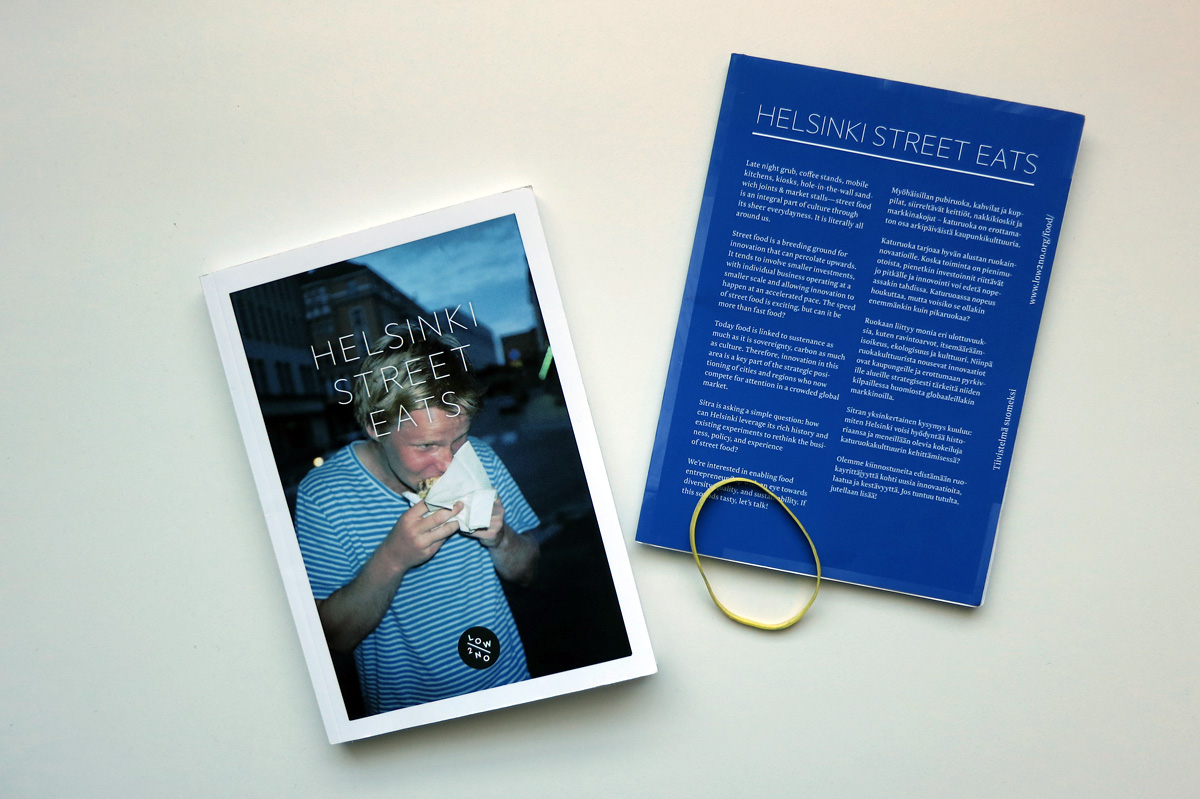
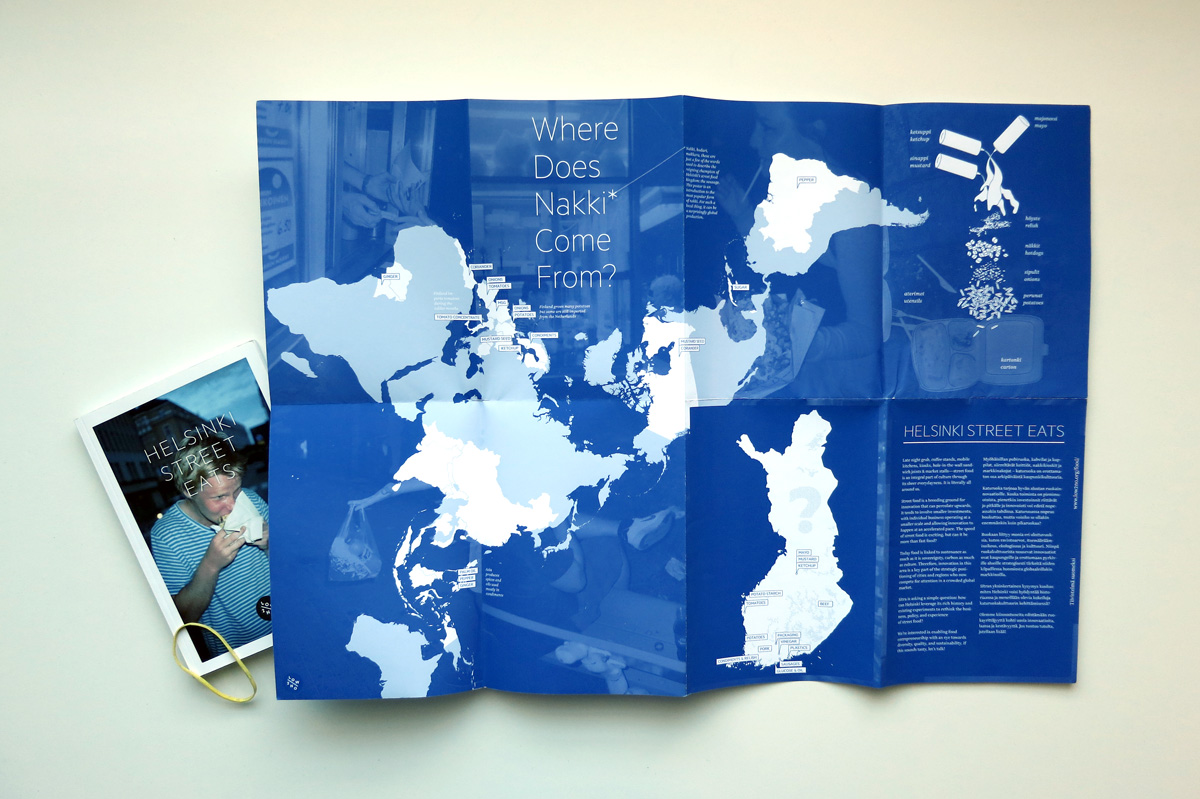
The poster is designed to fold down into A5 format so that it fits neatly within the book. Right now we're waiting for the actual posters to come back from the print house, but they will be printed on 60gsm paper which means they're a good 25% thinner than standard printer paper, making them easier to fold up.
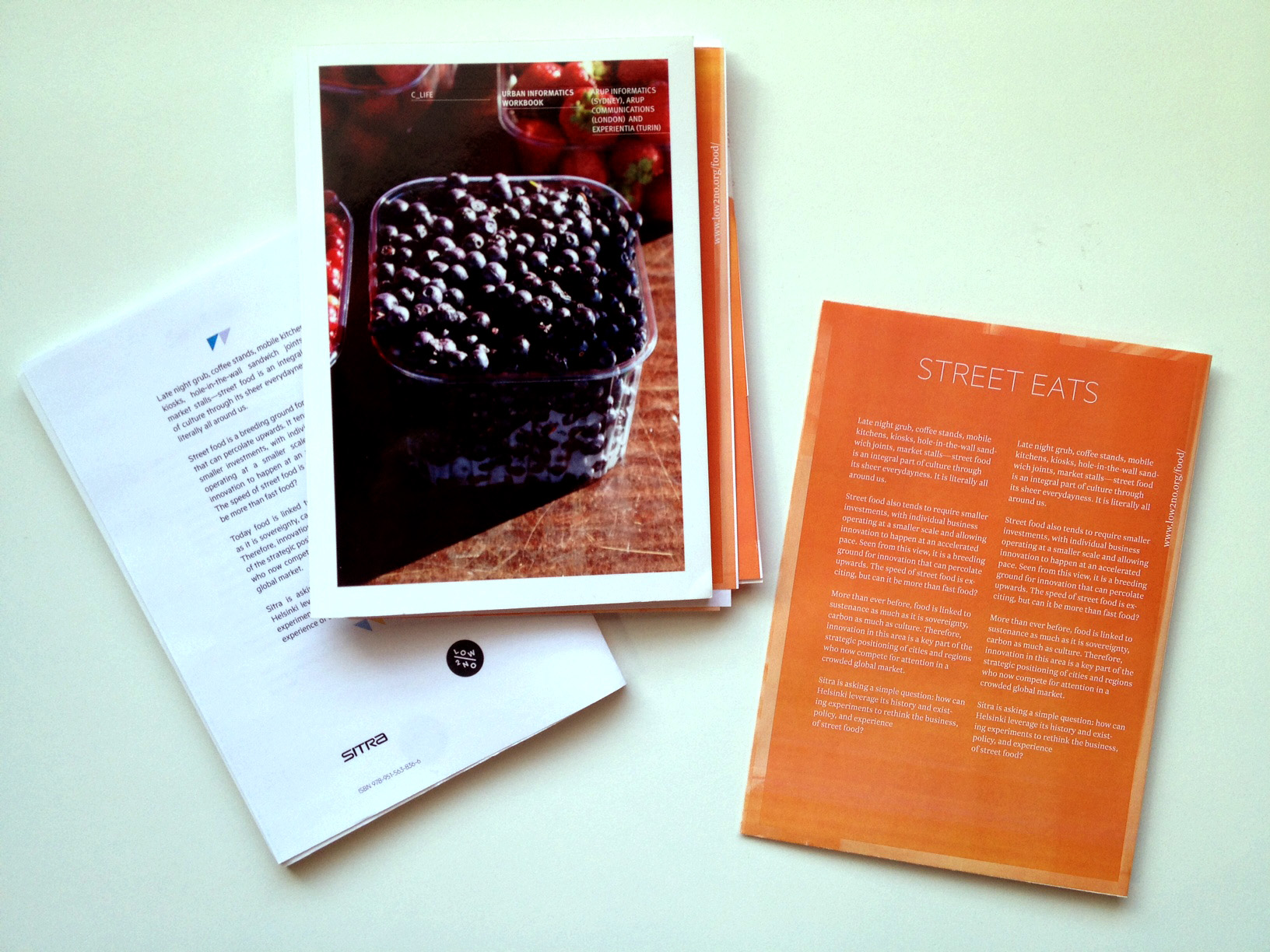
Various paper prototypes using the office printer and tape to craft posters and an old Lulu book as a stand-in.
The binding pushes the poster out a few millimeters which creates a natural 'tab'. We discovered this on accident while making a prototype, but it was a nice discovery since we wanted to have a quick way to thumb to the Finnish language summary.

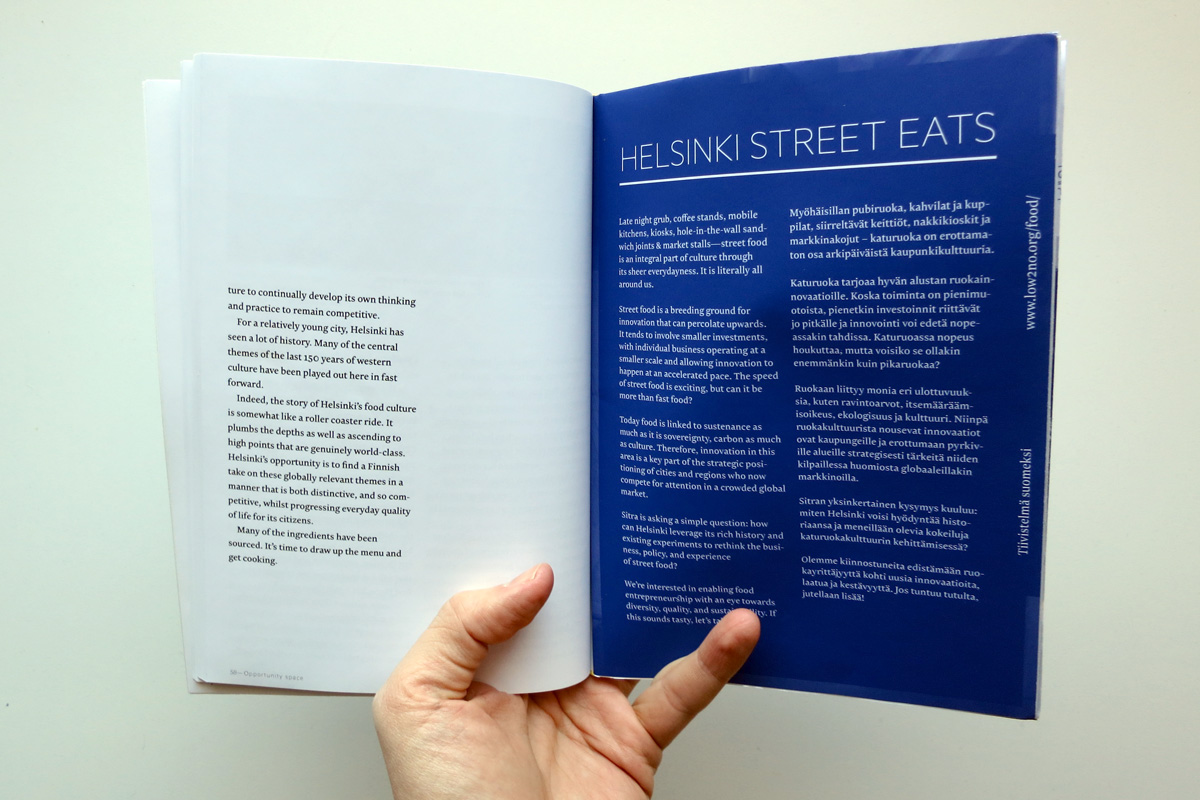
When we give out copies of the book they'll come with the poster and rubber band, but if you order a copy online or download the PDF you'll find the contents of the poster included as normal pages.
Because print-on-demand does not have any setup costs or minimum print runs, we can also offer the same book in multiple flavors. As we started working on the cover it was hard to settle on a single image, so we decided to let the user decide. There are four copies of the book available for download/print. All of the contents are the same, but you get to pick your own cover. My favorite features a scene of Kauppatori from 1901. What's yours?
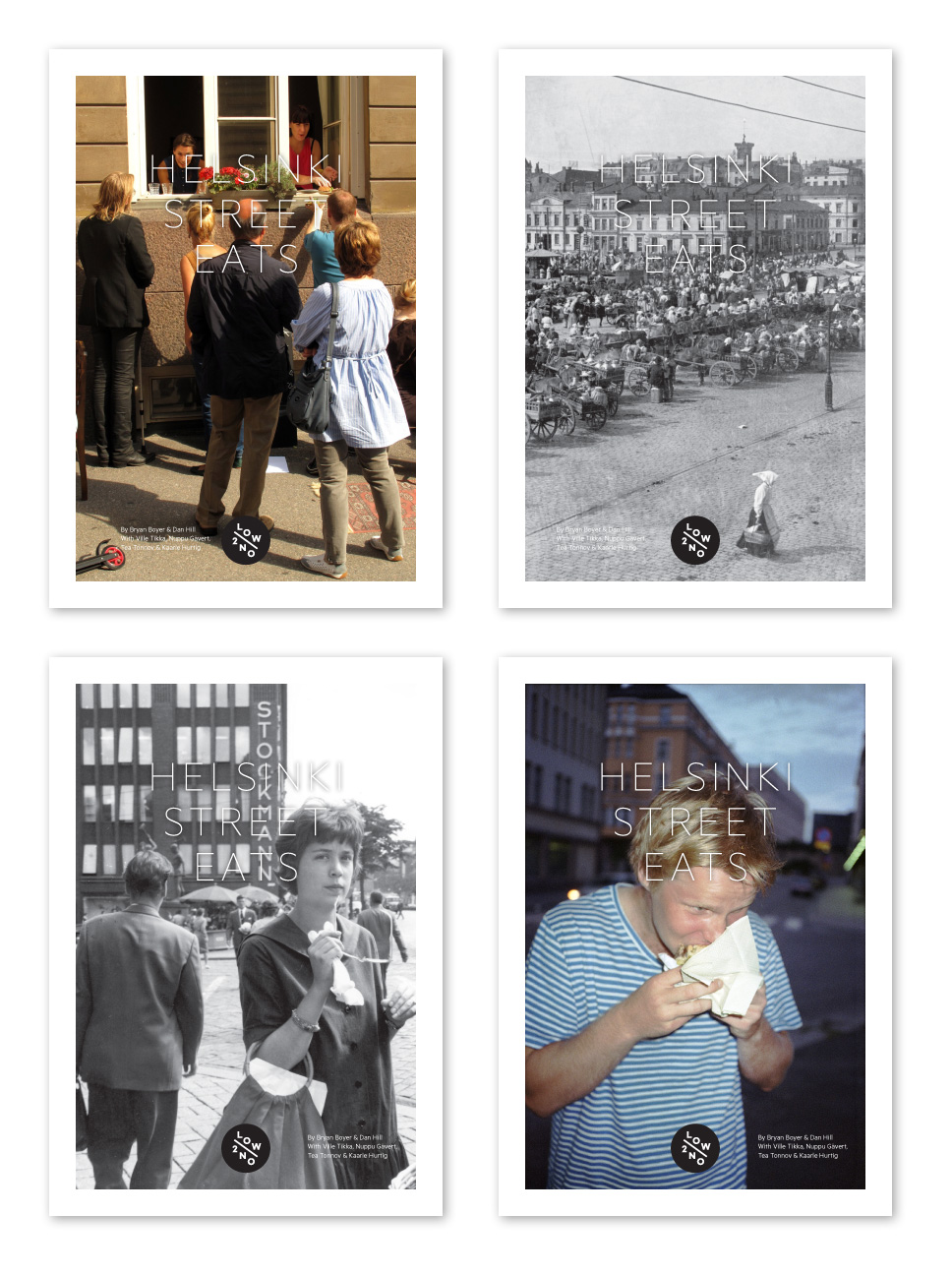
Clockwise from top left: Ravintolapäivä August 21, 2011; 'The Great Saturday Market' at Kauppatori in 1901; Jaskan Grilli in August, 2011; Outside Stockmann in 1959.
Although the writing and research for this project has been on slow burn for about nine months now, the production of the book was pretty quick. Dan and I did all of the work in house, tossing files back and forth with occasional but insightful comments from Marco and Justin. One of the positive side effects of taking longer than expected to deliver this project was the opportunity to shoot extra photos around town, so it's richly illustrated.
The larger team included Ville and Nuppu of WeVolve on interviews and research; an investigation into the supply chain and geography of a typical hodari (hotdog) by Aalto University student Tea Tonnov; photography by the indefatigable Kaarle Hurtig; and tips and ciritique from too many people to mention.
Hope you enjoy! Hyvää ruokaa!
That pile of snow from last week? Still there. And not only that, it's snowing as I type, so the thing is growing.
Dan remarked the other day that during this time of year it feels like everyone is booting up new projects. Could the surge be detected in the number of domain name registrations? We've booked one this week, with another to come once we settle on a name for it. Buying a domain name is a good inflection point. It means the project has solidified enough to be developed in public.
They come and they go. The domain name for a quick project from a couple years ago will be expiring soon, so we've moved it to this website for posterity. The permanent home for our Clues to Open Helsinki is now in the HDL dossiers. The grunt work of moving the project from one website to another was a nice opportunity to revisit the work and be reminded of the extent to which many of our current interests were there in nascent form. Food? Check. Community decision making? Yup. Design exchange? Sure enough!

Photo: Hertta Kiiski
During the last couple months we have been slowly building up two projects about food and community decision making, and this week they took the leap from more or less fuzzy interest areas to specific proposals. We forced ourselves to sit down and draft a one page description for each project.
Despite the awkward term—and please let us know if you have something better—we like one pagers around here because they are a simple way to bring a level of rigor in one's thinking: big ideas, small page. Here's how we do it.
Working simultaneously in Google Docs or huddled around a Word document on a laptop, we take turns drafting sentences, phrases, and fragments. At an early stage the one pager is mostly about why and what, and the who, how, and when to be covered by a cursory sentence. Or left out for the moment.
It's hard to resist the urge to drop the document into InDesign and start fiddling with layouts and font sizes to make room for more words on the page, but point of writing the one pager is to work within rigid boundaries and take advantage of the fact that the format forces you to make tough decisions. To really test yourself, try using a bullet list or two. If you're as allergic to corporate speak as I am, this will be a true test of your mettle.
But bullet points were invented for a reason: done right, they should be distilled versions of your main points. In our case, it's also part of writing to our audience. The kind of people who we need to read our one pagers tend to be used to, even expect to see, bullet points in the documents that glide across their desk. Dan calls this method designing, which is a tactic that all of us on the team practice innately.
By the end of HDL Global 2010 we had drafted something like 39 different versions of the one page description that went out to everyone from invitees to press people. Those all grew out of a single document, so the process left us with a family tree of explanation.

With luck, the two single page documents that we drafted this week will grow similar trees as they develop. Here's the first couple paragraphs of the current draft of our document for 'Brickstarter', a project about community decision making:
Brickstarter is a 21st century social service. It enables everyday people, using everyday technology and culture, to articulate and progress sustainable ideas about their community. Brickstarter is a platform to turn possibilities into proposals into projects.
The interface between citizens and institutions can be slow, awkward and cumbersome. For years, this was just the way things were. Yet the tools and media that people now use to orchestrate their everyday lives rapidly outstrip those used by most municipalities, ministries, and other institutions.
Brickstarter takes advantage of social media and mobile apps in order to address this disconnect, by developing a more articulate, more responsive, and more representative platform for citizens and institutions to work together.
What's missing here is an articulation of how Brickstarter connects community matters to dark matter but, you see, that's in a bullet list further down the page.

Never trust a website to design your book cover
Yes, the food booklet is still coming. In fact, that should be available for download by tomorrow. The Print on Demand Service tried to design a cover for us, but we've decided to go a different direction.
The good part of friday was spent in Kalasatama in a workshop about food entrepreurship. The session culminated in three, at at times four, people around a laptop drafting the one page description of the project that we spent the day sketching out. It's trending in the right direction and now we need to work quickly to ensure that we can meet an ambitious timeline.
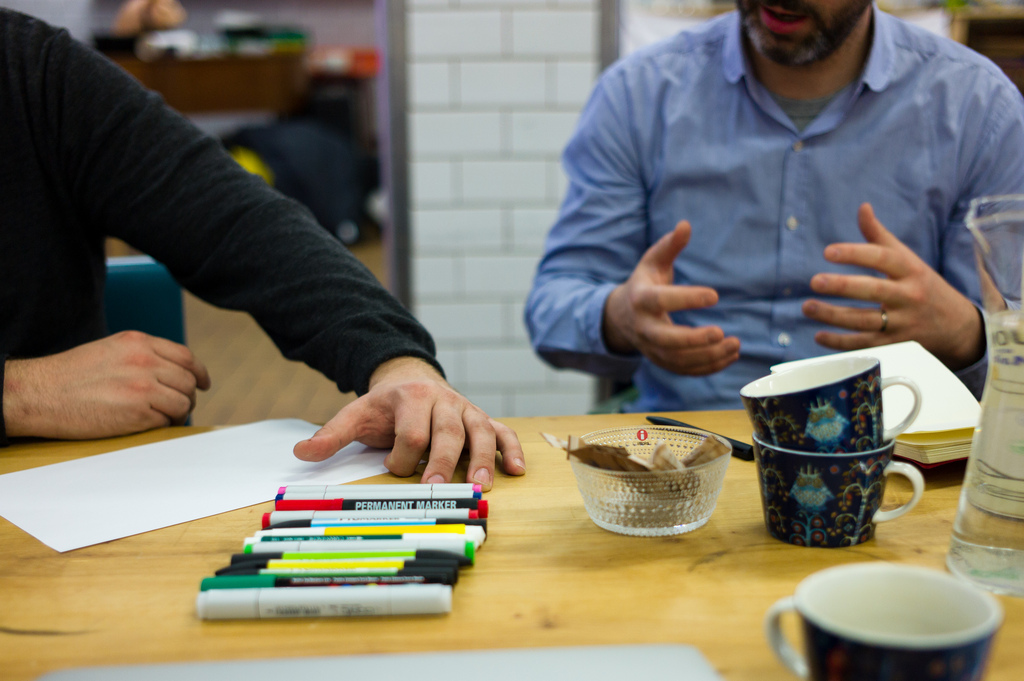
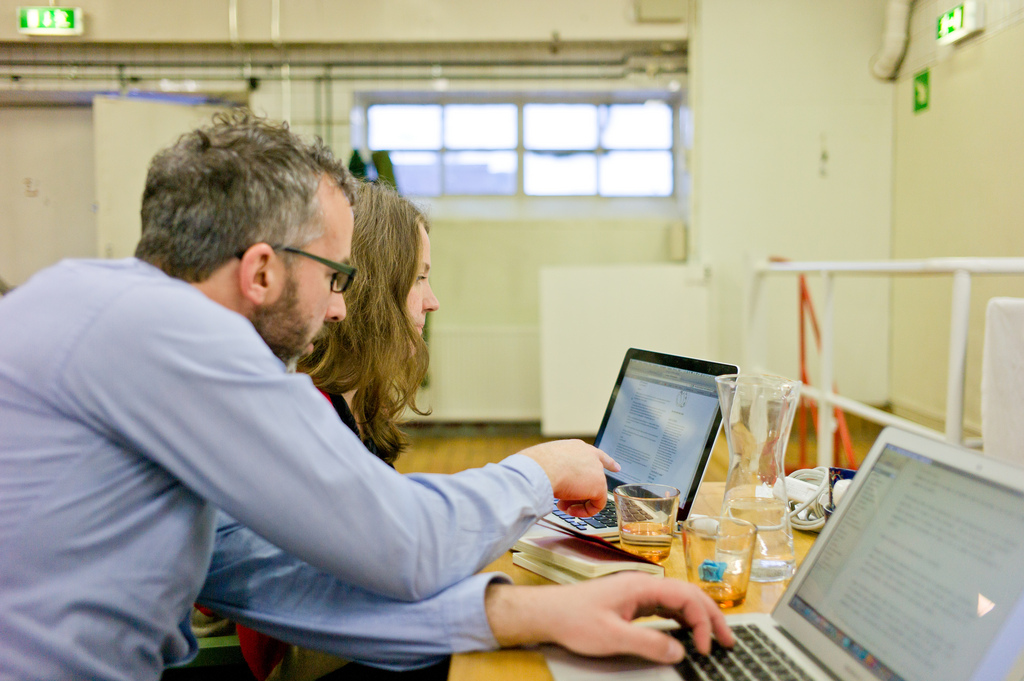
Sitra has been active on food topics for a while now, most recently by supporting the development of the wholesale market with an eye towards local and organic products. That was work on the 'platform', and our upcoming efforts will be building an 'application' to take advantage of that platform.
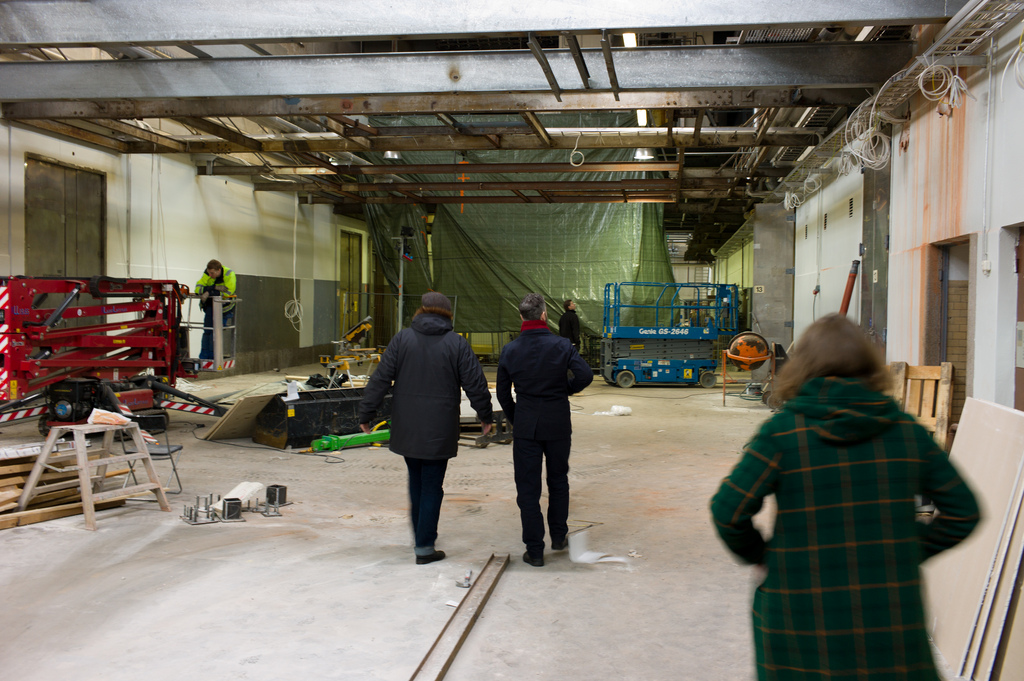
The centerpiece of the wholesale market is Kellohalli, an old butchery facility that is named for the clock on its facade. In a few months this space will be cleaned up and open to the public.
To close, an interview with Jonathan Ive in the London Evening Standard. He describes himself as "interested in being wrong." I think I like those words more than the things he and his team produce. The interview is full of good stuff, including this:
We struggle with the right words to describe the design process at Apple, but it is very much about designing and prototyping and making. When you separate those, I think the final result suffers. If something is going to be better, it is new, and if it’s new you are confronting problems and challenges you don’t have references for. To solve and address those requires a remarkable focus. There’s a sense of being inquisitive and optimistic, and you don’t see those in combination very often.
Three polite words that begin with F: frozen (temperatures), and freedom (from fossil fuels), and food. Let's see how these unpack.
Now that winter has set in, we are regularly experiencing temperatures in the range of -10º celsius. This makes for treacherous sidewalks but otherwise adds lots to the quality of life in the city: cross country skiing, sledding, new things on the ice, and plenty of light reflecting off the snow.
Recently Dan, our colleague Karoliina, Nina the intrepid interpreter, and myself spent a day in Hamina where it was also very frozen. Located 1.5 hours east of Helsinki, Hamina used to have two industries: a port and the paper mill but the later closed down in 2008.
Luckily for them, the mill premises found a new tenant who values cheap energy and the location's essentially limitless supply of cool Baltic water: Google purchased the property in 2009 and set up a data centre shortly thereafter.
Although the Google story is interesting, it's not the core of why we went to Hamina. We were there to learn about the way that the city has successfully fostered green energy, both as an energy source and as an industry. Early indicators point to Hamina as a positive example of how a community de-industralizes itself with as little long-term pain as possible. They paid attention to larger structural changes in Finland's economy and reacted decisively to find a new way forward. Google's data centre was one positive outcome, and the other is WinWind who manufacture wind turbines. In parallel with these new developments in the local economy, Hamina's municipally owned energy company also courageously set up a modest wind farm.
Hamina is known for having a circular town center
We wanted to understand how this happened. How does a community make decisions about its future? Or in other terms: how do communities make shared decisions from a shared value perspective?
Shared decisions are those which are bigger than any one person. Things like building a new road or rail, cordoning off a nature reserve, or passing a law. And shared value is measured in financial as well as social and ecological capital. Although the term is borrowed most recently from Michael Porter, the basic concept is by now quite generic—you might even argue that figuring out shared value is the challenge which underlays all others.
Our trip to Hamina was the first bit of research into this. How did they get the idea to build a wind farm? And how did it get negotiated in real space, with real euros, real local politics, and real personal opinions? How did Hamina decide to open its port area to new industries? How did Hamina propose for itself a new future?
In the coming weeks and months we'll be visiting other communities that have made—or failed to make—shared decisions as we try to better understand how we might help these processes flow more easily and productively.


One of the areas of focus is a phenomena called Not In My Back Yard (NIMBY) and how we might crack open more opportunity for Please In My Back Yard. In essence, we're interested in how communities balance the right to express negative opinions with the civic obligation of participation in the public realm, in local economies, in politics, in society. So how do we make it more meaningful and easier for people to engage in shared decisions? That's what we'll be focusing on in the area of work we've been calling Brickstarter internally.
A collection of NIMBY archetypes by Miquel Hudin drawn by Loren Purcell
Justin, Marco, and Johanna spent most of Friday in Lahti working with the city planning department there as part of our Design Exchange Programme. Things there are off to a good start with an ambitious timeline. We are also working on a new website for the exhange participants to share their experiences regularly.
Internally at Sitra we continue apace with work on tools, systems, working culture, and spatial resources. The first three involve lots of meetings in conference rooms, the latter involved one meeting in a design studio. It's also worth noting that there's a new Sitra.fi website!
Dan was over in London this weekend giving a presentation at The Design of Understanding. It's a safe bet that you can expect a write-up of some 10,000± words from him in the nearish future.
As always, an update on the food work. We spent a bit of time in Tukkutori with Elina and Ville, sharing notes on what we're up to and the same from them. Tukkutori is Helsinki's wholesale market and will be opening to consumers in the fall. Lots of exciting stuff planned there and we're seeing how we might be invovled, particularly with an eye towards strengthening the pathways for good ideas to grow up to be good businesses and good regulations and policy.
You never know what you're going to find in Tukkutori
And yes, some mockups for print. The food booklet we're working on may or may not come with a poster.
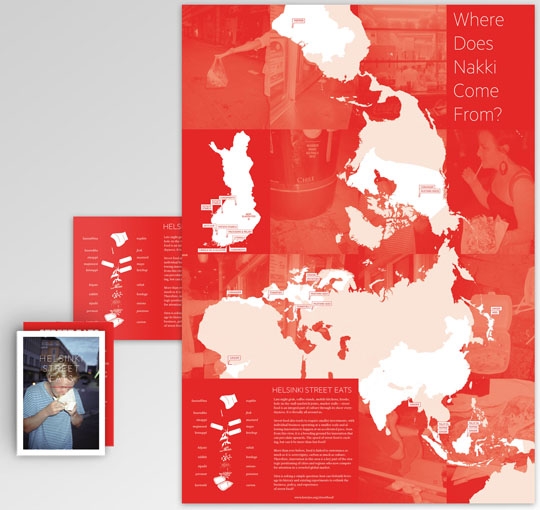
Roll call! Johanna is mostly pitching in on Synergize Finland projects, Justin is holding down the fort in Boston, Marco is in Moscow giving a talk at Skolkovo, and Dan is somewhere in Australia running at a breakneck pace with a full slate of talks, workshops, and meetings there. For more on that, follow Dan's Twitter account or look for the mentions of @HDL2010. And this leaves me, alone in Helsinki, spending the day out and about and writing.
Between bouts of project planning and other exciting administrative duties we've been continuing to drive our research into the street food of Helsinki. Below is a snippet of that, one of four narratives that we open the booklet with. They're meant to give snapshots of different key moments in the development of Helsinki's food culture. As you might guess, we're much more interested in the stuff around the food than the victuals themselves.
Ullanlinna, 1960
The woman shifts nervously from foot to foot outside the restaurant’s doorway. Above her, a green neon sign sputters into life, casting the restaurant’s name in flowing script across the elegant square, although the sun seems to have no intention of disappearing anytime soon. Still, it was late, and he was late.
She dares not go into the restaurant without him. This is not simply a matter of etiquette, or timidity on her part; it’s the law. In Finland, women are not allowed in restaurants unless accompanied by a man, so she waits. She finds this faintly offensive, as she’s heard that the reasoning is that women in a restaurant or bar on their own could only be there for one thing, and it wasn’t the food.
Dancing isn’t allowed either, for similar reasons; this she finds more ridiculous than offensive. There had been some progress, however: after the Helsinki Olympics, Alko, who set such rules, had deigned to allow the introduction of something equally licentious: the bar stool.
That the new owner of the restaurant is a woman, Mrs. Paukka, is an irony also not lost on her, but it makes no difference. For all her progressive attitudes, the woman had never been to a restaurant before, just as no-one in her family had. But she’d heard about Mrs. Paukka’s new menu—in particular the crispy fried Baltic herrings—and had pestered the man about going for weeks.
The sharp new kiosk across the square, owned by the restaurant and the only one in the country with an alcohol license, is full of men sitting, smoking, drinking, eating gelato, workers from banks and docks alike gathered around the small tables under the trees. She feels their eyes occasionally upon her. The woman pulls a copy of Kaunis Koti from her bag. She’d just bought the magazine from the R-Kioski on Korkeavuorenkatu, and had intended to save it for the tram ride home, but it would prove more useful as a screen to hide behind for the moment.
A skid of leather shoes on the cobbles behind her, accompanied by “Anteeksi, olen myöhässä!” …
Simultaneous to the writing, we're also doing some light data mining. I spent part of yesterday doing a bit of very light scripting to help us more easily pull data from the local restaurant website, Eat.fi. That process looks like this:

Left to right: 1) a map of open restaurants at a particular time, as provided by Eat.fi 2) the code on Eat.fi that makes this view possible 3) a small script that takes a bunch of copy/pasted HTML code and returns a count of the open restaurants 3) collecting that data by hand in Excel 4) visualizing it in Illustrator using a polar graph. Much faster than counting all of the dots on the map 24 times.
We wanted to make a simple point: at the moment when drinking activity on the typical weekend is spiking, food availability is crashing. Restaurants stop serving food and there is very little of a night time economy to speak of. So we made a diagram showing the opening hours of all 569 restaurants in central Helsinki. That's the red line of this diagram:

Red: # of open restaurants at each hour, as detailed in the records of Eat.fi (peaks at 422). Blue: anecdotal observation of public drunkeness (intensity & volume) on a typical Helsinki Friday
The blue line is interpretive, a sketch. It's not based on data at all. As we evolve this diagram we'll figure out a way to handle the discrepancy between these two (one based on data and one anecdotal observation) but for now it's shaping up as a way to illustrate the point. The fact that the red hoop and the blue hoop scarcely overlap is one (small) part of the reason why saturday morning the streets are dotted with puddled of vomit and why alcohol related injuries and assaults are high.
Of course this has a direct impact on the individuals whose health is impacted or who are the victims of violence or property damage. It also indirectly effects the efficacy of Helsinki's tourism strategy that seeks to make this a globally competitive destination. So here too the details matter.

The primary offering today in Helsinki street food. Photo: Kaarle Hurtig for Sitra
As you can see, to make at point that sits at the intersection of governance, business, and culture we're starting to pull together a range of different sources as well. Mixing ephemeral narratives with the historical development of the market and its regulation from 1900 onwards; bits of data with rich imagery; interviews with close observations.
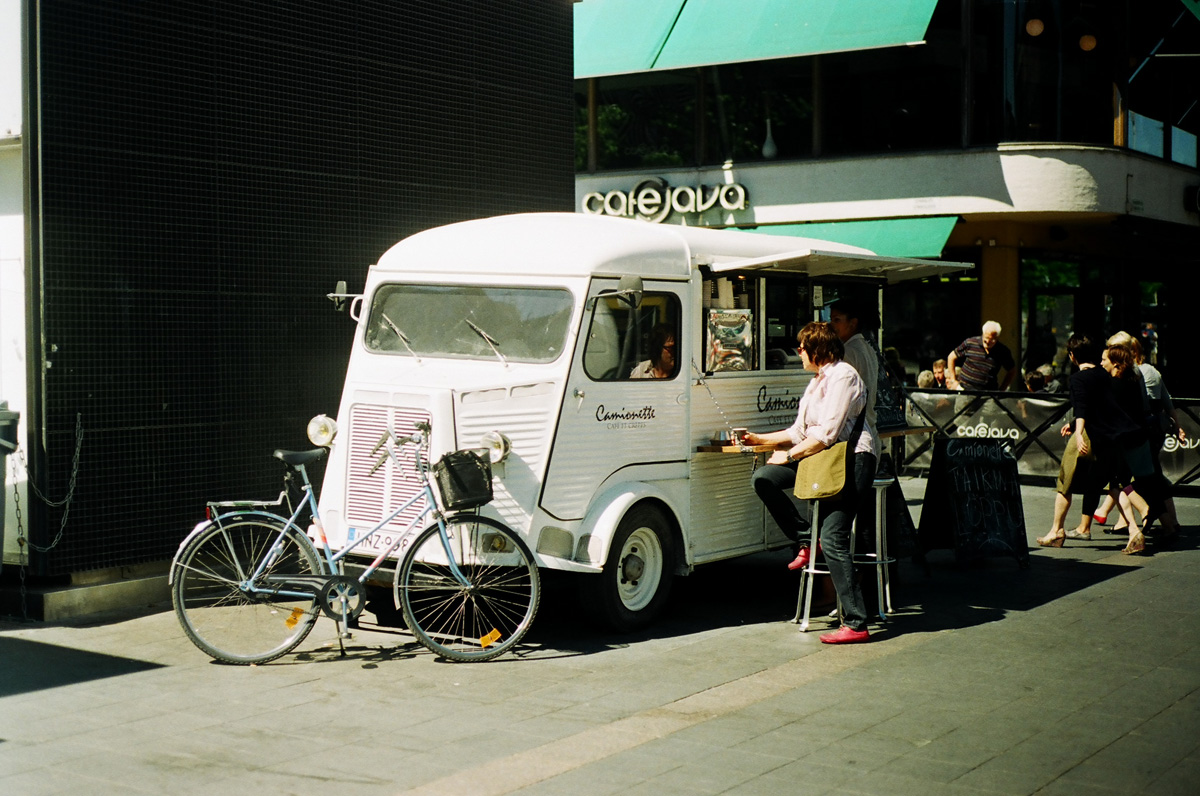
Mid afternoon coffee at Camionette
We've been moving between conversations and interviews with organizers and activitists like Olli Sirén, who has been the public face of Ravintolapäivä or Tio Tikka, who started Helsinki's only current food truck to The Public Works Department, who Dan and I visited this week.
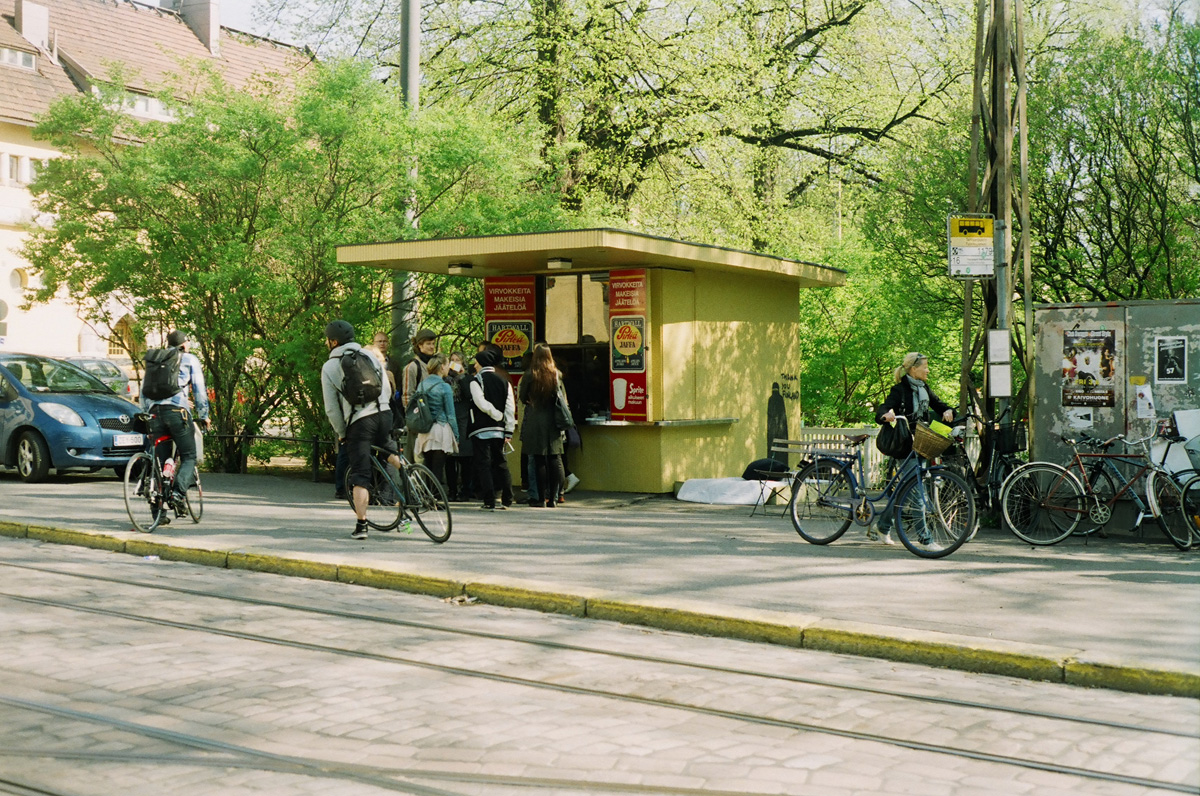
Snapshot from one of the restaurants open for the first Ravintolapäivä
In our booklet we're pulling together a bit of the history, current evidence, and indications of where there is untapped potential for innovation. Ultmately we are looking into the past before speculating about the next hundred years of everyday food in Helsinki and how we can make them even better. And in that regard we're focusing on how the dark matter, all the bits that situate food within our everyday lives—or not.
And to end, an observation about the color of milk packaging in northern Europe, provided by the ever amusing and insightful The Kaspar Stromman Design Blog.
Notes rather than thoughts/links this week, if you don't mind. First up, a few meetings.
Bryan and I caught up with Ville Relander, the City of Helsinki's PM for their Food Culture Strategy. Many, many ideas spinning out of that one, as food culture is one of the most exciting and rapidly moving development areas in Finland. Equally, food is a way in to so many everyday systems: local culture, logistics, entrepreneurship, national identity, immigration, sustainability, service culture, retail, smart systems, production, industry, popular culture, urban planning, health, education, waste, the relationship between urban and rural; it's all in there. It's a key area for us, in terms of systemic change. We look forward to working with Ville on this.
(Incidentally, we met at Kluuvi, the newly-opened complex in the city centre, which is worth a look. Not least the excellent Eat&Joy Maatilatori (farmers' market) in the basement.)
Sitra also hosted a visit from Fundación Chile, one of the few organisations with a similar remit and position to ours. As part of the visit, Bryan and I met with Francoise Tirreau Glasinovic and Alejandro Tocigl.
It happened to be a rather beautiful autumn day, so we took Francoise and Alejandro for a walk around the harbour from Ruoholahti to Moko on Perämiehenkatu. Although there are key differences, the similarities between our organisations are manyfold. We talked for a couple of hours and we were probably only just getting going. Key areas of interest included different tactics for overcoming the tendency of project teams towards silos, or conversely towards proliferation of project ideas, and how to measure multiple forms of 'capital' from investments and projects, such as those suggested by concepts such as shared value. And so in turn, how to decide what to do in the first place! Many thanks to Francoise and Alejandro for dropping by and for the great conversation—we will continue the dialogue.
The strategy and budgeting process rolls on, and fills many of the gaps left between these conversations. We're knee-deep in it, but the end of the beginning is in the sight. It was good to hear that we (Sitra) had a very well-attended external stakeholder day recently, providing strong input from outside. Bryan and I will be working with our colleague Tuula to ensure all these conversations turn into useful tools for the organisation.
In between all that, it was a week of engagement through events. Marco was in Taipei for much of the week, at the 2011 International Design Alliance Congress, presenting Low2No and taking part in a panel on urbanism. Justin was at DMI Design Management Annual 36: Design at Scale, in New York (and good to hear from Justin that old friends Jake Barton and Nicola Twilley were on top form.) Bryan took off for Buenos Aires for the Centro Metropolitano de Diseño for various events, including giving a talk at the Design Festival, and general scouting. I was holding the fort in Helsinki all week, but will report back on last week's Tallinn conference shortly, and prep for next week's trip to Sigtuna for a Mistra gathering.
I did however give a talk at Nokia on Friday, to their design team (Marko Ahtisaari invited us, after we attended Joi Ito's talk a few weeks back.) Interesting times at Nokia, given the announcement of their new phones the day before. It remains to be seen whether this is a comeback, but there are always some smart cookies there, and the Lumia/Asha/flexible concept phone combo has already changed the conversation around the company. Thanks to Matt George for hosting, and organising a good crowd.
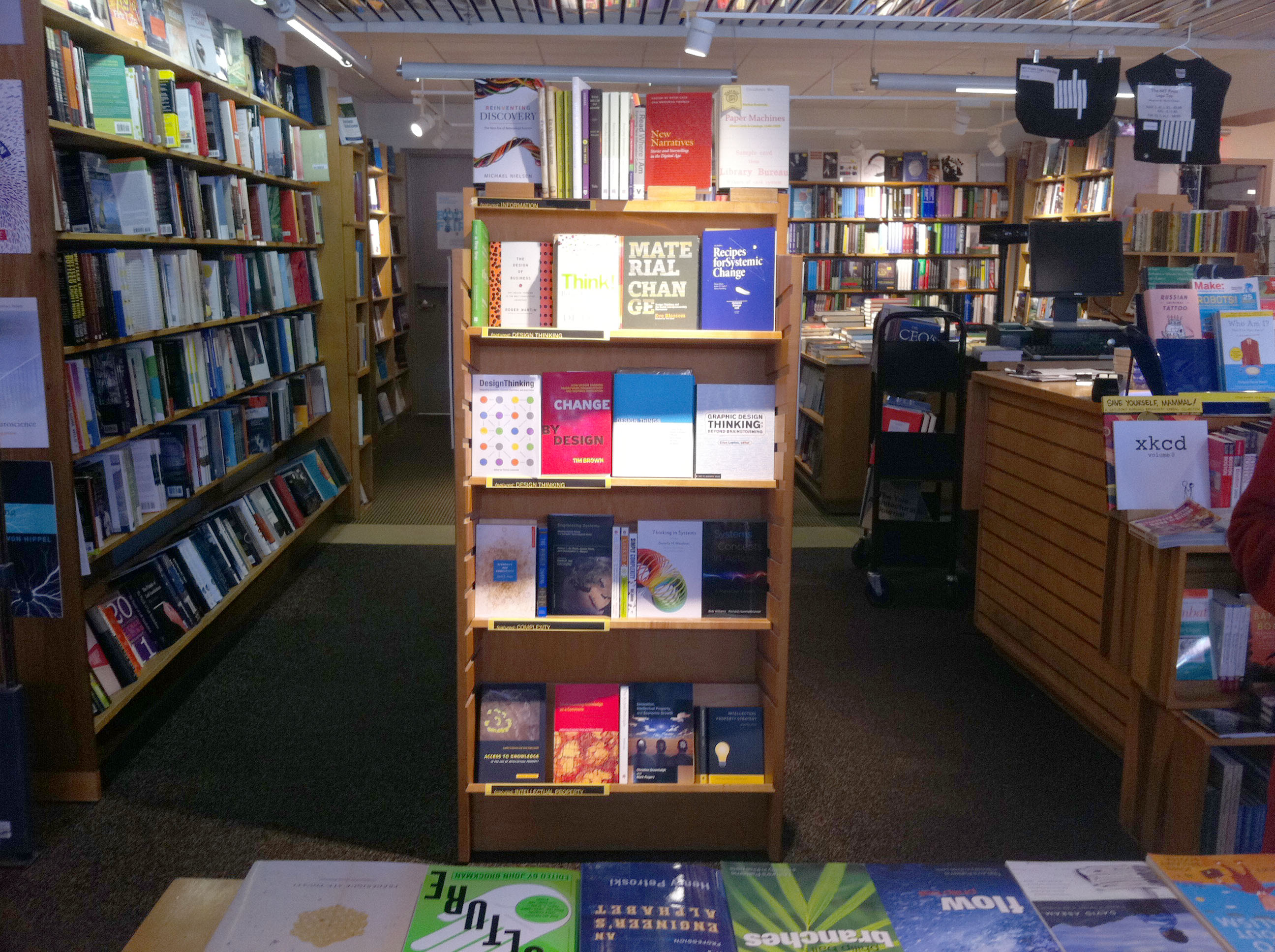
MIT Press!
While out and about, no doubt preparing for Snowtober, Justin also snapped this pic of In Studio in situ at MIT Press, in Cambridge Mass, which means of course that you can buy it there. As reported last week, it's getting out there. Do keep your feedback coming in—it's invaluable learning for us.
At DMI NYC, Justin had given a quick welcome/overview to DMI Helsinki in 2012. On related matters, congratulations to Cape Town, winner of World Design Capital 2014.
Helsinki is next year's WDC, and as with the Finnish winter, we are beginning to sense its imminent arrival. Preparations and planning are beginning to transform into activity, and it will be fascinating to see what it feels like on the street. I remember being impressed with how Victoria's State of Design festival was so vividly present in the city of Melbourne, rather more than Sydney's Design, say (no fault of the very capable Sydney Design organisers by the way; just some key differences in levels of funding and particularities of urban fabric and culture.) It wasn't so much painting the town red as turning the city over to design for a couple of weeks. It's a challenge to sustain that for an entire year, but the programme for Helsinki WDC look to be nicely diverse at this point.
More to follow on Sitra's involvement with WDC Helsinki.
And following last week's links to reports from inside Occupy New York, this from inside Occupy London, by Madeleine Bunting in today's Guardian. From "architecture of consciousness" to "key symbolic public space".

 CASE STUDY Strategically redesigning social housing to act as a stepping stone towards the formal economy